
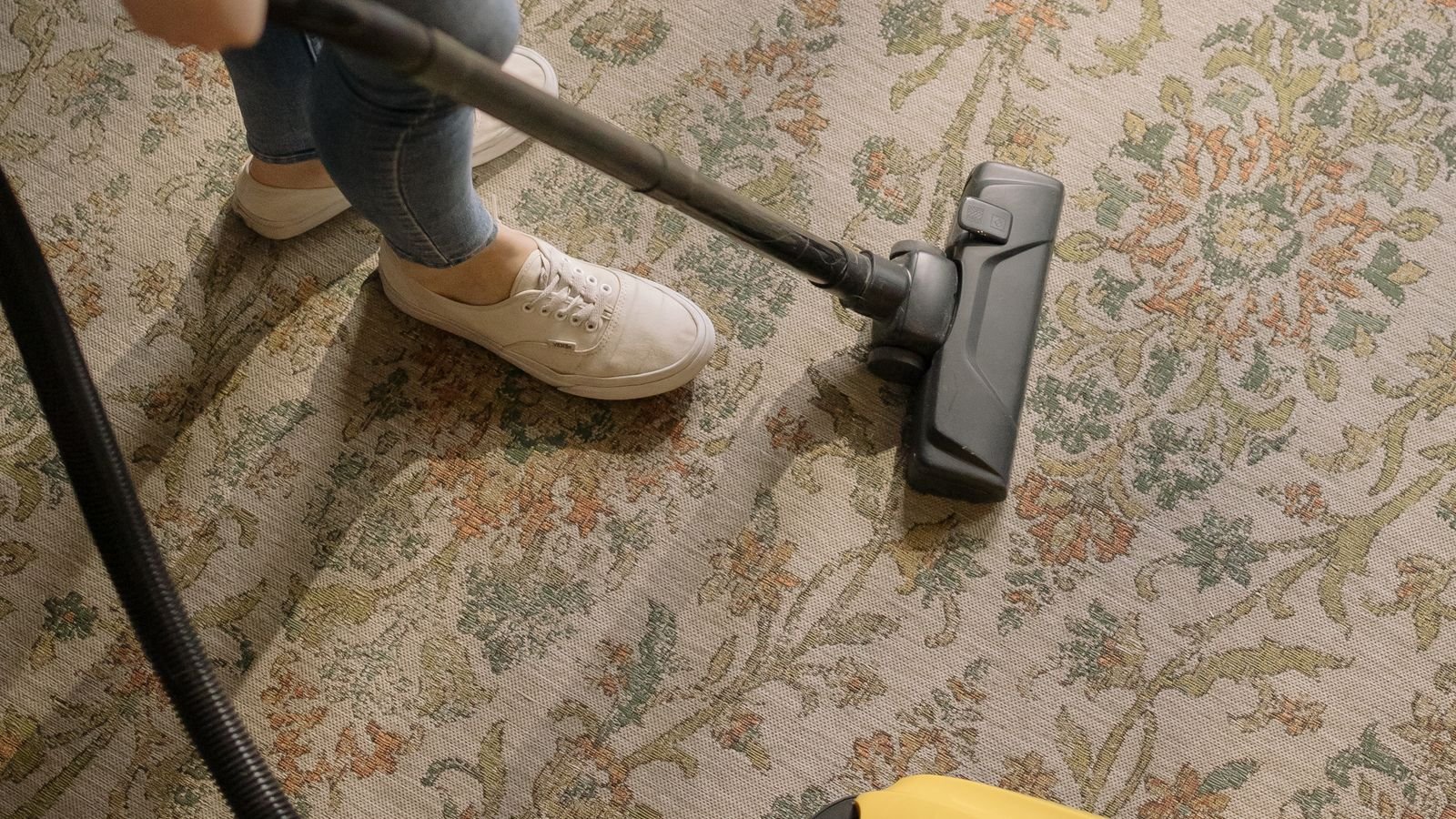
Most carpets are cleaned when they look dirty, which is the worst possible schedule. By the time a carpet visibly shows soil, the fibres have already been holding weeks or months of grit, oils and allergens, and some of that load has begun grinding away at the pile every time someone walks across it. The visible change is the last symptom, not the first.
The honest answer to how often carpets should be cleaned is that it depends on who and what walks on them. A retired couple’s spare bedroom and a Manchester office reception have almost nothing in common as cleaning problems. This guide sets out realistic schedules for both homes and businesses, explains what vacuuming does and does not achieve, and covers the situations that should move your carpet up the priority list regardless of the calendar.
What Carpets Actually Collect
A carpet is a filter standing on its side. It traps what falls on it and what settles out of the air, which is genuinely useful, because soil held in carpet is soil that is not circulating at breathing height. The problem is that a filter only works until it is full.
- Dry particulate, the grit, sand and soil walked in on shoes, which is abrasive and cuts fibres at the base of the pile
- Oily residues from cooking, skin and pollution, which coat fibres and make them grip fresh soil faster
- Organic material, skin cells, food crumbs and pet dander, which feed dust mites and bacteria
- Allergens, pollen and dust mite waste, which matter enormously in households with asthma or allergies
- Moisture and spills, which wick into backing and underlay where surface cleaning never reaches
Vacuuming removes a good share of the dry particulate near the surface. It removes almost none of the oily film, the deep grit at the base of the pile or anything bound into the fibres. That deeper load is what professional extraction exists to remove, and it is why a carpet can be vacuumed daily and still be genuinely dirty.
Recommended Schedules for Homes
For a typical household, professional cleaning once every twelve months is the sensible baseline, with vacuuming once or twice a week in between. Industry guidance from bodies such as the Carpet and Rug Institute follows the same logic, regular vacuuming for surface soil and periodic deep extraction to remove what vacuuming cannot, with the interval tightening as occupancy and use increase. From that baseline, adjust for how your home actually lives.
Adjusting for your household
- Adults only, shoes off at the door, every twelve to eighteen months
- Families with young children, every six to twelve months, because floors are where toddlers live
- Households with pets, every six months for the rooms pets use, since dander, oils and accidents build quickly
- Smokers in the home, every six months, as residues settle into fibres and hold odour
- Allergy or asthma sufferers in the house, every three to six months for bedrooms and main living areas
Not every room needs the same attention. Hallways, stairs and the main living room carry most of the traffic and can be cleaned more often than spare rooms. A sensible pattern many households settle into is a full-property clean once a year with a lighter interim clean of the high-traffic areas in between, often arranged through a local residential cleaning service alongside the regular housework.
New carpets deserve one extra note. Many manufacturers tie their wear warranties to evidence of periodic professional cleaning, so keeping receipts is worth the thirty seconds it takes. It also pays to clean a new carpet before it ever looks like it needs it, because a fibre that has never been allowed to load with oily soil resists staining far better than one that has.
Recommended Schedules for Businesses
Commercial carpet lives a much harder life. A single office doorway can take more footfall in a week than a domestic hallway takes in a year, and the soil arrives faster than any domestic-style schedule can manage.
- Entrances, lifts and reception areas, extraction cleaning every one to three months, because this is where outdoor soil enters and where visitors form their first impression
- Corridors and open-plan traffic lanes, every three to six months
- General office areas under desks and around meeting tables, every six to twelve months
- Hospitality and licensed premises, every one to three months for trading floors, driven by food and drink spillage
- Healthcare and childcare settings, short cycles agreed as part of the wider hygiene plan
The commercial case is not only about appearance. Carpet in poor condition changes how clients read a business, and replacement is one of the more disruptive costs a premises can face. Planned cleaning through a commercial cleaning programme costs a fraction of early replacement and keeps the difference invisible. Out-of-hours scheduling means the work never interrupts trade, and a good contractor will map the building into zones so the busiest areas cycle more often than the quiet ones without anyone having to remember.
The Signs a Carpet Cannot Wait for the Schedule
Calendars are guides, not rules. Certain signs mean a carpet needs attention now, whatever the diary says.
- Traffic lanes that stay dark after vacuuming, which means bound-in oily soil
- A musty or stale smell that returns within a day of airing the room
- Allergy symptoms that ease when the sufferer leaves the house
- Any spill involving milk, pet accidents or food, which will develop odour as it breaks down in the backing
- A flattened, matted pile that no longer lifts with vacuuming
Individual marks are a separate job from a full clean. A drink spill or a make-up mark treated promptly with the right chemistry will usually come out completely, while the same mark left for a month may be permanent. If one stain is the problem rather than the whole room, targeted carpet stain removal is the quicker and cheaper route.
Why Professional Extraction Beats Hired Machines
Supermarket rental machines occupy an awkward middle ground. They cost real money and effort, but run at a fraction of the water temperature, spray pressure and vacuum recovery of a professional truck-mounted or high-grade portable system. The two failures that follow are predictable.
The first is soil left behind. Weak extraction removes the surface layer and leaves the base of the pile loaded, so the carpet looks better for a fortnight and then darkens again as the deep soil wicks upward. The second is over-wetting. Underpowered vacuum recovery leaves carpets wet for a day or more, and slow drying is exactly the condition that lets odour and mould develop in backing and underlay. Professional equipment removes far more moisture on the recovery pass, which is why properly cleaned carpet is typically dry within hours.
There is also the question of chemistry. Different fibres, wool, nylon, polypropylene, react differently to cleaning agents and heat, and using the wrong product can set a stain permanently or damage the pile. A trained technician identifies the fibre before choosing the method, which is not something a rental machine label can do for you. Wool in particular punishes guesswork, since too much heat or the wrong alkalinity can shrink, brown or felt the pile, and a wool blend is exactly what many Manchester homes have on their stairs and landings without knowing it.
Making a Clean Last Longer
The interval between professional cleans stretches or shrinks depending on a few habits, all of them cheap.
- Use proper entrance matting at every external door, since a good mat strips most of the grit before it reaches carpet
- Vacuum slowly, one pass in each direction, rather than a quick skim, and empty or replace bags before they are full
- Deal with spills immediately by blotting, never rubbing, and avoid supermarket stain products on unknown fibres
- Run a shoes-off policy at home if the household will tolerate it
- Move furniture a few inches once or twice a year so traffic lanes and pressure marks do not set in the same place
In commercial buildings the same logic applies at scale. Matting systems, daily vacuuming of entrances and prompt spill response are the difference between carpet that needs quarterly rescue and carpet that needs routine maintenance. Odour tells its own story too, since visitors smell a carpeted room within seconds of entering while the household stopped noticing months ago, and a fresh, neutral smell is usually the first thing people mention after a proper clean.
A Simple Rule to Take Away
If you cannot remember when a carpet was last professionally cleaned, it is due. Homes should work to a twelve-month baseline, tightened for pets, children, smokers and allergies. Businesses should map cleaning frequency to footfall, with entrances on the shortest cycle. In both cases, vacuuming is the daily defence and extraction is the periodic reset, and neither replaces the other.
Whether it is one flight of stairs at home or every floor of an office building, we clean carpets across Greater Manchester with professional-grade extraction equipment and fibre-appropriate chemistry through our carpet cleaning service. Tell us the rooms, the fibre if you know it and the problem if there is one, and request a free quote today.