
What actually happens in the first few minutes of a spill
A spill on carpet is never one problem, it is two. There is the liquid still sitting in the top of the pile, and there is the liquid already travelling down the fibre towards the backing. The first part is easy to recover. The second part is what comes back as a faint shadow three days later, wicking upwards as the carpet dries, and it is the reason a mark you were certain you had beaten reappears in a slightly wider shape than the original.
That split decides what you should do first. Everything in the opening minutes should be about removing liquid, not about treating colour. Reaching straight for a bottle of stain remover adds moisture to a carpet that is already saturated, drives the original spill deeper, and leaves you with a larger wet patch carrying exactly the same dye. Lift first, treat second. In the houses and offices we work in on carpet cleaning jobs across Manchester, the marks that prove impossible are almost never the dramatic ones. They are the small spills that were rubbed in a hurry, then topped up with the wrong product, then rubbed again.
The other thing working against you is time, and not in the way people assume. Very few substances stain carpet on contact. They stain as they dry, as the water carrying them evaporates and leaves concentrated pigment behind, bonded to the fibre. A spill dealt with inside ten minutes is a wet patch. The same spill dealt with the following morning is a repair job.
The blotting method that decides the outcome
Blotting is not a gentler version of scrubbing. It is a different action with a different purpose, and doing it properly is most of the skill involved in domestic stain work.
Use a white cloth or plain kitchen roll, never a coloured towel, because a damp coloured towel under pressure will transfer its own dye into wet carpet. Press straight down, hold for a few seconds, lift, and move to a clean part of the cloth. Repeat with fresh cloth until nothing more transfers. You are using the cloth as a wick, and a cloth that already holds the spill has nothing left to absorb with, so people who use one towel throughout are mostly redistributing the stain.
Work from the outside inwards
Start at the edge of the mark and move towards the centre. Working outwards from the middle pushes the boundary of the stain wider with every pass, and a two inch spill becomes a six inch ring that is far harder to disguise. Keep the treated area as small as the original spill.
Use less liquid than feels right
Whatever solution you decide on, apply it to the cloth rather than pouring it onto the carpet. Carpet holds a surprising amount of water, and over wetting causes two separate problems. It carries the stain into the underlay where you cannot reach it, and it leaves the backing damp long enough to develop a musty smell that outlasts the mark you were treating. Damp is a real issue in older Manchester terraces and ground floor flats, where a soaked patch of carpet can take days to dry out properly without help.
Red wine and the white wine myth
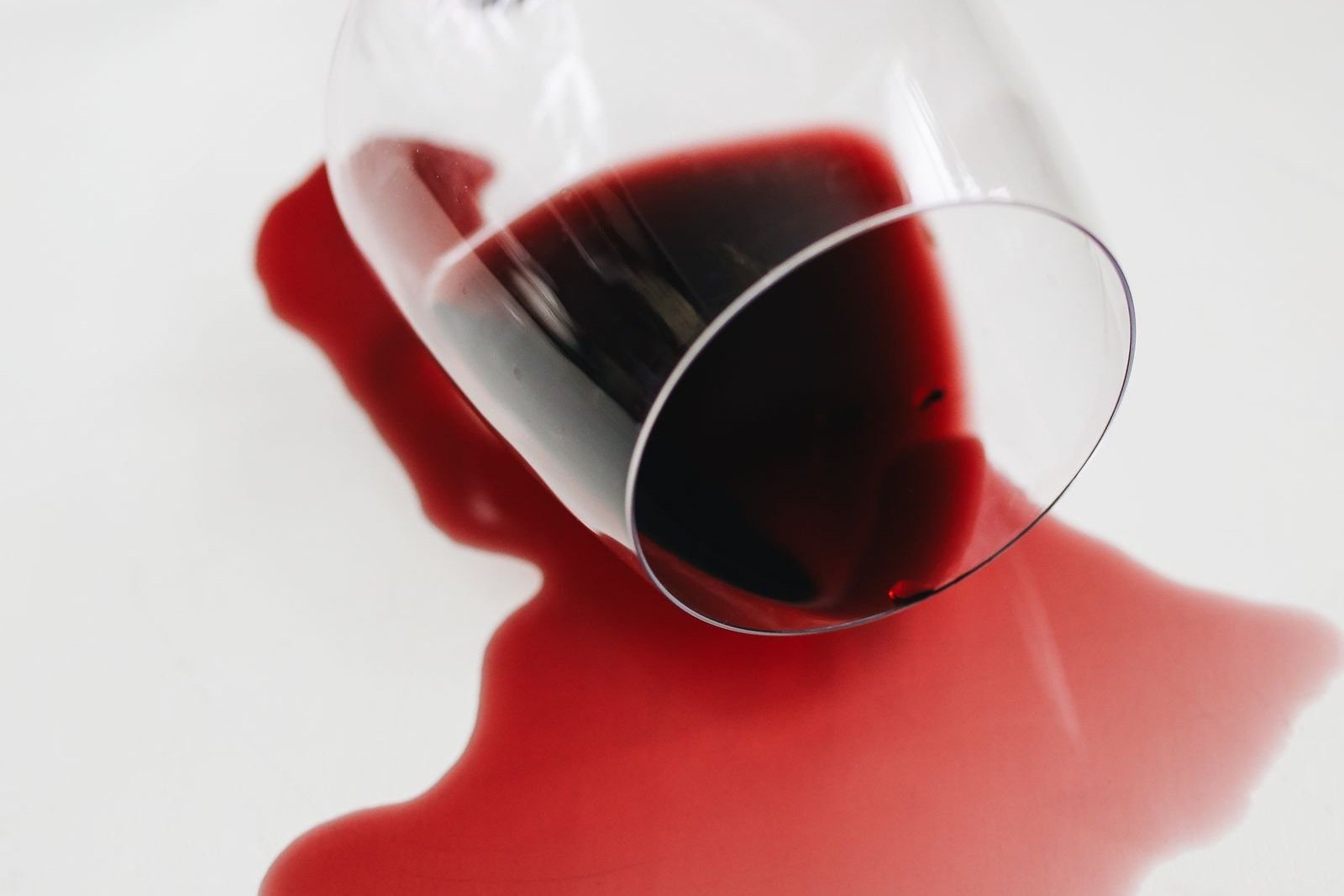
Red wine is the stain people panic about most, and it responds better than its reputation suggests, provided nobody reaches for the salt drawer and the second bottle. Pouring white wine over red wine achieves nothing chemically. It simply doubles the volume of liquid in the carpet and adds sugar, which stays behind after drying and turns the patch into a sticky area that attracts soil and greys off within weeks.
Blot hard and repeatedly with plain kitchen roll until the transfer slows. Then treat with cool water, working from the outside in, blotting between applications. A very dilute solution of washing up liquid in cool water lifts what remains in most cases, and a mild white vinegar solution is a common household follow up for the residual colour. Ideal Home’s guide to removing stains from carpet runs through the standard household treatments for wine, coffee and grease, and its core instruction matches ours, which is to blot rather than rub and to test any product on a hidden section of carpet first.
What ruins red wine recovery is heat. Hot water sets the pigment into the fibre, and so does a warm hairdryer aimed at the damp patch afterwards. Keep everything cool until the carpet is genuinely clean, then let it dry with airflow rather than heat.
Coffee and tea leave two stains rather than one
Coffee and tea are tannin stains, and they behave differently from wine because there are usually two components sitting on top of each other. There is the brown tannin itself, and in most British households there is milk and sugar with it. The tannin is a colour problem. The milk is a protein and fat problem that will smell sour if it is left in the backing, particularly on stairs and landings where airflow is poor.
Blot as much as possible, then treat with cool water and a trace of washing up liquid to deal with the milk and sugar before you attack the colour. Going after the brown mark first with an acidic solution can fix the protein into the fibre and leave you with a stain you can see and a smell you cannot place.
Tannin marks left to dry fully are among the more stubborn domestic stains, because tea and coffee both contain natural dyes that were designed by nature to bind. A day old coffee ring on a light wool carpet will usually lighten with home treatment rather than disappear, and full removal normally needs a proper extraction machine that flushes clean solution through the pile and pulls the loosened pigment back out.
Grease, oil and cosmetics need a solvent rather than water
Cooking oil, butter, chip fat, foundation, lipstick and candle wax all share one property, which is that water alone will not touch them. Adding water to a grease mark spreads the oil into a wider halo and achieves nothing else, so the instinct to reach for a wet cloth actively makes the situation worse.
Scrape off any solid material with the edge of a spoon, moving inwards, then absorb what you can. Bicarbonate of soda or cornflour left on a fresh grease mark for fifteen to twenty minutes will draw a useful amount of oil out of the fibre before you vacuum it away. Only then treat what remains with a small amount of washing up liquid, which is designed to break down fats, applied to a cloth rather than to the carpet.
Solvent based spot removers do work on grease, but they carry risks worth knowing about. Some soften the latex adhesive holding the carpet backing together, which causes the pile to loosen or delaminate in that patch, and the damage is permanent. Some strip the stain resistant treatment applied to the carpet when it was manufactured, so that spot becomes the place every future spill lands hardest. If you use one, test it in a wardrobe or under a sofa first and use it sparingly.
Ink, dye and the stains that chemically set
Some substances do not sit on the fibre, they dye it. Once that reaction has happened there is no cleaning method that reverses it, because there is nothing left to remove. The fibre itself has changed colour. Being honest about which category a stain falls into saves people from destroying good carpet in pursuit of a mark that was never coming out.
The stains that commonly bond for good include permanent marker and most biros, hair dye and beard dye, iodine and antiseptic, curry and turmeric, mustard, concentrated fruit squash containing strong colourants, and any household bleach splash, which does not add colour but removes it. Rust from a radiator or a metal furniture foot is another one, and it will keep returning as the metal keeps corroding unless the source is dealt with first.
Fresh ballpoint ink is the exception worth trying. Dab, do not wipe, with a cloth barely dampened with surgical spirit, changing to a clean section constantly, then blot with cool water to remove the spirit. Wiping turns a small dot into a long smear that has now dyed several times the original area. If the ink has dried, or if the mark is from a marker pen, home treatment normally spreads it rather than lifting it, and this is the point to look at professional carpet stain removal in Manchester before the area gets any larger. Specialist reducing and oxidising agents can shift some dye stains, but they are matched to the fibre type and applied under controlled dwell times, which is not something to improvise on a living room floor.
Blood and other protein stains
Blood follows one rule that overrides everything else, which is that it must be treated cold. Warm or hot water cooks the protein and locks it into the fibre in a way that no later treatment undoes, so the kettle stays off and the tap stays on cold.
Blot fresh blood with cold water on a white cloth, changing cloths often, and keep the treated area tight. A small amount of salt in cold water helps on fresh marks. For dried blood, rehydrate gently with cold water and give it time to soften rather than attacking it with pressure, then blot again. Products containing enzymes are designed for protein and work well here, but they need time to act and they need to be rinsed out afterwards, since enzyme residue left in the pile keeps attracting soil.
The same cold water and enzyme logic applies to sickness, milk and other biological marks, where the smell usually outlasts the visible stain because the residue has reached the underlay. Odour that keeps returning after the mark has gone is a sign the contamination is deeper than the surface, and that is treated the same way we approach pet odour removal from carpets, by finding and neutralising the source rather than masking what you can smell.
The point where scrubbing becomes the real damage
There is a moment in almost every failed stain attempt where the carpet stops being stained and starts being damaged. It is worth learning to recognise it, because the visible result of over scrubbing looks a lot like a stain and is far harder to put right.
Vigorous rubbing distorts the twist that gives carpet fibre its structure. Once that twist opens up, the pile in that spot lies differently, catches light differently, and reads as a dull grey patch from across the room even after every trace of the original spill has gone. On cut pile and wool carpets it can also cause pilling and fuzzing, and on the loop pile common in offices and rented flats it pulls loops proud of the surface where they snag and unravel. None of this is reversible by cleaning.
The practical rules are simple. Stop when the cloth stops picking up colour, because at that point you are working the fibre rather than the stain. Never use a stiff brush, a scouring pad or the abrasive side of a sponge on carpet. Do not layer different products on the same spot, since an alkaline cleaner followed by an acidic one can neutralise both and leave a residue that greys the area permanently. And give the carpet time to dry fully before judging the result, because damp pile always looks darker than it will once dry, and a great deal of unnecessary scrubbing happens to marks that were already gone.
When professional treatment costs less than the carpet
The maths on this is more straightforward than people expect. A single stubborn stain in a hallway or a lounge rarely justifies replacing a whole room of carpet, and replacement means new carpet, new underlay, fitting, moving furniture and matching the rest of the house. Professional treatment of the affected area, usually alongside a clean of the surrounding room so the finish matches, sits well below that in almost every case we quote for.
It is worth calling someone in when a mark has already dried, when it keeps wicking back after each attempt, when the spill covered a wide area rather than a spot, when the carpet is wool or a delicate natural fibre, or when several products have already been tried. That last one matters more than it sounds, so tell whoever attends what you applied, because a technician who knows there is an acidic residue in the pile will rinse it out before treating rather than adding another reaction on top.
Good spot work is only part of it. Carpets that are cleaned properly on a sensible cycle hold up far better against spills in the first place, because a fibre carrying no built up soil releases a fresh stain much more easily, and our guidance on how often carpets should be cleaned covers what that looks like for a busy household or a working office. If a stain has beaten you, or if a whole floor needs bringing back rather than one patch, our Manchester carpet cleaning team can assess the fibre, identify what caused the mark and tell you honestly whether it will come out before any work starts.