
Searching for an oven-cleaning price in Manchester often produces a tempting single number. It may be a starting price for a small built-in oven, while the appliance in your kitchen is a double oven with a hob and a heavily soiled grill. A quote is useful only when both sides mean the same job. Rather than inventing a local price range, this guide explains what to describe, what to ask the cleaner to include, and how to compare two written offers fairly.
The aim is to buy the work you need without paying for a vague bundle. An oven visit may cover the cavity and racks alone, or it may also include door glass, hob, extractor and other parts. The model and the condition affect the method. A good enquiry gives the provider enough detail to say what is included, what is excluded and when any extra cost would be agreed.
Begin with the appliance, not a price band
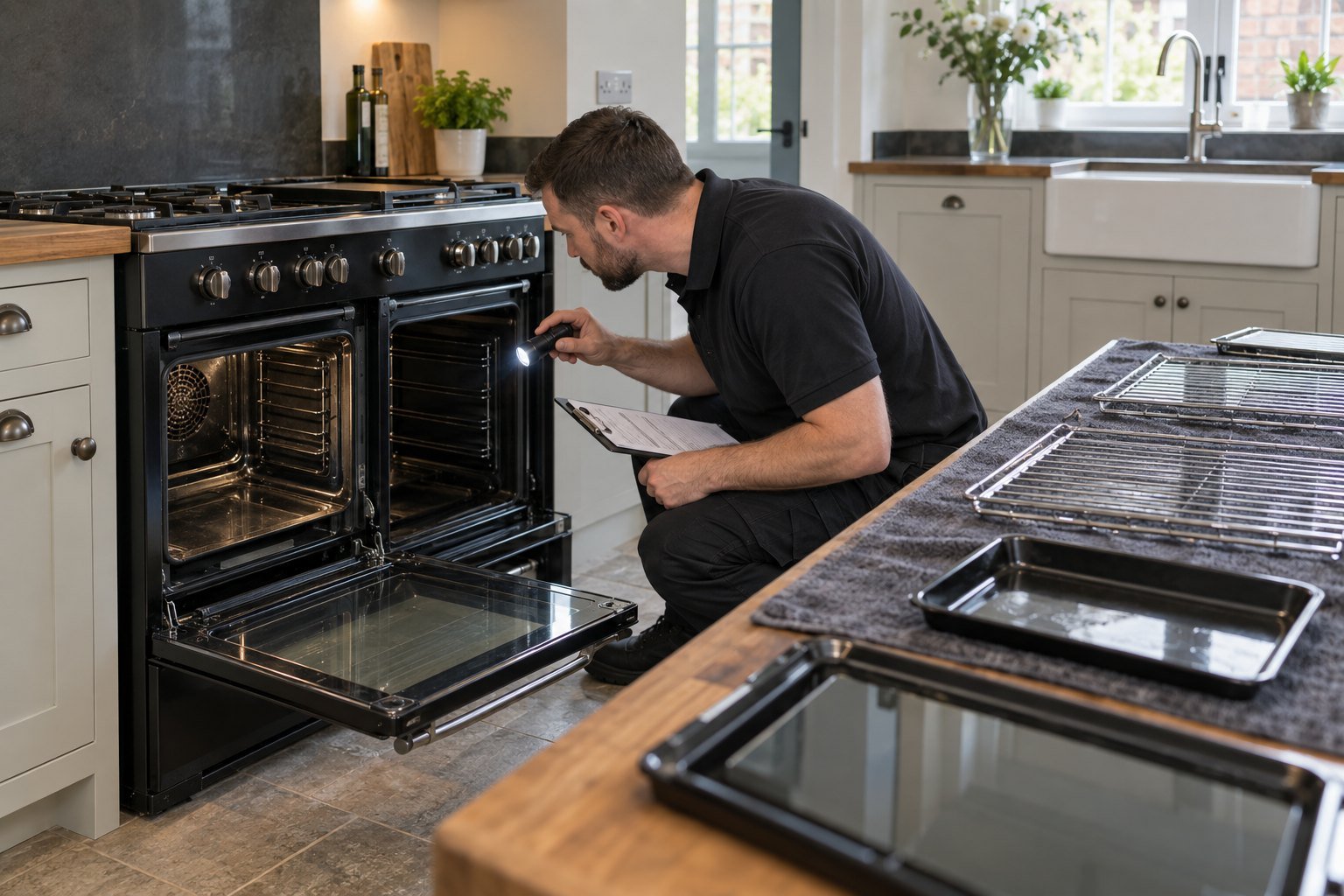
A photograph of the front of the cooker and its model label, if you can safely find it without moving the appliance, can clarify far more than “standard oven.” State whether it is a single built-in oven, two separate cavities, a freestanding cooker or a wide range. Mention a separate grill, the number of doors, and whether you also want the hob or extractor cleaned. You do not need to dismantle anything to obtain a quote.
Those distinctions matter because every extra cavity and removable part takes attention. A quote for one oven cavity should not quietly be compared with a quote for an oven, hob and extractor together. Ask each provider to write down the same appliance list. If you want only the oven, say so. If you are arranging an entire kitchen clean, the home deep-cleaning scope should be considered separately so that cupboards, worktops and floors do not get implied by the oven price.
Give the Manchester postcode and describe access, especially if parking, a controlled apartment entrance or stairs could affect arrival and equipment. Do not assume a city-centre flat and a suburban driveway have the same setup. The provider can then say whether travel, parking or a minimum visit charge appears in the quoted total. That is a question to ask, not an assertion that every cleaner charges for these items.
Describe the condition plainly
“Needs cleaning” can mean a light film after ordinary use, a sticky door, thick deposits around the grill, or a spill baked onto the base. Photograph the cavity and the door in normal light. Note persistent smoke or an unusual smell, but do not assume that cleaning will repair an appliance fault. If the door will not close, a seal is damaged or the oven is not heating correctly, ask an appropriate appliance professional about the fault rather than expecting a cleaner to diagnose it.
Condition can change the time and method proposed. Be candid about years of build-up and any previous product that left residue. A provider may ask to inspect before confirming a final price. If so, request the decision point in writing: when will the confirmed price be stated, and may you decline extra work before it starts? That is more useful than an impressive low number that applies only to a nearly clean appliance.
Do not use a claimed “average Manchester oven-cleaning price” as a substitute for the appliance description. A rate from a search result may have no date, no clear scope and no evidence of what was included. Two honest quotes can differ because they define the task differently. The comparison begins by matching scope, not by choosing the smaller figure.
Check what happens to racks, trays and door glass
The interior cavity is only one part of the job. Ask whether shelves, racks, side supports, trays and door glass are included, and whether the provider will remove any parts or clean them in place. Some components are model-specific and should be handled according to the appliance instructions. Do not treat “full oven clean” as a universal promise that every panel can or should be removed.
For example, Beko’s oven-care guidance gives model-dependent instructions for removing inner door glass and advises consulting the instruction manual when the oven interior is uncertain. The point applies to quote discussions even if your oven is a different brand: identify the actual model before assuming a door can be dismantled. A cleaner can explain the proposed scope after checking the manual, and should not force a component that is not designed for routine removal.
Ask where removable parts will be cleaned and how adjacent worktops and floors will be protected. The answer need not use a particular piece of equipment to be valid. It should explain how the parts are treated, rinsed and returned, and whether anything such as a replacement filter is outside the cleaning quote. Replacing parts is a different service from cleaning them.
Self-cleaning features still need a model check
A pyrolytic programme, steam-assisted programme or catalytic lining may change what the cleaner recommends. These are not interchangeable labels, and a method suitable for a plain enamel cavity is not automatically suitable for every coated surface. Give the make and model, mention any self-cleaning function, and ask the provider to confirm that its process follows the relevant manual.
The presence of a self-cleaning programme also does not prove that every rack, runner and door component is covered by it. Confirm which parts you will remove, which the cleaner will handle, and what is excluded. If the appliance is under warranty or has been recently repaired, the manual and service advice should take priority over a generic cleaning tip.
This is a reason to avoid universal promises such as “all ovens are dismantled” or “all products are safe on every finish.” A useful quote names the appliance and the intended work. It leaves room to change the method when the manufacturer’s instructions require it, with your agreement before any extra charge.
Separate the oven, hob and extractor
A hob may be a flat induction surface, a gas hob with removable pan supports, or part of a range cooker. An extractor may have accessible grease filters, ducting and components beyond an ordinary surface clean. Ask for separate lines for the oven cavity, hob and visible extractor components. Then ask whether a combined visit changes the total. An itemised comparison shows where one quote covers more than another.
If the extractor is in a restaurant or commercial kitchen, do not treat a domestic oven-cleaning quote as a substitute for a separate extraction-system assessment. Commercial ductwork and records are a different scope. EPC’s restaurant-cleaning service is a more relevant starting point for that conversation. For a home kitchen, keep the discussion to the visible components actually listed in the quote.
A microwave, splashback, nearby cabinets or kitchen floor should also be named if you expect them to be cleaned. They do not become included merely because they sit next to the oven. Conversely, a provider should be able to state that a quote is for the oven alone without implying a whole-kitchen service.
Ask what the quoted total includes
When two providers describe the same appliance, compare the practical terms. Is the figure fixed from the information supplied, provisional until inspection, or a base rate plus stated extras? Are cleaning materials, travel and any parking cost included? Is tax included where applicable? How long is the visit window, and is any deposit or cancellation term stated before booking? Ask for the answer in writing so there is one shared record.
A lower quote may be entirely suitable if it covers what you want. A higher one may include parts or appliances the other excludes. Avoid judging either solely by a list of products or an unsupported claim of being “the best.” Instead, ask the provider to describe the work and the circumstances that would change the price. The current EPC oven-cleaning service page is a starting point for the service discussion, but the quote for your appliance should be specific.
Do not agree to an open-ended “heavy-soiling supplement” without knowing when it will be decided. A fair process is simple: inspect the appliance, state the additional work and revised total, and ask for approval before proceeding. If the condition differs from the photos you sent, both sides can then make a clear decision.
Consider whether the oven is part of a larger clean
For a move, an end-of-tenancy visit or a home deep clean, make the oven a named line item. A general kitchen wipe and a detailed appliance clean are different tasks. A landlord’s checkout list might ask for one standard, while the cleaner’s general room list uses another. Share the actual expected scope with the provider and ask for a specific oven line rather than assuming the broad phrase “kitchen cleaned” settles it.
Our end-of-tenancy cleaning page explains that wider booking route. It should still be clear whether racks, glass, hob and extractor are in the agreed package. Photographs before the visit can make the conversation easier, but they do not turn an unseen condition into a guaranteed outcome.
If the appliance is damaged, has a persistent fault or requires a replacement component, distinguish repair from cleaning. A cleaning visit can remove accessible deposits within the agreed method; it cannot promise to restore a failing part or erase permanent marks. That distinction protects the customer from paying for a result the service could not reasonably deliver.
A compact enquiry that earns a useful answer
Send the postcode, make and model if known, appliance type, number of cavities, a few clear photographs, approximate condition, and a list of any hob, extractor or additional appliance you want included. Say whether the site has access or parking constraints and when the work must be completed. Ask the provider to return the included parts, exclusions, total, possible extras and booking terms in one response.
For example: “I have a double built-in oven in M20, used regularly, with a heavily soiled grill and door glass. I also want the gas hob cleaned but not the extractor. Photos attached. Please confirm whether the racks and model-specific door glass are included, whether parking affects the total, and when any condition supplement would be agreed.” That message gives the cleaner a real job to price.
Keep the reply and check the finished work against the agreed list, allowing for any change you approved on site. If you need an EPC quote, use the oven-cleaning booking route or contact the team with those details. A reliable price starts with a precise scope, not a number detached from the appliance in front of you.