
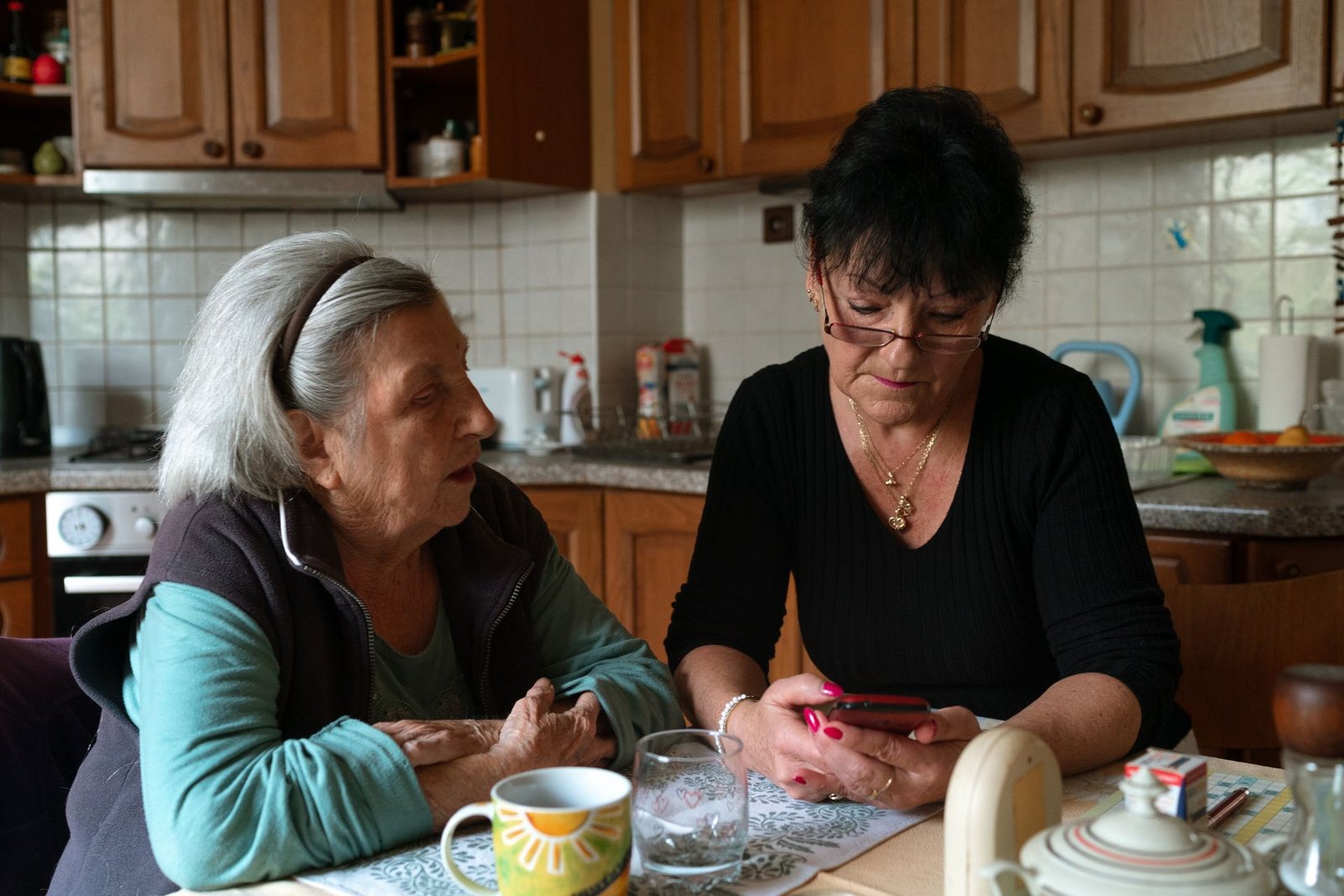
Most of the calls we get in Manchester about cleaning support for an elderly parent or a vulnerable relative come from an adult son or daughter, often living some distance away, who has noticed on a visit that the house is not being kept the way it used to be. The cooker has not been properly cleaned in months, there is a build-up of clutter that is starting to look like a trip hazard, or the bathroom has developed mould in the corners that nobody has the energy or the mobility to deal with any more. The request is nearly always the same: help, without making a big thing of it, and without it turning into something bigger than a cleaning visit.
That last part matters, and we would rather be precise about it upfront than let a family assume we cover something we do not. There is an important, legally defined line between what a domestic cleaning company like ours does and what is called “personal care,” and being clear about that line from the first phone call protects everyone, especially the person whose home it is.
What personal care actually means, and why we do not provide it
Personal care is a specific, regulated term, not a general phrase for looking after someone. The Care Quality Commission’s own guidance describes it as a regulated activity under the Health and Social Care Act 2008 (Regulated Activities) Regulations 2014, defined as providing personal care “for people who are unable to provide it for themselves because of old age, illness or disability,” delivered in the place where they live, including through domiciliary or homecare services. Anyone providing that activity has to be registered with the CQC. The NHS’s own description of what a paid carer does under this kind of arrangement is specific: help with things like getting out of bed, washing and dressing, using the toilet, taking medicines and getting settled for the night.
None of that is what a domestic cleaner does, and we are not registered to do it. We will not wash, dress, or physically assist a client, manage medication, or provide anything that falls under that regulated definition, and if a family’s need genuinely is that kind of support, the right next step is a council care needs assessment or a registered home care agency, not a cleaning company stretching its remit to be helpful. We would rather say that plainly on the first call than take on a job that is not ours to do.
What our elderly cleaning support in Manchester provides, and why it still matters a great deal
A clean, well-kept home is a genuine safety factor for an older or less mobile person, even though it sits in a completely different category to personal care. Clutter on a hallway or staircase is a fall risk. A kitchen that has not been deep cleaned in a while can develop genuine hygiene problems once someone’s own capacity to bend, reach into a fridge, or manage a full clean has reduced. A bathroom with mould or limescale build-up becomes both an unpleasant place to be and, on tiled floors, a slip risk. None of this needs a registered carer. It needs a thorough, regular domestic clean carried out by someone who understands they are working around a person’s daily life and routines, not just their belongings.
This is where we can help properly: kitchens, bathrooms, floors, dusting, laundry where wanted, and a general tidiness that keeps a home safer and more manageable, delivered as a regular ongoing clean for a household that needs consistent support, or a one-off deep clean where things have been left for a while and a fresh start is what is actually needed before a regular routine can begin.
Working alongside an existing care arrangement, not replacing it
A lot of the households we visit already have some form of care support in place, whether that is a family member helping day to day or a paid carer arranged through the council or privately. The NHS’s guidance sets out that route clearly: a care needs assessment from the local council establishes what support someone is eligible for, followed by a financial assessment, or means test, to work out what the council will contribute and what the individual pays themselves, with paid home care typically costing “from £15 to £30 an hour” depending on where you live. That whole process, and the ongoing personal care it arranges, is entirely separate from us, and we are not a way around it or a cheaper alternative to it.
What we do is sit alongside that arrangement. A carer visiting to help someone get up, washed and dressed in the morning is doing a completely different job to a cleaner coming in on a separate day to do the kitchen, bathroom and floors properly. Families often set both up at once, precisely because they are not substitutes for each other, and coordinating around an existing carer’s visiting times, or a family member’s own schedule, is a normal part of arranging the clean.
How a visit is actually run differently for a vulnerable resident’s home
The mechanics of the clean itself are adjusted with the person in mind, not just the property. We keep hoses, cables and equipment off walked routes rather than leaving them trailing across a hallway or lounge, because a trip risk we created ourselves would defeat the entire point of the visit. Where a client has memory difficulties, we knock and announce ourselves before entering a room, keep to a consistent, familiar cleaner where the household would rather see the same face each time, and take direction calmly if a routine needs to change on the day. Where a client has a sensitivity to strong fragrance, we use milder products rather than insisting on a standard range. Where cleaning chemicals are left on site between visits for a top-up job, they are stored safely and out of any risk of confusion, particularly in a household where medication is also kept close to hand in the kitchen or bathroom.
None of this is a special “elderly care package” with an inflated price attached. It is the same clean, done properly, with a bit more attention paid to how the home is actually lived in day to day.
We are also, in a quiet and unofficial way, an extra set of eyes in a home that a family member might only see once a week or once a month. A cleaner working through a house properly notices things a family visit sometimes misses: a smoke alarm hanging loose or beeping for a battery change, a rug edge that has started to curl and catch a foot, a bathroom mat that has gone slippery on the underside, a fridge holding food well past its date because shopping and cooking have quietly become harder. We are not inspectors and we do not go looking for problems, but if something like that is sitting in plain sight while we clean around it, we will mention it to whoever we normally speak to in the family, because saying nothing helps no one.
What good practice in this kind of home actually looks like
We have written separately about what CQC-ready cleaning looks like inside a registered care home, which is a useful comparison precisely because it shows how different that regulated environment is from an ordinary domestic visit to someone living independently in their own home. It also answers a question we get asked directly: no, an ordinary residential clean does not need to meet CQC standards, because it is not a regulated care setting, but that does not mean standards slip. A genuinely thorough clean in a vulnerable person’s home means paying real attention to kitchen hygiene, bathroom sanitising, and the kind of dust and allergen build-up that affects someone with reduced mobility or a respiratory condition far more than it affects a busy working household. For a general sense of how often a home like this should be professionally cleaned, our piece on how often a Manchester home should really be cleaned is a fair starting point, though we would always rather assess a specific household in person than quote a generic frequency.
Arranging it as a family, without making it a whole event
Most of these arrangements are set up by an adult child or a close relative on behalf of the person living in the home, and we are used to working that way. We are happy to talk it through with whoever is arranging it, agree access and keys sensibly, and keep the person whose home it actually is properly informed and comfortable with who is coming and when, rather than a family member and a cleaning company making decisions over their head. Dignity matters as much as the clean itself here, and a good visit should never feel like it is being done to someone rather than for them.
If you are trying to arrange proper cleaning support for a parent or relative in Manchester, and want a straightforward conversation about what we can and cannot help with before anything is booked, get in touch through our contact page, or read more about how we work first if that is more useful.