
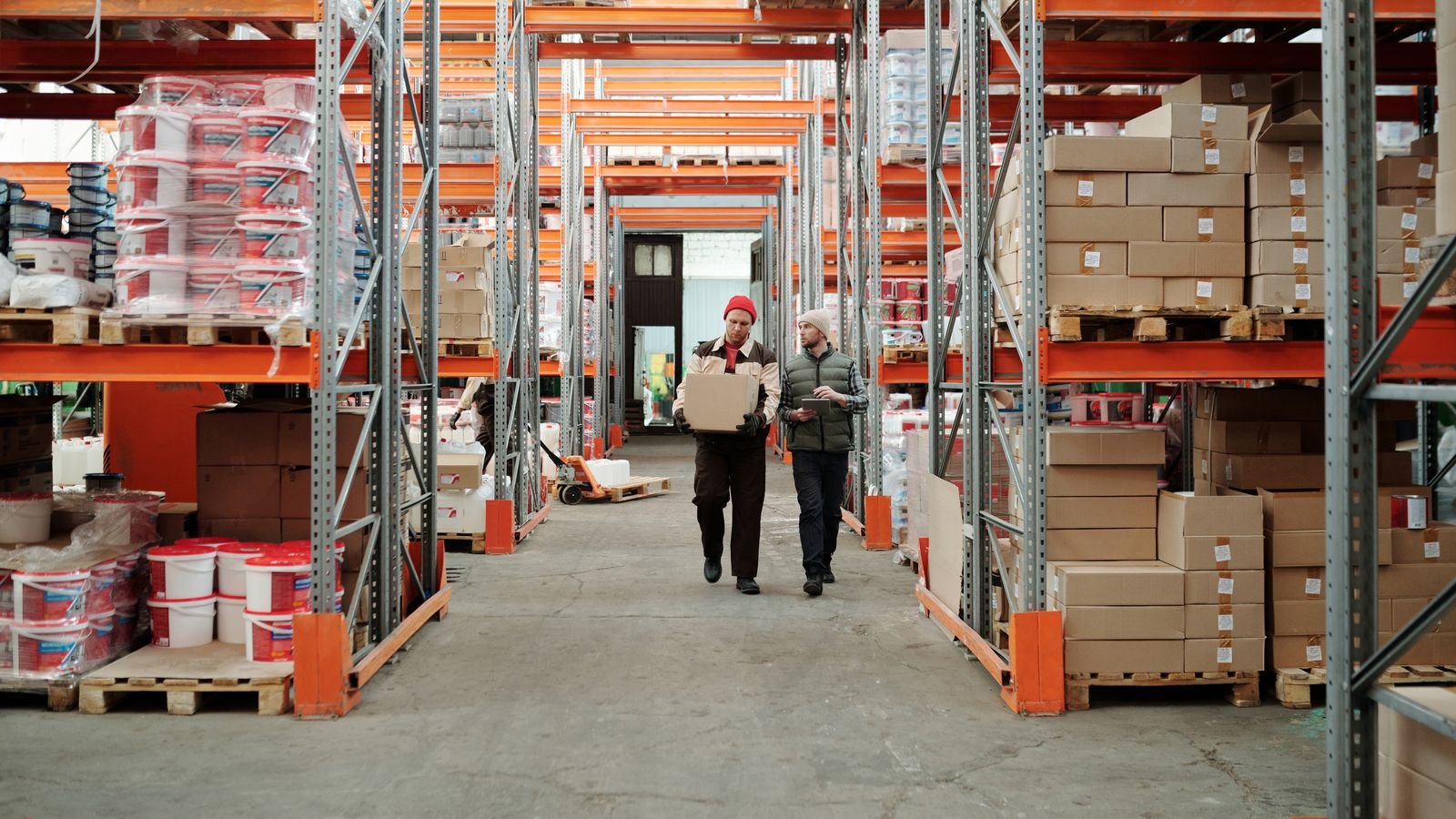
A site that does not stop between November and Christmas
Warehouse cleaning in peak season is a different job from warehouse cleaning in the rest of the year. From the end of November the site runs flat out. Double shifts, agency staff, and trailers arriving around the clock. There is no quiet week to fit a deep clean into, and nobody has the time to stop and tidy.
That does not mean the building can be left. A warehouse that is not looked after in peak season gets slower and less safe week by week. Floors collect debris, lanes get blocked, welfare areas wear out, and small problems turn into stoppages.
The aim is not a spotless warehouse in December. It is a warehouse where nothing gets in the way of the work. This guide covers how to keep it that way, week by week, without stopping the operation.
Think in rhythms, not in one big clean
The mistake most sites make is treating cleaning as an event. In peak season it works better as a rhythm. Every task has a frequency, and the frequency is what stops the mess building up.
- Every shift. Spills, loose packaging in the pick aisles and the bins. These are for your own team, with a clear way to call for help.
- Every night. Machine cleaning of the busiest floor zones, toilets, welfare areas and offices.
- Every week. Dock areas, the yard and the bin stores.
- Every fortnight or so. High-level and racking work in whichever zone is quietest.
- In January. The full reset, once the peak has passed.
Our warehouse cleaning is set up for this. Night shifts, weekends and bank holidays are standard, and work can be planned around operating hours. If you have not done a pre-peak reset, say so when you ask for a quote and the first visits can start with the worst areas.
Packaging is the biggest single mess
In a distribution site, most of the debris is packaging. Stretch wrap, strapping, cardboard, broken pallet boards and loose labels all end up on the floor. They look harmless. They are not.
Stretch wrap winds round the wheels of trucks. Cardboard dust settles on everything. A scrap of strapping on a smooth floor is a slip risk. Piles of packaging near the doors and the back of the racking also add to the fire load of the building.
The responsible person for a warehouse has to carry out a fire risk assessment under the Regulatory Reform (Fire Safety) Order 2005. The government publishes a fire safety risk assessment guide for factories and warehouses aimed at employers, managers, occupiers and owners, and it covers storage warehouses. Waste and packaging are fuel, and keeping fuel under control is a basic part of any assessment. Tell your cleaning contractor what yours says about waste, and agree who clears what.
A simple rule helps. Flatten and bale packaging at the point it is created. Move it to the waste area at the end of every shift. Never let it collect in a corridor, at the end of an aisle or against a fire door.
Keep traffic lanes and floor markings working
In peak season the floor is a road. Trucks and pedestrians share the same building at higher volumes, and the markings that keep them apart do most of the safety work. Dust and tyre marks wear those markings down faster than usual.
Clean floors keep the lines visible. They also keep trucks running properly, because grit and spilt product damage tyres and make loads less stable. Our floor cleaning uses ride-on scrubbing machines and high-speed buffers, and anti-slip treatment can be applied where a surface needs it.
The key is sequencing. Machines should not be working in a lane while it is carrying live traffic. Agree with the shift lead which zone is free and when, and let the cleaners work through the building zone by zone. That is far safer than a machine moving through a working aisle.
Dock doors in winter
The dock is where the weather comes in. Rain runs off trailers, wet leaves blow across the yard, and grit is carried onto the floor on tyres and boots. In winter a dock door area that was dry in September can be slippery all day.
- Sweep the yard and the dock apron more often than in summer.
- Use matting at pedestrian doors, and swap it when it is soaked.
- Dry the floor rather than mopping it wet, particularly at the door and the dock leveller.
- Check drains and gullies so standing water has somewhere to go.
External yard and car park sweeping is part of our service. It is worth adding to the schedule from now, not once the first wet week has already caused a near miss.
Dust, racking and the work you do not do in peak
Dust builds up on racking, beams and pipework all year, and it comes to a head when the volume of cardboard goes up. High-level cleaning is a real job. We cover racking, beams and pipework, and dust control and extraction.
It is not, however, a job for the middle of a live shift. Falling dust over open pick faces is a problem for product and for people. Do it zone by zone, at the quietest time you have, and finish the high-level work before the floor clean in each area. Anything that can wait until January should wait.
Welfare areas on double shifts
When a site runs two shifts, the canteen, toilets and changing areas never get a break. They are used from early morning until night, and they are cleaned in the same gap as everything else. That gap is short.
Stagger the work. A quick check by your own supervisors at mid-shift catches the obvious problems. A proper clean follows at handover or overnight. Agree who restocks soap, paper and bin liners, because those are the first things to run out and the first things staff notice.
Spills and leaks, the first five minutes
Every warehouse has spills. Hydraulic oil from a truck, a split case of liquid, a leaking pallet. What matters is the first five minutes. A spill left alone gets driven through, spread across the building and tracked into the welfare areas.
Put spill kits where the spills happen, and make sure everyone knows where they are. Block off the area, soak up the liquid and call for help if it is more than your team can handle. Our service includes spillage clean-up and stain removal, so a larger spill can be added to the next night’s work instead of being left to wear into the floor.
Agency staff and the habits that keep a floor clear
Peak season brings people who have never seen your building. A five-minute housekeeping talk in their first shift pays back quickly. Show them where the bins and baling points are, what to do with stretch wrap, and who to tell about a spill.
The habit to build is simple: clear as you go. If the person who creates the mess also moves it, the cleaners spend their time on cleaning rather than on clearing. That is the difference between a floor that stays usable and one that has to be rescued every night.
A weekly walk that takes ten minutes
You do not need a complicated audit. Walk the site once a week with a simple list and score each area as clear or not clear. The same person should do it, at the same time, so the results can be compared.
- Are the pick aisles and traffic lanes clear of packaging?
- Are floor markings visible from a truck seat?
- Are the bins and baling points emptied on time?
- Are welfare areas stocked and clean at handover?
- Are dock doors, drains and the yard in good order?
Share the results with your cleaning contractor. If the same area fails twice, change the schedule for that area rather than hoping next week is different.
What to agree before the peak
A short written plan saves a lot of argument in December. It does not need to be long. It needs to say who does what, when, and who to call.
- The weekly schedule, by zone and by night.
- The areas that are off limits at certain times, and who tells the cleaners.
- Where the cleaners park, how they get in, and who holds the keys and alarm codes.
- Your site rules and any permit or induction requirements for contractors.
- A named contact on each shift, and a way to reach them.
- A short review every week or two, to move effort to wherever the problem is.
Getting it started
If you run a warehouse or distribution site in Salford, Middleton, Rochdale, Bury, Whitefield or elsewhere in Greater Manchester, there is still time to put this in place before the peak. We start with a site assessment and follow with a detailed quote covering the scope, the frequency and the scheduling. For the wider picture of what we do across commercial premises, see our commercial cleaning in Manchester page, then tell us about your site, your shift pattern and the areas that worry you most.