
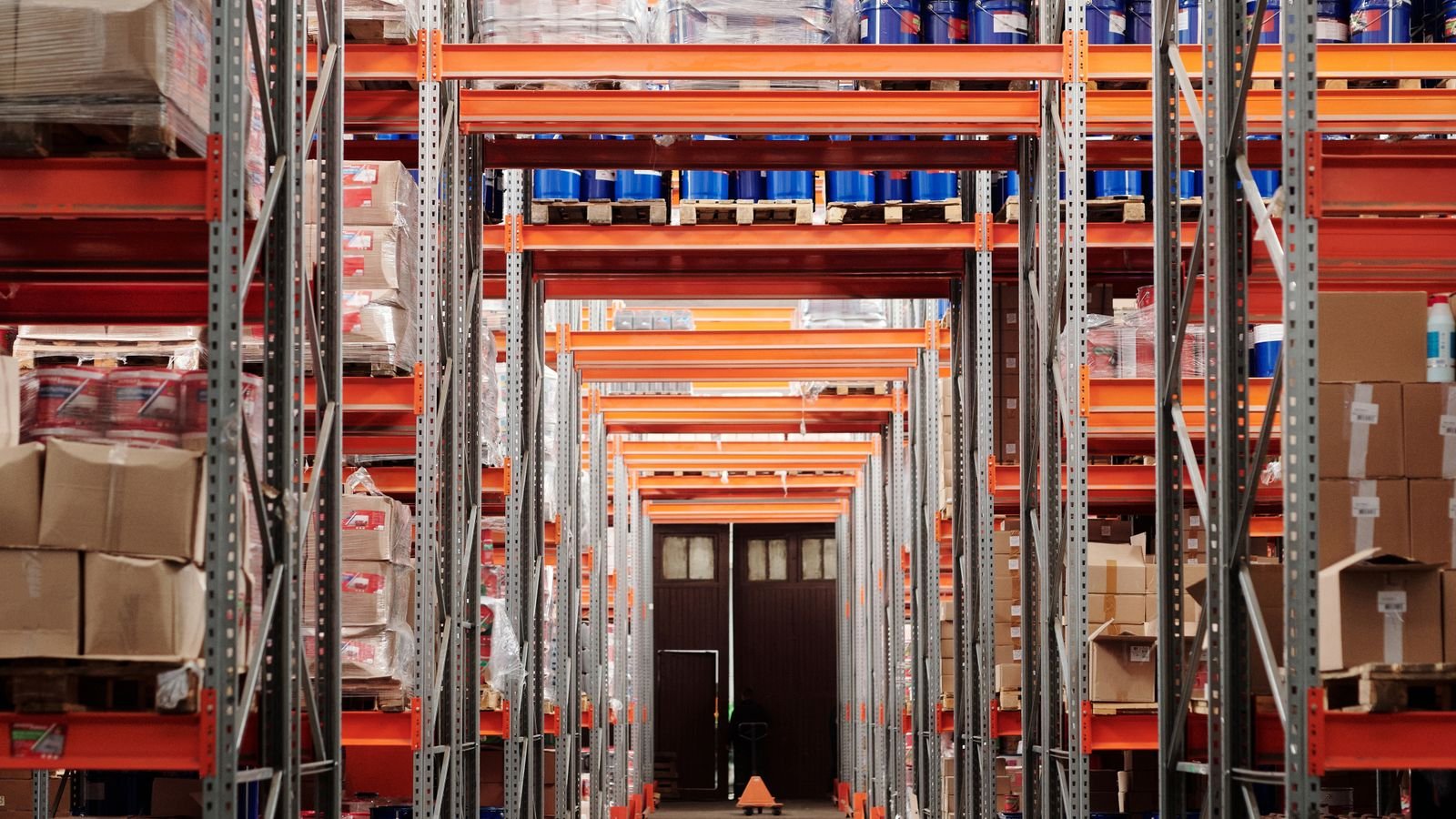
The dust nobody sees until it falls
High level cleaning is the part of a clean that sits above head height. Think of beams in a warehouse, light fittings in an office, the tops of shelving in a shop and the ledges, pipes and vents that never get wiped in a normal visit. Dust settles there for months. Then someone opens a door, the draught shifts it and it lands on a clean desk or a display.
This kind of cleaning also carries the most risk to the cleaner. It means working at height, and falls from ladders are a well known cause of injury at work. A business that books it should know how the work will be done and what a safe visit looks like.
This guide is for the manager of a shop, office, warehouse or leisure site in Greater Manchester who needs high level work done. It explains what the rules say about ladders, which questions to ask and how to prepare the area.
What counts as high level cleaning
There is no fixed height. In practice, anything a cleaner cannot reach from the floor with a standard pole falls into this group. Typical jobs include the following.
- Light fittings, diffusers and ceiling tiles in offices and shops.
- Beams, pipework, ductwork and cable trays in warehouses and units.
- The tops of racking, shelving, wardrobes and display units.
- High windows, skylights and internal glazing above doors.
- Air vents, grilles and extractor covers.
- Signage, banners and the tops of walls where dust and cobwebs collect.
Some of this can be done from the ground with extending poles and the right attachments. Some of it cannot. The rest of this guide is about the second group.
Ladders are allowed, with conditions
People are often surprised to learn that ladders are not banned. The Health and Safety Executive says so directly in its guidance on the safe use of ladders and stepladders. The law asks for a sensible, proportionate approach to managing risk. A ladder can be a practical choice for a low risk task of short duration. The HSE adds that it should not automatically be the first choice.
The HSE explains when a ladder is acceptable. It can be used when an assessment of the risk has shown that equipment with a higher level of fall protection is not justified. That is because the risk is low and the task is short, or because existing features of the workplace cannot be altered. Short duration alone is not the deciding factor. The risk must be considered first.
In other words, the right question is not how long the job will take. The right question is whether a ladder is the safest sensible way to do it.
The 30 minute guide
The HSE gives a rough guide on time. If a task would need someone to stay up a leaning ladder or stepladder for more than 30 minutes at a time, it recommends using alternative equipment. That could be a podium, a platform or a mobile tower.
For high level cleaning this matters a lot. Wiping a few light fittings in a corridor may be a short job. Cleaning a whole run of beams or a ceiling grid in a shop is not. The longer and more repetitive the job, the stronger the case for proper access equipment.
A contractor who says a ladder is fine for everything is not applying the guidance. A contractor who explains why the equipment suits the job is.
Matching the equipment to the job
There is a range of options, and the safest one that does the job is the right one. A pole with the correct attachment keeps both feet on the floor. A stepladder suits a short task, such as a single light fitting. A podium or platform gives a stable place to work for longer. A mobile tower suits a long run of beams or a large ceiling area. A very high or awkward space, such as an atrium, calls for a specialist team with powered access equipment.
Your contractor should be able to say which option they plan to use in each area, and why. That one answer tells you whether the job has been planned or guessed.
Where a ladder can be used
The HSE has a clear list of the conditions for putting a ladder in place. Read it as a checklist for the cleaning visit.
- Firm ground, and level ground. The HSE says to use proper levelling devices, not bricks, blocks or timber.
- A clean, solid surface. Oil, moss, leaf litter and loose material such as sand or packaging stop the feet from gripping.
- A floor that is not slippery. The HSE notes that shiny floor surfaces can be slippery even without contamination.
- A position where vehicles will not strike it. Use barriers or cones where there is any traffic.
- A position where doors and windows cannot push it over. Secure them where possible, but not fire exits.
- An area where the public cannot walk underneath or get too close. Use barriers or cones, or as a last resort a person standing guard at the base.
- A place where the ladder can be secured.
Look at that list as a manager. A polished showroom floor, a busy shop aisle, a warehouse bay with forklift traffic and a lobby with a revolving door are all difficult places for a ladder. They can still be cleaned at height. They need planning, and sometimes a different piece of equipment.
Competence matters
The HSE says that anyone using a ladder must be competent, or must be working under the supervision of a competent person while being trained. Competence comes from a mix of training, practical and theoretical knowledge, and experience.
It lists what the training should cover. That includes how to assess the risks of using a ladder for a particular task, when it is right to use a ladder and when it is not, and which type of ladder to use and how to use it. This is more than showing someone which end goes up.
For you, it comes down to a straightforward question. Who will be at height on your site, and how were they trained for it? A short, specific answer is what you want to hear.
Prepare the area before the team arrives
A lot of the safety on the day depends on the space being ready. A few simple steps help.
- Clear the floor below the work area. Stock, boxes and furniture make a ladder unstable and a fall worse.
- Move the public and staff away. Close an aisle or use a side of the building that is out of use.
- Tell people what is happening. A sign at each approach is a good start.
- Protect valuable items below. Cover stock, desks and display units, because dust and debris will fall.
- Check ceilings and fittings. If a tile is loose or a fitting is damaged, tell the contractor before they start.
- Agree who is on site. The HSE mentions a person standing guard as a last resort. It helps to know who that would be.
It also helps to choose the right time. Out of hours cleaning means no customers walking below and no staff to protect. Many sites find that an evening or a weekend visit makes high level work easier to do safely.
Dry methods first
High level dust is usually dry, fine and easy to disturb. A vacuum with a long attachment, or a damp microfibre cloth on a pole, collects it. A dry brush sends it into the air. The HSE advice on dust is to vacuum, not sweep. The same sense applies above your head, because what goes up has to come down.
Light fittings need extra care. They should be isolated or switched off, cool and checked before they are touched. Anything that looks cracked, loose or damaged should be reported, not cleaned.
What to ask a contractor
These questions help separate a careful contractor from one who has not thought it through.
- What access equipment will you use for each area, and why?
- Who will be working at height, and how are they trained?
- How do you protect the public and our staff below?
- How do you deal with shiny floors, aisles or loading areas?
- Do you have a risk assessment for work at height, and can we see it?
- How long will the work take, and is it broken into stages?
- Which jobs would you not do from a ladder?
The last question is a useful test. A good contractor will have an answer. Some areas, such as a high atrium or a long run of roof beams, call for specialist access equipment and a specialist team.
Where it fits in a wider clean
High level work is often part of a larger job. It suits a periodic deep clean, a pre-opening reset in a shop, or a quarterly visit to a large unit. Doing it first in the sequence is sensible, because dust falls and the floor is cleaned last.
In a warehouse the beams, pipes and tops of racking need attention on a regular cycle. In a shop, light fittings and the tops of displays matter because customers see them. Each site needs its own plan.
Getting started
If you have a site with dust above head height, tell us what is up there, how high it is and when the area is quiet. We will look at the space with you, agree what can be done safely and put the plan in the quote.