
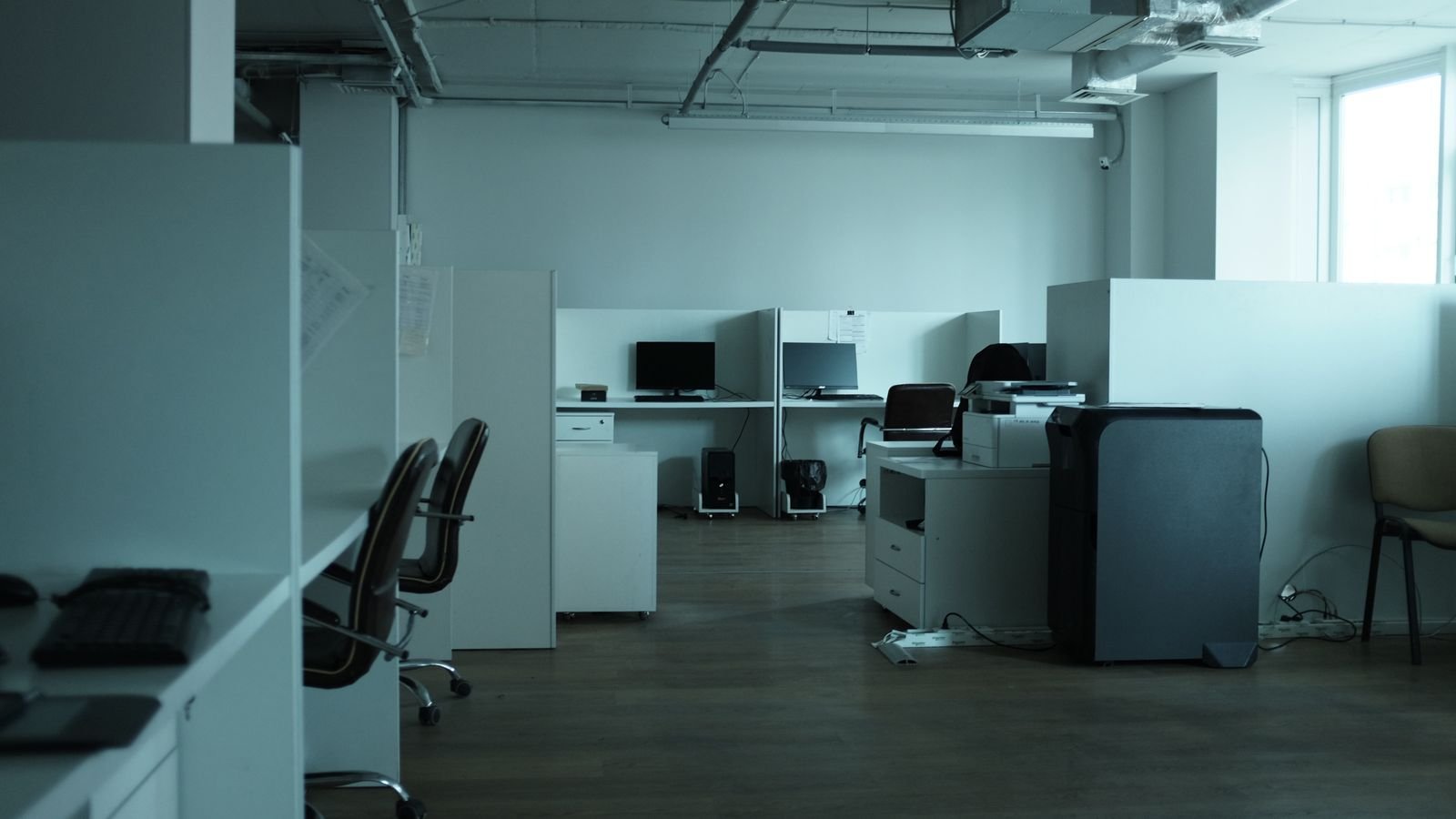
Commercial carpet cleaners working in Manchester city centre spend as much effort on the building as on the carpet. Managed office blocks have rules about when contractors can work, how they get in and how equipment moves between floors. Planning around those rules decides whether a carpet clean runs smoothly or eats into the next working day.
This guide covers cleaning office carpets in city centre buildings: arranging out-of-hours access, getting equipment in through lifts and loading areas, allowing for drying time and dealing with desks and furniture. It is written for office managers, facilities teams and business owners planning carpet cleaning in a managed building.
Start with the building’s rules
If your building is managed by a landlord or agent, ask which contractor rules apply before booking. Requirements vary by landlord, managing agent and tenancy. Confirm whether this visit needs contractor names, insurance details, a method statement or site forms; do not assume every building asks for the same documents.
Access windows vary by building. Confirm when carpet cleaning may take place, whether powered equipment is allowed during office hours and whether noise limits apply. Base the booking on the building rules rather than assuming evenings or weekends are available.
Ask about security. Out-of-hours access may need a security guard to be present, a fob that works after hours or a booking with the building’s security team. Agree who will let the cleaners in and lock up afterwards, so nobody is left waiting outside the building.
Lifts, loading and moving equipment
Equipment may include extraction machines, hoses and solution tanks. Confirm the route from the vehicle to the office, including any loading bay, service lift or corridor booking. The building contact and cleaning provider can agree which route fits the equipment and access window.
If a service lift needs a reservation, confirm the available times and whether the crew can load and unload within them. Include time to bring equipment in and remove it when work ends. Do not book the cleaning slot until the access window and moving route agree.
Ask whether a loading bay or nearby stopping point can be used and whether it must be reserved. Confirm any vehicle restrictions with building management and tell the cleaning provider where equipment can be unloaded. Include the agreed route in the visit plan.
Record the route through reception, corridors and lifts, then ask what protection the contractor will use on each surface. Agree who checks those shared areas at the end of the job and how any marks or damage are reported.
Timing around the working week
Choose a work slot when the treated carpet can remain clear for its required drying period. A period without scheduled office use may help, but Fridays, weekends and holiday closures are not available in every building. Check access hours and staff use before selecting a date.
Drying time depends on the carpet, cleaning method, amount of moisture, humidity, airflow and ambient temperature. Ask the provider what conditions it expects and arrange a check before the next planned use. Follow the installed carpet maker’s instructions rather than promising a fixed reopening time.
Ask building management what heating and ventilation settings will apply during the closure. Do not assume weekend settings will match a normal office day. Share any limits with the cleaner so the method and reopening time account for site conditions.
Desks, chairs and furniture
List the furniture and equipment that need to move, and agree who will handle each item. Do not assume the cleaning crew will move heavy furniture, desks with fixed cables or equipment-bearing cabinets. Confirm which carpet areas will be accessible if an item remains in place.
If staff are expected to clear their desk areas, agree that arrangement in advance. Remove loose papers, cables and personal items from the floor, and confirm who can move or disconnect powered equipment. The list should make clear which spaces are ready when the team arrives.
Agree how furniture will be returned after cleaning and how to protect the carpet while it dries. If the cleaner recommends pads or another barrier under furniture legs, confirm that the material suits the carpet and when it should be removed.
Choosing a cleaning method for office carpet
Identify whether the floor is carpet tile or broadloom, and record the maker or product if known. Different fibres and products may have different care instructions. Ask the provider to explain the method proposed for this carpet and check it against available manufacturer guidance. Our guide to commercial carpet cleaning in Manchester explains the main approaches.
Cleaning methods differ in moisture and drying requirements. Ask which product, equipment and method the provider plans to use, what limitations apply to this carpet and how the area will be checked before it reopens. A maker recommendation for one product should not be treated as universal advice for every office carpet.
Point out entrances, corridors and visible spots before the survey. Ask the cleaner to assess the carpet and explain what the proposed method may improve and what may remain. Agree how untreated or unresolved marks will be recorded after the visit.
Carpet tiles and broadloom carpet
If the office has Interface carpet tiles, the manufacturer’s maintenance guidelines say difficult stains may call for replacing a tile from spare stock; a replacement can look different until it has been walked in. Check whether this applies to the installed product and whether spare tiles are available.
If any tile edge is already loose, show the cleaner before work starts. Ask whether the proposed method could disturb it and how the team will respond if an edge lifts. Agree the repair or escalation route with the person responsible for the floor before the appointment.
For broadloom carpet laid as one continuous floor covering, list the rooms and appearance priorities before work begins. Ask whether each space should be treated in full or as a smaller zone and how the proposed method could affect drying or appearance. The provider should assess the specific carpet rather than infer a result from the room label.
Working with the building’s own cleaning team
If the building has a contractor for shared spaces or your office has a daily cleaning team, tell them about the planned work. Agree the sequence for nearby hard floors, furniture and any tasks that could affect the treated carpet. This handoff helps prevent one team from undoing another’s agreed work.
Confirm who is responsible for corridors and lift lobbies before adding those areas to the job. The answer depends on the tenancy and service agreement. Get permission from the person who controls the space and include those areas in the quote if they are within scope.
After cleaning, give the building team a short handoff that identifies the areas completed, any remaining spots and any care instructions supplied by the carpet manufacturer. Agree who will keep that record and who staff should contact if an issue appears before the floor is reopened.
Keeping people safe while carpets dry
Before work starts, agree which parts of the floor will be closed, how people will be redirected and who can authorise reopening. If a route must remain open, ask the cleaner and building contact to choose another work sequence or time. Put signs at access points as part of the agreed communication plan and keep the reopening decision separate from the sign being present.
For Interface carpet tiles, the manufacturer says the carpet should be completely dry before traffic returns and that drying conditions vary with humidity, airflow and temperature. Apply the actual carpet maker’s instructions to the floor in this office; a sign does not establish that the carpet is ready for use. Agree the reopening check before access is restored.
Regular office carpet care
Set routine care from the carpet maker’s guidance and the site’s use. For Interface products, its guide describes regular cleaning, soil-prevention measures and product-specific spot treatment. Ask the cleaner to distinguish routine vacuuming, spill treatment and periodic cleaning in the agreed plan. Prompt treatment may help with some marks, but it does not guarantee that every stain can be removed.
Plan maintenance from an assessment of traffic, soil and the carpet maker’s recommended routine. If a provider suggests a shorter interval, ask what conditions on this floor support the recommendation rather than assuming every city centre office needs a fixed frequency. Our page on office carpet cleaning in Manchester covers the factors to discuss.
Questions about city centre office carpet cleaning
Can carpet cleaning happen during office hours?
Possibly, if the building permits it, people can be kept away from the work area and the chosen method allows enough drying time. Check access rules and agree the work sequence with the building contact and cleaner.
Do we need to tell the building management?
Ask who controls contractor access and what approvals, documents or lift bookings apply to this visit. Requirements vary by building, so confirm them before agreeing the date.
How long does the carpet take to dry?
It depends on the product, method and drying conditions. Ask the cleaner how it will confirm that the carpet is ready for traffic and follow the instructions for the installed carpet.
Who moves the desks?
Agree who will move each item before the visit. The provider can confirm what its team can handle and which desks, cables or equipment need to be moved by your staff or another contractor.
Can all marks be removed?
No method can be promised to remove every mark. The likely result depends on the carpet, the stain and its history. Ask what the provider expects to improve and agree that remaining marks will be recorded.
Plan your office carpet clean
Tell us the building, the floor area, the carpet type and the times the building allows contractors. We can then plan the clean around the building and your working week. Send us your office details to arrange a visit.