
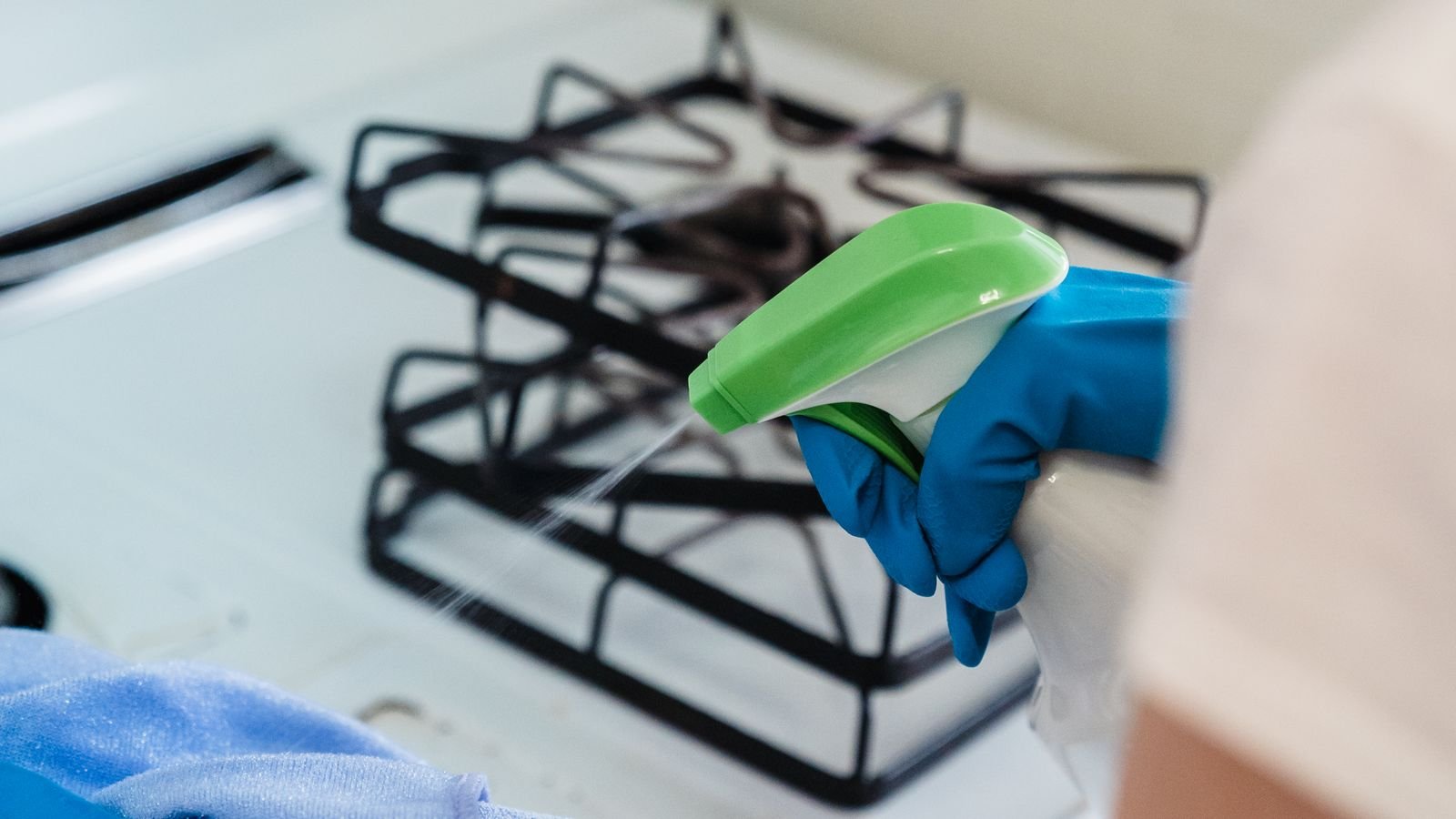
When a food hygiene inspection is expected, most restaurant owners do the same thing. They look around the kitchen, see what is not as good as it should be and start cleaning. That instinct is right, but before paying for professional restaurant cleaning services it is worth knowing what a week of effort can realistically fix and what it cannot. A visible mess can be cleared in days. A missing routine, a gap in the records or a problem with the building cannot.
This guide explains what a restaurant can put right in the week before an inspection is expected, what it cannot, and why a one-off deep clean does not replace a regular schedule. It promises no rating. Inspectors form their own view on the day, and nobody who cleans for you can control it.
What inspectors are looking at
In England, local authority officers inspect food businesses and may award a food hygiene rating from 0 to 5 under the national scheme run with the Food Standards Agency. The rating reflects three broad areas: how hygienically food is handled, the condition of the structure and the level of cleanliness, and how the business manages food safety. Cleaning sits inside the second area and supports the others, but the third, the management of food safety, is largely about systems and records.
That is the key point for a last-week plan. Cleaning is the part you can see and change quickly. The management side is about what you do all year, and inspectors can tell the difference between a kitchen that is cleaned routinely and one that has been scrubbed in a panic.
The Institute of Food Science and Technology, the professional body for food science and technology in the UK, runs a food safety group and publishes material for people who work in the sector. It is a reminder that food safety is a discipline with its own methods, not simply a matter of tidy surfaces. For the legal requirements and the details of the rating scheme, rely on the Food Standards Agency and your local authority. This article does not replace them.
What a restaurant can put right in a week
Several jobs are within reach in a short time, and they make a visible difference.
Seals, edges and hard-to-see places
Rubber seals on fridges and freezers, the edges of work surfaces, the corners of floors and the joints between tiles collect residue. A focused clean with the right products shifts most of it. Check door handles, switches and the places where hands touch repeatedly, since these are easy to overlook.
Behind and under equipment
Fryers, ranges and refrigeration often sit on a floor that is rarely cleaned underneath. Pulling equipment out where it is safe to do so, cleaning behind and under it, and checking for pests or damage is a task that suits a deep clean. Heavy or gas-connected equipment should not be moved casually. Agree with your contractor what can be moved and what stays put.
Extraction surrounds
The hood, its visible surfaces and the surrounding walls and ceiling collect grease. Cleaning those surfaces is possible within a week. Cleaning the ductwork inside the system is a specialist task with its own schedule and records, and it is not something to improvise before an inspection. If duct cleaning is overdue, the honest position is to book it and keep the paperwork.
Storage areas
Dry stores, walk-in fridges and freezers, and chemical cupboards can be reorganised and cleaned. That means clearing floors, wiping shelves, throwing out expired stock, labelling items properly and keeping chemicals apart from food. It is one of the quickest wins, and it also helps staff.
Staff areas and toilets
Staff toilets, changing areas and handwashing stations are checked as part of an inspection. Cleaning them thoroughly, restocking soap and paper towels, and fixing minor faults such as a loose seat or blocked drain is realistic in a few days.
Front of house
A dining room that has been cleaned thoroughly, with floors, tables, chairs and toilets in good order, shows care. It does not replace a clean kitchen, but it is the first thing a visitor sees.
What cannot be fixed in a week
Some problems need more than a scrub.
- Structural defects such as damaged floors, broken tiles, cracked surfaces and gaps around pipes may need a builder or maintenance contractor.
- Pest problems need professional treatment and a record of what was done. A cleaner cannot resolve an infestation.
- Missing food safety management documents cannot be created honestly for a period that has already passed.
- Staff training that has not taken place cannot be backdated.
- Poor habits cannot be changed in a week, and inspectors tend to notice when they are still in place.
Being clear about these limits is a service in itself. The best use of the last week is to do what you can, be honest about what remains and have a plan to address it.
Records that prove routine cleaning
Inspectors are interested in what happens every day, not only what happens before they arrive. A cleaning schedule with signatures or initials showing what was done and when is simple evidence of routine. A schedule has to be accurate to be useful. Filling in a month of entries the night before is exactly the sort of thing an experienced officer will spot.
A realistic cleaning record usually has:
- A list of tasks and their frequency, such as daily, weekly and monthly.
- A way to sign off each completed task.
- A named person responsible for checking it.
- A note of any corrective action, such as a missed task and what was done about it.
If your records have been patchy, start keeping them properly now and say so honestly if asked. A recent, accurate record is better than an old, fabricated one. If a contractor cleans for you, ask for a visit report or checklist you can file with your own records.
Why a deep clean does not replace a schedule
A one-off deep clean before an inspection resets the kitchen, and it is a sensible thing to do. It is not a substitute for an ongoing routine, for three reasons.
First, kitchens get dirty again quickly. Grease, food debris and moisture accumulate within days, so a deep clean that is not followed by good daily habits fades fast.
Second, an inspector sees more than surfaces. They ask about procedures, look at how staff work and review records. A spotless kitchen with no routine behind it invites questions.
Third, inspections are not always announced. A schedule means the kitchen is in decent shape on any day, not only on the day you hope for.
Exclusive Pro Cleaning’s restaurant cleaning page describes kitchen deep cleaning, grease removal, extraction system cleaning and front-of-house presentation as part of its service, and says work is carried out during downtime, usually after service or before opening. That timing matters when you are planning a deep clean around trading hours. A deep clean can be the start of a scheduled arrangement, and the commercial deep cleaning page explains how it reaches behind equipment and inside cupboards.
A sensible plan for the final week
Without promising anything, a sensible order of work looks like this.
- Days one and two. Walk the kitchen with a critical eye, list what is dirty, damaged or missing and book any outside help you need. Start checking records and fill obvious gaps going forward.
- Days three and four. Carry out the deep clean, including behind and under equipment, storage areas and extraction surrounds. Repair what you can.
- Day five. Clean the staff areas, restock handwashing supplies and check labelling and dates.
- Day six. Walk the kitchen again as an inspector would, and fix what you find.
- Day seven. Brief staff on what the inspector may ask, and keep cleaning as normal.
If the inspection date is not known, treat this as a pattern for the next fortnight. The aim is a kitchen that would pass an unannounced visit most days.
What to ask professional restaurant cleaning services
If you are using a contractor, brief them properly. Tell them an inspection is expected, share your cleaning schedule, point out the areas you worry about and ask what they can reach safely. A reasonable provider will tell you what they can do, what they cannot do and what needs another trade. Ask for a written note of the work completed, so you can attach it to your records.
Questions about preparing for an inspection
Can a deep clean guarantee a good rating?
No. A rating reflects hygiene practice, the condition of the premises and food safety management as the inspector finds them. Cleaning helps with only part of that.
Should I clean the extraction ductwork myself?
No. Ductwork cleaning is a specialist job with its own schedule and records. Book it through a qualified contractor if it is due.
How do I prove we clean regularly?
Keep a cleaning schedule with entries signed as the work is done. Contractor visit reports can sit alongside it.
What if the inspector finds something wrong?
Acknowledge it, ask what is required and correct it. Honest records and a clear plan are better than defensiveness.
For restaurants in Manchester planning a deep clean, the wider commercial cleaning service is the place to start. Describe your kitchen, the equipment and the available hours, and agree what is included in advance. Send us the kitchen details to ask about a visit.