
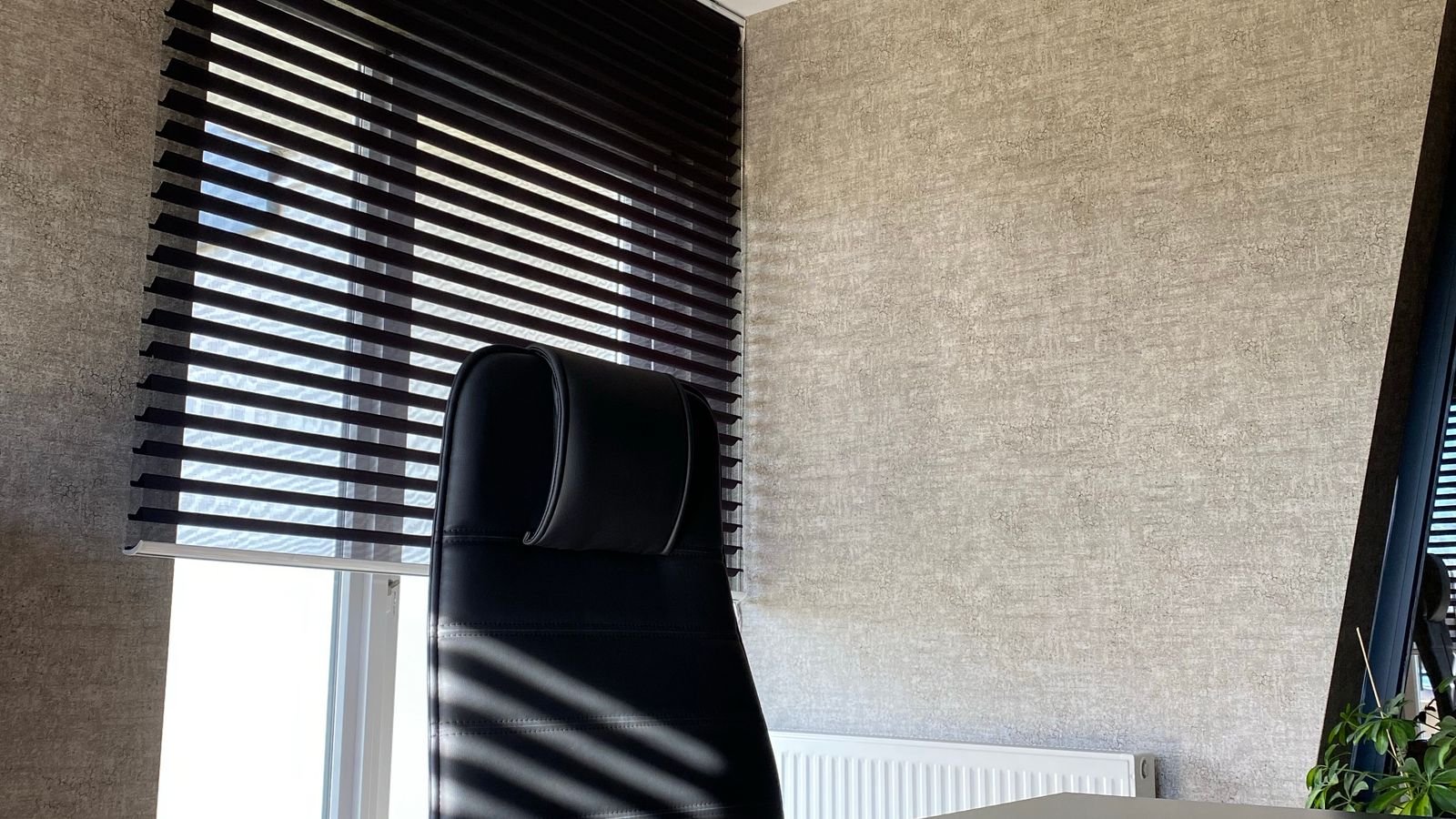
Most office cleaning is written for open-plan floors. Carpet tiles, laminate desks, plastic bins, fabric chairs that have seen better days. Executive cleaning services are a different job from open-plan cleaning. The desks may be veneered or lacquered timber, the chairs leather, the boardroom table polished wood or glass, and the people who use the rooms often leave papers out and keep tight diaries. A standard open-plan specification applied to those rooms can leave streaks on glass, dull a polished surface or move something that should never have been touched.
This guide explains how the care needed on an executive floor differs, how a specification should change, and how a cleaner is briefed so that nothing important is disturbed. It ranks no provider and promises no outcome. It describes what a careful arrangement looks like so you can judge any quote against it.
What makes executive cleaning services different
Four things set it apart from a general office.
- The materials are more varied and more easily damaged. Wood, leather and glass each need their own approach, and a general-purpose spray suits none of them well.
- The contents are more sensitive. Desks hold contracts, board papers and personal items, and the rule for the cleaner is usually look but do not move.
- The timing is tighter. Executives and their assistants often arrive early or stay late, and a boardroom may be needed at short notice.
- The standard is more visible. Clients, candidates and visitors are shown these rooms first, so a smear on a glass table is noticed.
None of this means the cleaning has to be exotic. It means the method is chosen for each surface and the brief is written down.
Wood, veneer and lacquered surfaces
Timber desks and boardroom tables come in several finishes, and the finish decides the cleaning method. A lacquered or varnished surface has a hard film on top, and it usually wants a soft, barely damp cloth followed by a dry one. An oiled or waxed surface behaves differently, because water and strong cleaners can mark or strip the finish. Veneer is a thin layer of wood over another material, and excess moisture at the edges can lift it.
The simplest rule is to find out what the finish is before anyone cleans it. A furniture supplier or an installer can usually tell you. Specialist woodcare brands such as Liberon publish guidance on oils, waxes and varnishes and describe the range of finishes used on interior furniture and woodwork, which is a useful reminder that wooden surfaces are not all treated alike. If you are unsure, an inconspicuous test patch with the intended method is a sensible precaution, and polishing sprays are best left out unless the furniture supplier recommends them.
Practical points for the brief:
- Dust with a clean microfibre cloth, not a dry rag that can scratch.
- Avoid soaking. A cloth should be damp, not wet.
- Lift items on the surface rather than dragging them, and put them back where they were.
- Do not use abrasive pads or general-purpose degreasers on polished timber.
- Report any existing damage, such as heat rings or scratches, so the cleaner is not blamed later.
Leather chairs
Leather seats and office chairs collect skin oils, dust and the odd spill. They also dry out and crack if cleaned too harshly. A cleaner should use a method suited to the leather type, and ideally the product or manufacturer’s care instructions. Some leather is protected by a surface coating and tolerates a damp cloth, while untreated or aniline leather is more delicate and absorbs liquids.
The usual routine for regular visits is light: a dust or a gentle wipe. Deeper work, such as conditioning, is better treated as a periodic task agreed in advance, not something left to a cleaner’s judgement on the day. Stains should be reported, not attacked. A poor attempt to remove a mark often leaves a bigger one, so it is better for the cleaner to leave a note and let the office manager decide.
Glass tables, screens and partitions
Glass is the surface where cleaning quality is most visible. A glass boardroom table shows every smear, fingerprint and trace of polish, and glazed partitions show streaks from every angle when the light changes. Cleaners usually work with a glass cleaner and a lint-free cloth or a squeegee for large panes, and finish with a dry cloth to remove streaks.
Points worth agreeing:
- Whether the cleaner should reach high or awkward glazing, which may need equipment and safe access, or whether that is a separate job.
- Which cloths are used for glass, so that a cloth used on a desk is not used on a table.
- How tabletop glass is lifted or moved, if at all. The usual answer is that it is not.
- Whether glass is cleaned every visit or only the high-traffic areas, such as the boardroom, reception and meeting rooms.
Our guide on cleaning screens and keyboards, and the page on office cleaning, cover the general-office side. The point here is simply that an executive floor often has more glass and less tolerance for marks.
Papers left out and confidential material
On many executive floors, papers are left on desks overnight. The cleaner’s task is to clean around them, and never to read, sort, move or tidy them. That needs to be said in the brief, not assumed.
A workable arrangement usually includes:
- A clear desk policy, where the occupants agree to lock sensitive material away, while accepting that not everyone will always do so.
- An instruction that cleaners do not open drawers, folders or cabinets.
- A rule about waste bins. Some offices want bins emptied and others want paper bins left for shredding handled by a separate service.
- A named person to contact if something looks wrong, such as a door left open or a laptop left unattended.
If your business holds particularly sensitive information, such as in a legal or financial setting, talk through the access arrangements with the provider before the first visit. Confidentiality is a matter of agreed procedure and trust, not just a clause in a contract.
Timing around diaries
Executive rooms are often the hardest to schedule because the people in them keep irregular hours. A cleaner arriving at six in the evening may find a meeting still running. A cleaner arriving at seven in the morning may find the chief executive already at the desk.
Useful ways to deal with it:
- Agree a cleaning window for each room, and share it with the assistants who manage the diaries.
- Let the cleaner skip a room that is in use and return to it, or note it as missed so it can be picked up next time.
- Use a simple handover for last-minute needs, such as a message to the supervisor if the boardroom needs a quick refresh before a meeting.
- Keep a fixed order of work so that the most visible rooms are done first or last, depending on when they are used.
Cleaning contractors who work on a consistent schedule with the same people are better placed to cope with this. The cleaning contractors page describes a dedicated team and account management approach, which suits premises where the cleaner needs to learn what each room expects.
How the specification differs from an open-plan office
A standard open-plan specification might list vacuuming, desk wiping, bin emptying, kitchen and toilet cleaning. An executive specification keeps that backbone but adds detail.
- Named rooms and the order in which they are cleaned.
- Surface notes for each room, such as polished timber desk, leather chairs, glass table.
- A do-not-touch list covering papers, personal items, framed pictures, awards and equipment.
- Product limits, such as only the approved cloth and cleaner for the boardroom table.
- A reporting method for damage, spills and anything unusual.
- A clear statement of anything excluded, such as moving furniture, high-level glazing or specialist furniture care.
It is better to have a longer specification that a new cleaner can follow than a short one that relies on memory.
Briefing the cleaner
The best specification is wasted if the person doing the work has never seen it. A good briefing includes a walk-round on the first visit, where the office manager or an assistant points out each surface and its quirks, and a written copy kept on site. It also helps to name one person who can answer questions, and to tell the cleaner what the room is used for, because a cleaner who knows the boardroom hosts client meetings will pay attention to the glass.
Introduce replacements properly. If the usual cleaner is away, the cover should have the same written specification and a short briefing, not a verbal summary passed along in the corridor.
Questions about cleaning executive offices
Can a normal commercial cleaner look after an executive floor?
Yes, if the specification is clear and the cleaner is briefed. The difference lies in surface care, timing and confidentiality, not in a special kind of cleaner.
Who should decide how polished wood is cleaned?
Ideally the furniture supplier or installer, based on the finish. If that information is not available, use the gentlest method and ask before using any polish.
Should cleaners touch papers on desks?
No. The usual rule is to clean around them and leave them exactly where they are. Write it into the brief.
How often should boardroom glass be cleaned?
It depends on how often the room is used. A boardroom hosting client meetings may want glass cleaned every visit. A rarely used room may only need it weekly.
If you manage executive space in Manchester and want a written specification before a trial visit, contact the team with the room list and surfaces, and ask what is included and what is not.