
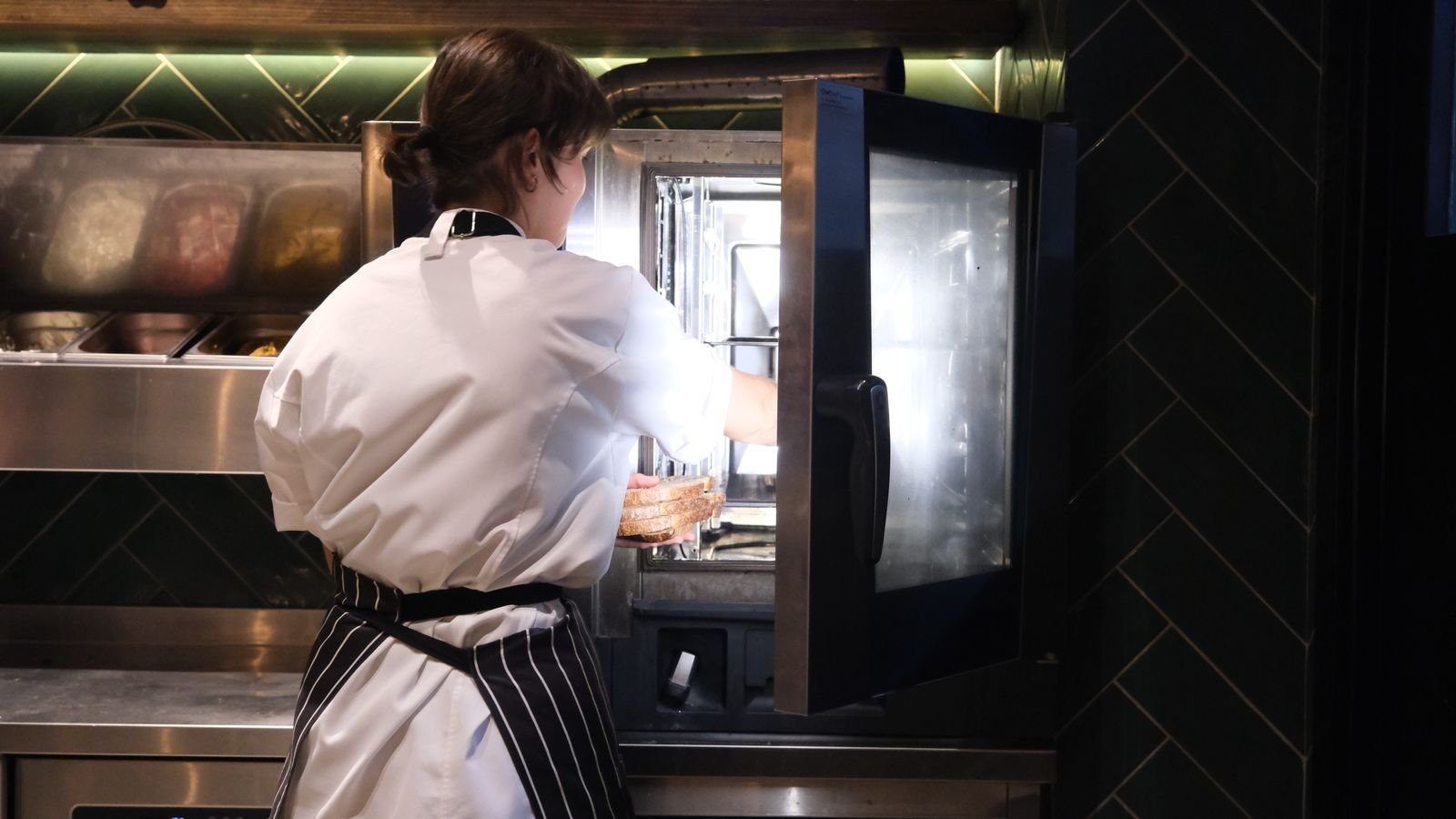
A school or care home kitchen never really stops. Breakfast gives way to lunch, lunch to tea, and in a care home there are late snacks and special diets to think about as well. The ovens at the centre of all this are usually large combination ovens, deck ovens, bratt pans and heavy ranges, and they work hard for set meal times that cannot slip. That makes industrial oven cleaning in an institutional kitchen a different problem from the same job in a restaurant, because the cook cannot simply close for a night and reopen with a fresh menu.
This guide looks at how an oven deep clean can be planned around meal service, how the kitchen keeps feeding people while it happens, what to think about with chemicals in a food area, and which records a catering manager will want to hold afterwards. It is written for the manager who has to organise the clean, not for the person who will do it.
Why institutional ovens get dirty in a different way
A restaurant oven sees a wide mix of food and a lot of splashing. An institutional oven sees the same few dishes in large volumes, cooked at the same times every day. Roast dinners, baked puddings, pies, traybakes and reheated meals all leave fat and sugar on the walls, the door glass, the fan housings and the seals. Because the pattern is so regular, the build-up is regular too. It tends to appear in the same places week after week, and it hardens into a layer that a daily wipe does not shift.
Combination ovens add another layer to the picture. They use steam as well as heat, and some have automatic cleaning cycles. Those cycles help, but they are not a replacement for periodic hands-on work. Door seals, drip trays, vents, fan guards and the gaps around the controls collect residue that a built-in cycle does not reach. A trained cleaner will strip these parts back, clean them and refit them, which a cycle cannot do.
Bratt pans and large ranges bring their own jobs, such as tilting mechanisms, burner surrounds, the edges of hotplates and the splashbacks behind them. All of them benefit from a proper clean at intervals, in addition to what the kitchen team does at the end of each shift.
When the deep clean can be scheduled
The first question is always timing. The oven is in use for most of the day, so the deep clean has to find a window. For schools, the natural windows are the school holidays, weekends and inset days, when the kitchen is quiet or closed. Half-term weeks and the long breaks give the most room, because a combination oven can be taken apart and left to dry without anyone waiting for it. A proper clean of a large oven can take longer than people expect, and it is far better to book it into a window with some spare time than to squeeze it into a Friday afternoon.
Care homes are harder, because meals happen seven days a week. The usual answer is to work in sections. If the kitchen has more than one oven, one can be cleaned while the other covers service. If it has only one, the clean can be planned for the quietest part of the day, perhaps after the main midday meal when teas and snacks need less oven time, and the menu for that day can be adjusted to suit. It helps to speak to the cook in charge early. They know which dishes need the oven and which can be done on the hob, in a microwave or in a different appliance for one day.
Whichever pattern you choose, book the date well ahead and tell the kitchen team. A deep clean that arrives as a surprise on a busy day is a clean that gets cut short.
How the kitchen keeps serving
Some practical steps keep meals going while an oven is out of action.
- Plan a menu for the clean day that does not rely on the oven being cleaned. Soups, stews on the hob, cold dishes and items cooked in advance all help.
- Cook ahead of the clean where it is safe to do so, using your normal cooling and storage procedures.
- If a second oven or a steamer is available, move the heaviest oven jobs there.
- Agree a finish time with the cleaner, and allow for the oven to cool, be cleaned, be rinsed and be dried before it is turned on again.
- Make sure the kitchen knows which oven is out and when it will be back, so nobody loads food into a unit that is still being worked on.
A care home should also think about residents who need specific diets. If a texture-modified or allergen-free meal normally depends on a particular oven, plan that meal carefully on the day. The catering manager is best placed to do this, and the cleaning contractor should be told which appliances matter most.
Food safety and the chemicals used
Oven cleaning products are strong. Caustic gels and sprays are common for baked-on carbon and grease, and they need respect. The key points for a kitchen manager are these.
- Ask the contractor what products they plan to use and ask for the safety data sheets before the visit.
- Check that the products are suitable for use on food contact surfaces and that the method includes thorough rinsing.
- Agree that nothing is sprayed or left near open food, ingredients or clean utensils. Food is covered or moved out of the area first.
- Make sure the oven interior is rinsed, wiped and, where needed, left to dry before it is used again. A trace of cleaning product in an oven is a real food safety issue.
- Ask how the contractor will protect floors, drains and neighbouring equipment from splashes.
Many kitchens like to run a short check after the clean. A quick look inside, a wipe with a clean cloth and a test heat before the first meal can confirm that nothing is left behind. A good contractor will build that step into the visit and will not mind you asking.
For wider context on the care sector, the National Association of Care Catering describes itself as a membership body for those who provide catering in care settings. Bodies of this kind are a useful reminder that food in these settings is served to people who may be more vulnerable than the average diner, which is why the standard of cleaning matters so much.
The records a school or care home keeps
Schools and care homes are inspected, and kitchen managers are used to showing their paperwork. An oven deep clean should leave a trail of its own. At a minimum, hold on to the following.
- The date of the clean and the name of the contractor.
- A short description of what was cleaned, such as the oven interior, door and seals, fan housings, trays and racks.
- The names of the products used, with the safety data sheets on file.
- A note of any damage, worn seals or faults that were noticed and passed to the maintenance team.
- A sign-off from the person in charge of the kitchen that the oven was checked after cleaning.
Keep these with your other cleaning and maintenance records so that they are easy to find. If you use a written cleaning schedule, add the deep clean to it as a periodic task with a due date, so that the next one is not forgotten.
Work that belongs to the kitchen and work that does not
Industrial oven cleaning does not replace the daily routine. The kitchen team should keep wiping down oven fronts, removing loose debris and cleaning removable trays between deep cleans. What a contractor adds is the periodic, skilled work that needs time, equipment and training.
Some work belongs to other trades. Gas safety checks, electrical testing, servicing of a combination oven’s water system and repairs are for qualified engineers, not cleaners. A cleaning contractor who is asked to do these things should say no, and one who offers to is a warning sign. Likewise, the extraction canopy and ductwork above the ovens are separate jobs with their own schedules.
What to ask a contractor
Before you book, ask a few direct questions.
- Have you cleaned this type of oven before, and how do you protect the controls and seals?
- Which products do you use, and can I see the safety data sheets?
- How long will the oven be out of use, and how long must it dry before use?
- What do you do with waste water and residue?
- What will I receive in writing afterwards?
Exclusive Pro Cleaning describes its oven cleaning service for commercial kitchens, and a kitchen with several appliances may find it useful to read what is covered. For kitchens that also want the surrounding areas cleaned in the same visit, the deep cleaning page explains how a wider clean is arranged, and the commercial cleaning overview sets out the full range of services. Ask for a written scope in any case, so that you know exactly which appliances and which parts are included.
Planning the year
A simple rhythm works well for most institutional kitchens. Book the main oven deep clean for a long holiday, add a lighter clean at another quiet point in the year, and write both into the catering calendar when the dates are known. If the kitchen has a heavy period, such as a seasonal menu or a busy event, plan a clean just before it so that the equipment starts clean. Review the arrangement once a year with the contractor and adjust the frequency if the ovens are getting dirty faster than expected.
Questions about oven cleaning in school and care home kitchens
Can the oven be cleaned during term time?
It can, if the kitchen has a spare oven or can adjust the menu for the day. Holidays and weekends give more room and are usually easier.
Who is responsible for safety data sheets?
The contractor should supply them for any product they use, and the kitchen should keep them on file.
Does an automatic cleaning cycle replace a deep clean?
No. It helps between visits, but seals, vents, fan guards and many other parts still need hands-on cleaning.
How often should an institutional oven be deep cleaned?
It depends on the oven, the menu and how heavily it is used. Many kitchens agree a regular interval with their contractor and adjust it after the first few visits.