
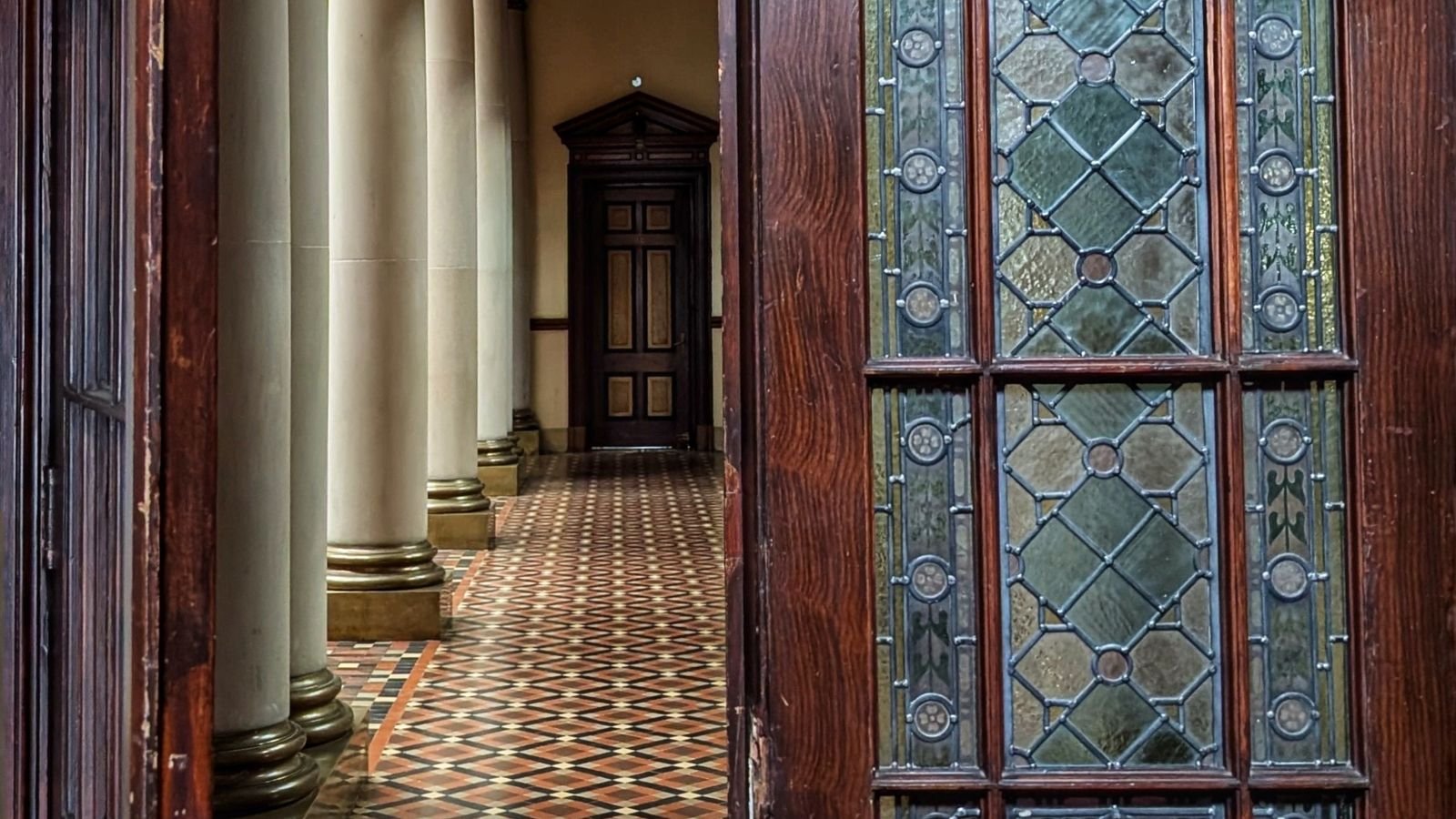
If you have a Victorian or Edwardian house in Manchester, there is a fair chance it came with a tiled hallway. The geometric patterns in red, black, buff and blue are one of the great features of older terraces and semis in Chorlton, Withington, Didsbury, Sale and many other areas. They have survived a century or more of footsteps, but they have also survived a century of mops, paint, carpets laid over them and the wrong cleaning products. Victorian tile floor cleaning needs patience and the right approach, because the tiles are tougher than they look and more fragile than they should be.
This guide explains what these floors are made of, how to clean them safely, what sealing does and does not do, how to deal with cement and paint, and when it makes sense to call a specialist restorer.
What you are looking at
Most original hallway floors are one of two types. Encaustic tiles are made from different coloured clays pressed together so that the pattern runs through the thickness of the tile. Geometric tiles are smaller pieces of coloured clay laid out to form a pattern. Both are fired at high temperature, which makes the surface hard, but both are porous underneath their glaze or surface layer, and old grout and lime-based mortar are softer than modern materials.
The surface wear on these floors tells a story. Dull areas usually mean the original surface has worn through, and the clay beneath is more absorbent. Cracked or loose tiles usually point to movement in the floor below, damp or old repairs. A good cleaner starts by looking at the floor, not at the product.
Why harsh products do damage
Acid and strong alkalis are common cleaning mistakes. Spirit-based and acidic products were once recommended for removing cement and grout haze, and some are still sold for the purpose. They can etch the surface of old tiles, dissolve lime-based grout and leave the floor dull and rough. Strong alkaline cleaners, such as heavy-duty degreasers, can leave a residue that dulls the surface and draws dirt. Bleach can lighten colours and damage grout.
The safer rule is to start with the gentlest method and move up only if you need to. That means a neutral pH cleaner, warm water and a soft brush or mop, with plenty of rinsing. If the floor has been sealed, use only products that are compatible with the sealer. If you are unsure, test in a small, hidden corner.
A safe way to approach Victorian tile floor cleaning
For a regular clean of a sound Victorian hallway, a simple approach works.
- Dust or vacuum the floor first, with a soft brush attachment, so that grit does not scratch the surface.
- Mix a neutral floor cleaner with warm water according to the instructions on the label. Do not use more than recommended, because the excess will stay in the grout.
- Use a damp mop, not a soaking one. Too much water can seep into porous tiles and old grout, and into the floor structure below.
- Work in sections, changing the water often so that you are not spreading dirty water around.
- Rinse with clean water and a fresh mop head, to lift the residue.
- Dry with a clean cloth or let the floor air-dry with the door open.
For ingrained dirt in the grout, a soft brush and a little extra time are better than a stronger product. A professional cleaner uses the same principle, with equipment that applies cleaner and lifts it without flooding the floor. Exclusive Pro Cleaning describes its home deep cleaning service, which can include hard floors as part of a thorough clean, and its one-time cleaning option is useful if you want a single visit before a sale or a family event.
What sealing does and does not do
Many Victorian floors have been sealed at some point, often with a wax, an acrylic or a resin sealer. A sealer sits on or in the surface and makes the tile easier to wipe and less likely to absorb spills. Done properly it helps. Done badly it causes trouble.
Sealers do not make a floor immune to wear. They can yellow, peel or become cloudy, especially if applied to a floor that was damp or not clean. A film-forming sealer can also trap moisture in the tile and the floor below. Wax sealers need re-polishing and attract dirt where they have worn. If you see white patches, flaking or a hazy look, the sealer may be failing.
Before sealing a floor, it must be clean and dry, and old products must be removed. This is why a restorer often strips the old finish first. If your floor was sealed years ago and looks tired, do not simply add another coat. Find out what is on it, and get advice.
Cement, plaster and paint splashes
Houses that have been renovated often have splashes on the hall floor, and paint is especially common. The approach depends on what the splash is.
Paint
Fresh paint can usually be lifted with a damp cloth. Dried emulsion can be softened with warm water and a plastic scraper, working gently so that the tile is not scratched. Gloss paint needs a suitable solvent, tested first on a small area. Avoid metal scrapers, which gouge the surface.
Cement and plaster
Cement splashes harden quickly and stick fast. Scraping them off can chip the tile. Plaster is softer and often comes off with water and patient work. Acid-based cement removers are a classic cause of damage on old tiles, so do not use them unless a restorer advises it. If the deposit is thick or the tile is delicate, leave it for a specialist.
Careful removal and protection suit old tiles better than harsh chemicals. Exclusive Pro Cleaning’s commercial floor cleaning page explains how floors are matched with the right method, a principle that applies as much in a hallway at home as in a shop.
Signs that you need a restorer
Cleaning can only do so much. A specialist tile restorer is the right call when:
- Tiles are cracked, loose or hollow-sounding when tapped.
- Grout is crumbling or missing in many places.
- There are thick, old layers of sealer or paint that will not come off.
- Large areas have lost their surface and look flat and stained.
- There is evidence of damp, such as white salt deposits rising from the floor.
- Missing tiles need matching, which is a specialist skill.
A restorer can strip old finishes, repair and replace tiles, re-grout with a suitable lime-based mix and reseal with a breathable product. It costs more than a clean, but on a floor that matters to the house, it is often worth it.
Preparing a hallway for a deep clean
If you have booked a cleaner, a little preparation helps. Clear the hall of shoes, mats, coat stands and anything else that sits on the floor, so the whole surface can be reached. Tell the cleaner about any known problems, such as loose tiles, an old patch repair or a previous sealer, because these change how the floor is approached. Mention if you have underfloor heating or a cellar below, and say whether the floor has ever been wet from a leak. A good cleaner will want to look first, test a small area and explain what they plan to do before starting. If you are selling or letting the house, a careful clean of an original hall floor is an improvement that buyers tend to notice, because they see the pattern as soon as they step through the door.
Looking after the floor day to day
A few small habits protect a Victorian hallway.
- Use doormats at the front door to catch grit and wet.
- Sweep or vacuum regularly. Grit is what scratches tiles.
- Wipe up spills quickly, especially wine, oil and anything acidic.
- Put felt pads on furniture legs.
- Avoid steam mops, which push hot water into the grout and the porous tile.
- Be careful with rugs. A rubber-backed mat can trap moisture or stain the floor, so use a breathable one.
Heritage and good advice
Original tiled floors are part of the character of older homes. The Victorian Society is a charity that campaigns for Victorian and Edwardian buildings, and it is a useful starting point if you want to understand the history of your house and why materials matter. Local conservation officers and specialist restorers can also help if your house is in a conservation area or is listed. If you are unsure about a hallway floor, contact Exclusive Pro Cleaning with photographs before anything is applied.
Questions about Victorian tile floors
Can I use vinegar on Victorian tiles?
It is better not to. Vinegar is acidic and can etch old tiles and soften lime-based grout. A neutral cleaner is a safer choice.
Should I seal my hallway tiles?
Only after they are properly cleaned and dry, and with a product suited to old, porous tiles. Poor sealing can trap moisture and look worse than no sealer.
Why does my tiled floor look dull after cleaning?
It is often a residue from too much cleaner, a failing old sealer or a worn surface. Rinsing well and finding out what is on the floor are the first steps.
Can a cleaner remove cement from encaustic tiles?
Sometimes, with care. Thick deposits and delicate tiles are better left to a restorer, because the wrong approach can damage the surface.