
More offices now have showers. Cyclists, runners and gym-goers use them before work, and some buildings advertise them as a benefit. But showers in an office are used unevenly. Some are busy at eight in the morning and silent for the rest of the day, and some may sit unused for days or weeks. That pattern matters for cleaning and for water hygiene. Damp seals grow mould. Drains collect hair. Lockers and benches pick up sweat and dust. And outlets that run only now and then can hold stale water. This guide explains office shower cleaning, what a cleaning team does, and how that differs from the water hygiene arrangements the building should already have in place. It does not claim that a cleaning contractor carries out water testing, which is a separate specialist service.
Why showers in offices are different
A household shower is used every day by a few people. An office shower is used in bursts, by different people, with towels, bags and kit being dragged in and out. The room is damp and often poorly ventilated, because it was added to a building that was not designed for it. Changing rooms add benches, lockers, hooks and floors that get wet and dirty.
The result is a space that looks fine at a glance and goes wrong quickly. Mould, limescale, soap scum and a musty smell appear fast if cleaning is not regular. The problem is easy to miss because the room is out of the way, and no one owns it.
What a cleaning team does
A cleaning team handles the visible hygiene of the shower and changing area. A typical scope includes the following.
Shower trays and floors
The tray or floor is cleaned with a suitable bathroom cleaner and a brush, paying attention to the corners and the edges where soap and hair collect. Non-slip surfaces need a stiff brush to lift dirt from the texture. Floors in the changing area are swept and mopped, and any wet areas are dried.
Walls, screens and fixtures
Tiles, glass screens, taps, shower heads and fittings are cleaned. Limescale is treated with a descaling product used as directed. Glass screens are wiped and squeegeed. Fittings are polished and dried.
Seals and grout
Silicone and grout hold moisture and are where mould tends to start. A cleaning team cleans surface mould and dirt from seals and grout lines with suitable products, and reports any sealant that is cracked, peeling or discoloured throughout, since that needs repair or replacement by a tradesperson.
Drains and hair traps
Drain covers and hair traps are cleared of hair, soap residue and debris at every visit, and the area is cleaned and disinfected. A blocked or slow drain, or one that smells, may need a plumber. Hair traps are the simplest part of the system to keep clear and make the most difference.
Benches, lockers and hooks
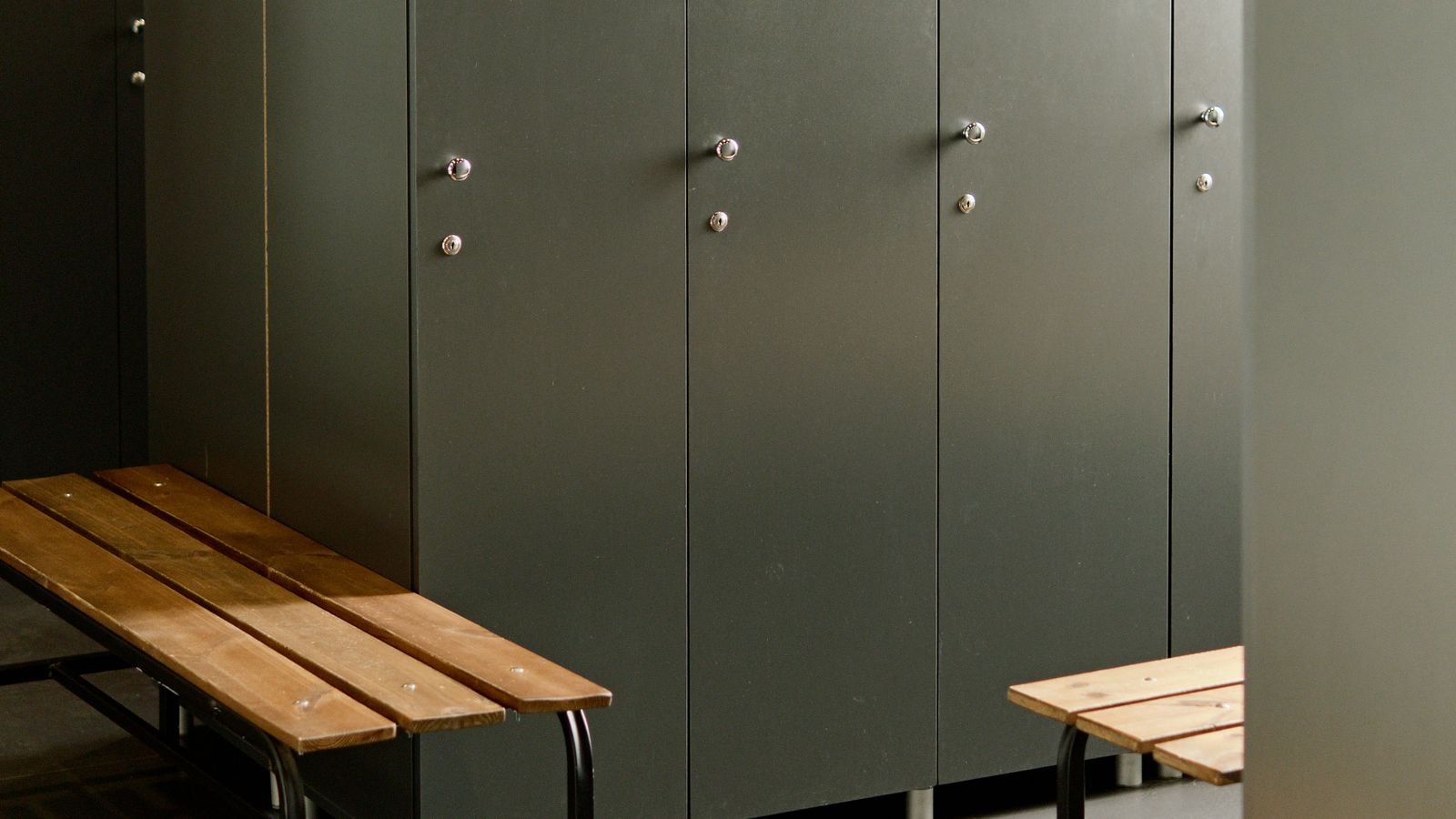
Benches are wiped down and disinfected. Lockers are cleaned on the outside, and the cleaner checks that they are not being used to store wet or dirty items for days. Hooks, hangers and rails are wiped. Floors under benches are cleaned, and the area behind and under lockers is included periodically.
Toilets, basins and mirrors
Changing rooms often include toilets and basins, which follow the usual washroom routine. Mirrors are cleaned and the area around them is wiped.
Bins and consumables
Bins are emptied and relined. Soap and paper towels are replenished according to the agreement. Towels, if the building supplies them, are handled by a laundry service or the building team, and the cleaning team does not usually launder them.
Ventilation
A cleaner can wipe extractor fan grilles, but the fan itself and the ducting need maintenance by the building team. A damp room with a weak or noisy fan will grow mould regardless of how often it is cleaned.
How often to clean
The right frequency depends on how many people use the showers. A room used by a handful of people each day will need cleaning at the end of each working day, or at least several times a week. A less busy room may need a regular clean and a weekly deep clean. Because the room is damp, cleaning once a month is rarely enough. Ask the cleaning provider for a schedule that matches the use, and review it after a few weeks.
Users can help. A sign asking people to squeegee the screen, take their belongings with them and put towels in a laundry bin helps. Staff who run the showers may also be happy to wipe the floor after a busy morning.
Water hygiene and little-used outlets
Showers are also a part of a building’s water system, and water hygiene is a separate subject from cleaning. Water that sits in pipes or in shower hoses and heads for long periods can encourage bacterial growth, including Legionella in some conditions. That is why buildings with water systems are expected to manage the risk, usually through a risk assessment and a control plan. The plan may include flushing little-used outlets, temperature checks and cleaning and descaling of shower heads and hoses at set intervals.
Cleaning teams do not usually run these controls, and Exclusive Pro Cleaning does not claim to carry out water testing or water hygiene management. These are tasks for the building owner or manager and a competent water hygiene contractor. The Legionella Control Association is a body linked to the water systems safety sector, and its website gives an idea of the professional field. If your building has showers, ask the person responsible for the premises who manages water hygiene, what the schedule is and whether the showers are included. A cleaning contractor can help by following the agreed routine, such as running the shower for a set time as part of a visit if the building manager asks and has written it into the plan, and by reporting problems.
What the cleaner should report
A good cleaner is a useful pair of eyes. Ask them to report any of the following to the building manager.
- Slow or blocked drains.
- Persistent mould that returns quickly after cleaning.
- Cracked tiles, failed silicone or damaged grout.
- Leaking taps, shower heads or hoses.
- Strong or musty smells.
- Discoloured or unusual water.
- Showers that have not been used for a long time.
- Damaged or missing hair traps, mats or drain covers.
Report them promptly, so that the right trade can be called.
Planning a deep clean
Regular cleaning keeps the room presentable, and an occasional deep clean tackles what routine work cannot reach. A deep clean might include descaling of fittings, a thorough scrub of grout lines, cleaning behind and under benches and lockers, high-level dusting and cleaning of vents and grilles. Exclusive Pro Cleaning describes its deep cleaning service for commercial premises on its website, and its office cleaning page explains the routine service that sits alongside it. The commercial cleaning overview lists the wider services that may be useful.
Setting up the arrangement
Include the showers and changing rooms in the written scope, with a list of tasks and a frequency. Name the person who is responsible for the room, so that issues have somewhere to go. Decide who supplies soap, paper and bins liners. Agree who reports water hygiene concerns, and who deals with them. If the showers are rarely used, say so, and agree what the cleaner should do on days when the room is empty. Review the arrangement after a month, and adjust the schedule.
Changing room habits that help
Small habits among users make a large difference. Asking people to take wet towels and kit away at the end of the day, to leave locker doors open when empty so that air can circulate and to report leaks or smells keeps the room fresher between cleans. A hook for squeegees, a clearly marked bin for hair and a note about who to contact helps too. Where showers are used by visitors as well as staff, a short sign explaining the rules is worthwhile. Review the room with the cleaner and the building manager every few months, because the way people use these spaces changes with the seasons, with the number of cyclists and with new fitness habits among staff.
Keeping the room in use
A shower that is cleaned well but never used is still a risk, so tell your building manager if the facility is unused for long periods. Some managers choose to flush and run little-used showers on a schedule, and to close the room if it will not be used for a while. Your cleaner can support that by noting how often the room looks used and reporting the pattern, which helps the manager make a sensible decision.
Questions about office shower cleaning
Who is responsible for water hygiene in the showers?
The building owner or manager is generally responsible, usually working with a competent water hygiene contractor. A cleaning contractor helps by cleaning and reporting problems.
How often should office showers be cleaned?
It depends on use. In a busy office, daily or several times a week is typical. Damp rooms need more frequent attention than dry ones.
Why does mould keep coming back?
Often because of poor ventilation, failed sealant or constant damp. Cleaning helps, but the cause may need repair.
Do cleaners test the water?
No. Water testing and water hygiene management are specialist services separate from cleaning. To ask about cleaning for an office shower or changing room, contact Exclusive Pro Cleaning.