
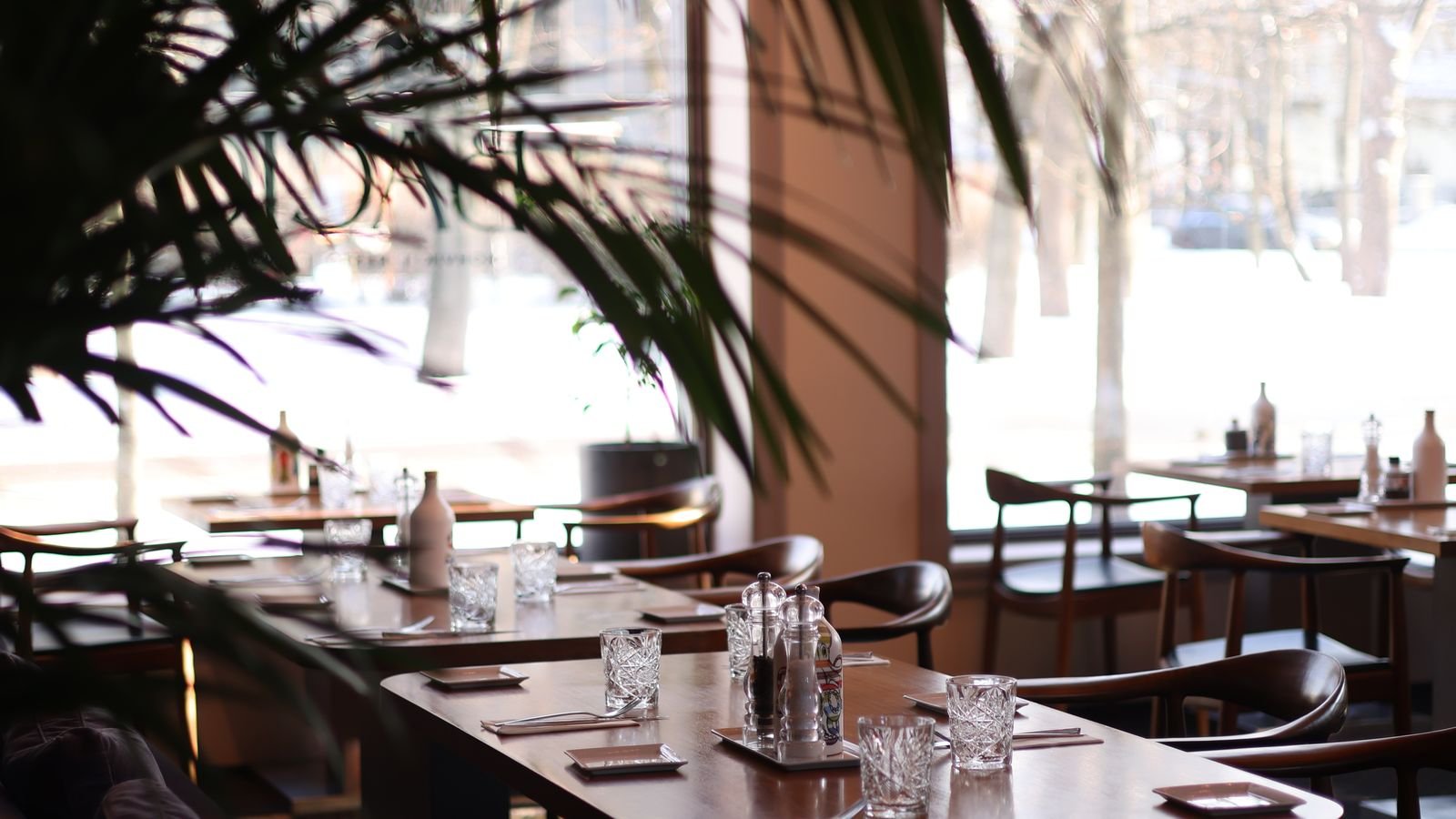
Between the last lunch table leaving and the first dinner booking arriving, a restaurant has a gap that is rarely long enough. In that gap the floor team resets the room, and the front of house has to look as though nothing happened. For an owner or manager searching for a restaurant cleaning service, the useful question is which parts of that reset belong to the staff on shift and which belong to a contractor who works when the doors are shut. This guide sets out the front of house, area by area, and explains where the line usually falls.
Why the gap between services matters
Lunch leaves a particular kind of mess. Crumbs and drips sit under table edges, high chairs have been wiped in a hurry, menus have been handled by dozens of hands and the card machine has been passed across the table all afternoon. Guests arriving for dinner notice a sticky menu or a smeared window before they notice the food. The work in the gap is quick, visible and repeated every day, so it is best written down as a short routine rather than left to memory.
What the floor team does in the gap
The staff on shift are the only people who can clean during service, because they are already in the room. Their job is the quick reset, not a deep clean.
Tables
Tables are cleared, wiped with a food-safe cleaner and dried, so that the surface is not left wet for the next guest. Table edges, undersides and the pedestal or legs collect more residue than the top, and they are the first places a regular guest’s hand or knee finds. A cloth that has been used on a table should not then be used on the floor, the card machine or the toilets. Colour-coded cloths make the rule easy to follow.
Chairs and booths
Chair seats, backs and arms are wiped, with a closer look at the join between seat and back, where crumbs settle. Booth seating needs a quick check along the seam and the gap at the wall. Wipeable seat coverings are quick to reset, while fabric needs brushing or vacuuming, and stains on it are a job for a periodic upholstery clean rather than the lunch gap.
High chairs
High chairs are used by the youngest guests and are often the messiest item in the room. The tray, the straps or harness, the seat and the legs all need wiping and drying between uses. Keeping them in a set place, away from the entrance, makes them easier to find and to clean.
Menus, condiments and card machines
Menus are handled by everyone, so wipeable menus or menu covers are simply quicker to keep clean. Condiment bottles, salt and pepper, sauces and table numbers are wiped or refilled in the gap. Card machines are touched by every paying guest, and they need a gentle wipe with a suitable product, following the maker’s instructions, so the screen is not damaged. Door handles, the host stand, the pen and the bill holder belong on the same list.
Floors under tables
The floor team usually sweeps or spot-mops during the gap, with attention to the areas under tables, around booths and near the bar. Use a wet floor sign, and dry the floor properly, because a damp floor is a slip risk for staff carrying plates. The HSE publishes guidance for the catering and hospitality industry, and slips and trips are listed among the main risks on its catering and hospitality page. Read it as the place to check your own duties; a cleaning article cannot replace it.
Customer toilets
Between lunch and dinner the toilets get a check, not a full clean. A member of staff looks for paper, soap, bin levels, wet floors and any obvious mess, wipes taps and door handles and logs the time on a check sheet. A full clean follows later, when the room is closed.
Entrance glass
The door glass and the window nearest the door take fingerprints all day. A quick wipe of the glass and the push plate or handle before dinner changes how the entrance looks from the pavement. It takes a minute, and it is one of the cheapest improvements in the routine.
What a contractor does overnight
A contractor who comes after service or before opening works without guests in the room, so the job can be thorough instead of quick. Exclusive Pro Cleaning says on its restaurant cleaning page that it typically works after service or before opening, and that its restaurant cleaning covers dining area floors and tables, front-of-house and reception areas and washroom deep cleaning, alongside kitchen work. The overnight visit is where the following jobs belong.
- Floors vacuumed, scrubbed or mopped across the whole room, including under and around fixed seating.
- Tables and chairs cleaned in full, including undersides, legs and joints.
- Skirting boards, door frames and window ledges wiped.
- Glass cleaned inside and out where reachable.
- Customer toilets cleaned from top to bottom, restocked and checked.
- Bar front, host stand and reception area cleaned and tidied.
- Bins emptied and relined, and bin areas checked.
The split is not about who is better at cleaning. It is about the time available. A server has a few minutes and a cloth; a contractor has the whole closed period and the right equipment.
A simple split of duties
Most restaurants settle into a pattern like the one below. Adjust it to your own room.
- Staff, every gap: wipe tables, chairs, high chairs, menus, condiments and card machines; spot-clean floors; check toilets; wipe entrance glass.
- Contractor, every night or on the days agreed: full floors, full toilets, fixed seating, skirting, glass, bins and the bar front.
- Contractor, periodically: upholstery, carpet or hard floor deep clean and high-level dusting, booked on a quiet day with notice.
A check sheet that gets used
A check sheet by the staff door works because it is quick to read. Keep it to one page. List the front-of-house tasks for the gap, with a column for the time and the initials of whoever did them. A manager who glances at it can see at once whether the reset happened. A sheet that is long, or that sits in a drawer, will not be used.
The same sheet can carry the overnight contractor’s tasks, so that the morning opener sees what was done and can flag anything missed. If something was missed, tell the contractor the next day. Short, specific feedback gets better results than a general complaint.
Food hygiene and the front of house
The front of house is not where food is prepared, but it is where guests judge the business, and it forms part of what an inspector sees. The Food Standards Agency sets out food hygiene expectations, and the local authority carries out inspections. Your own food safety management system and your environmental health officer are the right sources for what you must do. A cleaning company supports those procedures by cleaning to the agreed scope; it does not set them.
Using the quiet hours well
If the restaurant has a quiet period, plan the heavier jobs for it. Moving chairs to sweep under them, wiping the legs of tables, cleaning the backs of banquette seating and polishing the glass are all easier with the room empty. Stack chairs where the cleaner will not need to lift them twice, and clear the floor of anything that should not be there, such as bags, boxes and delivery crates.
Working with the cleaner
Tell the cleaner what the room looks like at closing time. A cleaner who arrives to find chairs already up and bins tied can spend the time on the floor and the toilets. A cleaner who arrives to find a full dining room still being cleared will spend half the visit waiting. Agree how the building is accessed, who sets the alarm and where equipment is kept. If you have several sites, give each the same one-page scope so that expectations are the same everywhere.
When you ask a provider for a quote, describe the room: the number of covers, the type of floor, the seating, the number of toilets and the hours when the room is empty. If you also need kitchen work, extraction or oven cleaning, say so, and ask for it to be itemised so that you can compare like with like. The commercial cleaning overview shows the range of services on offer, and fabric seating that needs more than a wipe is covered by upholstery cleaning.
Questions about a restaurant cleaning service for the front of house
What should staff clean between lunch and dinner?
Tables, chairs, high chairs, menus, condiments, card machines, the floor under tables, a toilet check and the entrance glass. These are quick resets, done by the people already in the room.
What does a contractor do that staff cannot?
A contractor works when the room is empty, so can clean floors fully, clean toilets from top to bottom, and reach skirting, glass and fixed seating without interrupting guests.
How often should customer toilets be checked?
Often enough that guests never find them out of paper or soap. Agree a rhythm that fits your footfall, and record each check on a sheet.
Do we need a separate clean for fabric seating?
Wipeable seating can be reset by staff. Fabric seating holds food and drink, and a periodic upholstery clean by a specialist is a separate job from the daily routine.