
For a household with an allergy sufferer, cleaning is rarely just about appearance. A home can look spotless and still hold the dust that sets off sneezing, itchy eyes or a blocked nose. At the same time, a good clean cannot promise to cure anything. What it can do is take away a lot of the dust and debris that collects around the house, and make the routine of keeping it down more manageable.
This guide explains how a whole-home clean can reduce dust and allergen build-up beyond the carpets, covering soft furnishings, curtains and blinds, high-level dust, vacuuming and damp-dusting, and the laundry the household does itself. It makes no medical claims. If someone in your home has an allergy, asthma or another condition, ask a GP, pharmacist or other health professional what is right for them. Public health sites such as NHS inform provide information on conditions and symptoms, and a place to find local services, and they are the right place to start for health questions.
What a cleaner can and cannot do
A cleaner can remove dust, dirt and debris from surfaces and soft furnishings, and can do so more thoroughly than a quick tidy. A cleaner can use suitable equipment, follow a methodical order and reach places that are easily skipped.
A cleaner cannot diagnose the cause of an allergy, remove every trace of an allergen or guarantee any change in symptoms. Dust returns, pollen blows in and pets shed. The best way to think about it is as lowering the load, not eliminating it. Exclusive Pro Cleaning’s home deep cleaning page says deep cleaning is particularly beneficial for allergy sufferers and cites Allergy UK’s recommendation of regular thorough cleaning to reduce dust mites, pet dander and other household allergens. That is a general statement about cleaning habits, not a promise about any individual’s health.
Start with where dust settles
Dust is not evenly spread. It collects where air is still and surfaces are rough or soft. A whole-home clean for an allergic household targets those places in a sensible order.
- High surfaces, such as the tops of wardrobes, shelves, picture frames and light fittings.
- Mid-level surfaces, such as windowsills, skirting boards, furniture and ornaments.
- Soft furnishings, curtains and blinds.
- Floors and carpets.
Working from high to low matters because dust falls. If the floors are vacuumed before the shelves are dusted, the floors need to be done again.
Soft furnishings
Soft furnishings hold dust, skin flakes and pet hair. Sofas, armchairs, cushions, throws, bedding and mattresses are the biggest collectors.
What helps:
- Vacuuming upholstery with a suitable attachment, including seams, edges and under cushions.
- Washing removable covers, throws and cushion covers according to their care labels.
- Airing and vacuuming mattresses, and washing mattress protectors.
- Dealing with pet beds and blankets.
Deeper fabric cleaning, such as steam or extraction, is a separate service. The upholstery cleaning page describes methods matched to the fabric, from hot water extraction to low-moisture or dry cleaning. It is not needed in every case, but it is an option when sofas and chairs hold years of dust.
Curtains and blinds
Curtains hang in the air currents of a room and collect dust, particularly in heavy fabrics. Blinds gather dust on every slat. Both are often forgotten.
- Curtains can be vacuumed with a soft brush attachment, and many can be washed or dry cleaned, depending on the fabric and lining. Check the label.
- Roller and venetian blinds can be wiped with a damp cloth, one slat or section at a time, while fabric blinds may need vacuuming or specialist cleaning.
- Dry-dusting can send dust into the air, so damp wiping is usually better for hard surfaces.
If curtains need taking down, agree who does it. Cleaners are not usually expected to remove and rehang heavy curtains, and it is safer to arrange that in advance.
High-level dust
High-level dust includes the tops of cupboards, light shades, ceiling corners, cornices and the tops of door frames. It is the dust nobody sees until a ray of light catches it. It also tends to fall when disturbed, so it is best removed early in the clean.
Cleaners reach what they safely can. A step stool is reasonable, while ladders and climbing on unstable furniture are not. Agree a sensible limit, and if you have very high ceilings or fixed light fittings, ask about the arrangement for those.
Vacuuming with suitable filters
The vacuum cleaner is the main tool for dust, and not all vacuums are equal. A machine with poor filtration can pass fine dust straight through and back into the room. Many vacuums use filters designed to trap fine particles, and the maker’s instructions say how to clean or replace them.
Points to consider:
- Use a vacuum with a sealed system or an appropriate filter where possible, and keep the filter clean.
- Empty the bin or change the bag before it is full, and do it carefully to avoid releasing dust.
- Use the right attachments for upholstery, edges and crevices.
- Vacuum slowly, since fast passes pick up less.
Consumer magazines test vacuum cleaners and publish results, which can help if you are buying one. Tell the cleaning provider whether you want your own machine used, or whether they bring theirs, and mention any concerns about its filtration.
Damp-dusting
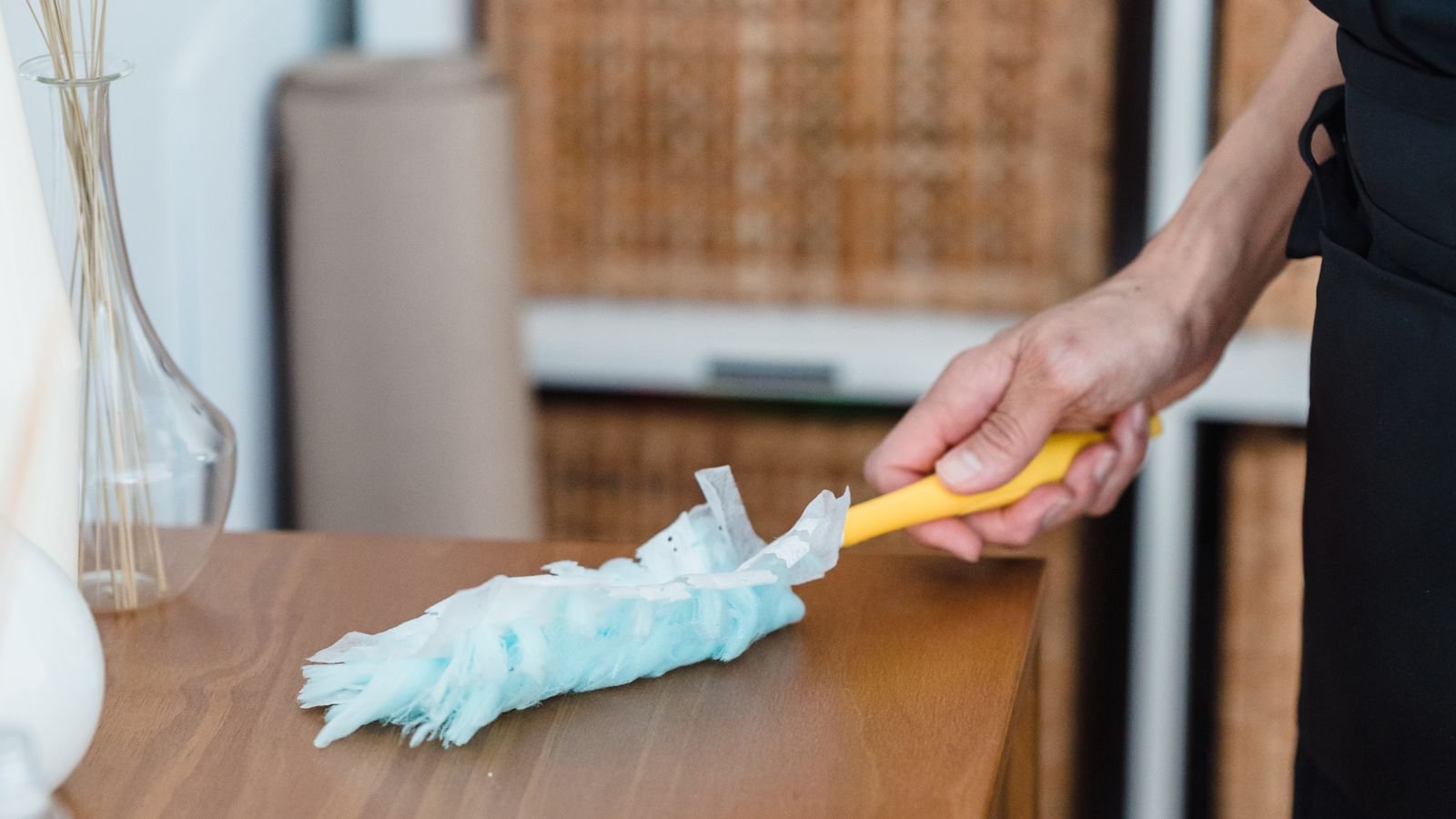
Dry dusting with a feather duster or a dry cloth tends to move dust around. Damp-dusting, using a slightly damp microfibre cloth, lifts it and holds it. It works well on most hard surfaces, such as shelves, skirting boards, furniture, frames and windowsills.
Use clean cloths, change them as they fill up, and wash them after use. Take care with surfaces that dislike moisture, such as unsealed wood, electronics and some finishes, and use a barely damp cloth in those cases. This is a task where the method matters more than the product.
Bedrooms, bathrooms and kitchens
Allergic households often focus on bedrooms, since that is where people spend many hours. Bedding, mattresses, pillows, curtains and floors matter most. Bathrooms need attention for damp and mould, which can be an irritant for some people, and good ventilation helps. Kitchens collect grease and food residue, and a regular clean keeps them in check.
A whole-home clean covers all of these in a planned order, with each room treated according to what collects there.
The laundry the household does itself
Some of the most important work happens in your own laundry. Washing bedding, throws, cushion covers and soft toys regularly according to their labels, drying them thoroughly and storing them clean makes a real difference. Cleaners may change beds and make them up if asked, but washing bedding and linen is usually separate, so agree it in advance.
A clean that includes bed making is common. The regular cleaning page lists bed making and bedroom tidying, vacuuming and mopping floors and dusting in every room among the standard tasks, and it says the same cleaner attends each visit. Tell the cleaner what you want done with bedding, and leave clean sets ready.
Pets and shedding
Pets add hair, dander and the dust they carry in from outside. A cleaner can vacuum upholstery and floors thoroughly, but the household sets the baseline. Brushing animals outdoors where possible, washing pet bedding on a regular schedule and keeping pets off beds and soft furniture if dander is a concern all lower the load between visits. Tell the cleaner which rooms your pets use most, so those get the longer attention, and mention any animal that is nervous around vacuum cleaners so they can be kept in another room during the visit.
Products and fragrance
For some people, cleaning products themselves cause irritation. Strong scents, sprays and some chemicals can trigger symptoms. If that applies to anyone in your home, tell the provider before the first visit and ask about alternatives, such as fragrance-free products or plain water and microfibre for light work. Do not assume that stronger means cleaner. Ventilate rooms during and after cleaning where you can.
Between cleans
A professional clean is more effective when the household supports it between visits.
- Take shoes off at the door and use doormats.
- Keep windows closed on high-pollen days if pollen is a trigger, and ventilate at other times.
- Reduce clutter that collects dust, such as piles of paper and ornaments on open shelves.
- Wash bedding and throws regularly.
- Groom pets away from bedrooms and soft furnishings where possible.
How often?
How often to clean depends on the home, the number of people and pets, and the level of sensitivity. Some households combine a thorough initial deep clean with regular visits, so the baseline stays low. Others book a deeper clean at the change of the seasons. Describe your situation and agree a plan you can sustain.
Questions about cleaning for allergy sufferers
Will a deep clean cure my allergy?
No. A clean can reduce dust and debris in the home, but it does not treat an allergy. Speak to a health professional about symptoms.
Should I leave the house during a clean?
Some people with allergies prefer to be out while dust is disturbed. Ask the cleaner to ventilate afterwards.
Do I need special products?
Not necessarily, but tell the provider if anyone reacts to scents or chemicals so a suitable choice can be made.
Can the cleaner wash my bedding?
Check in advance. Washing is usually a separate agreement from bed making.