
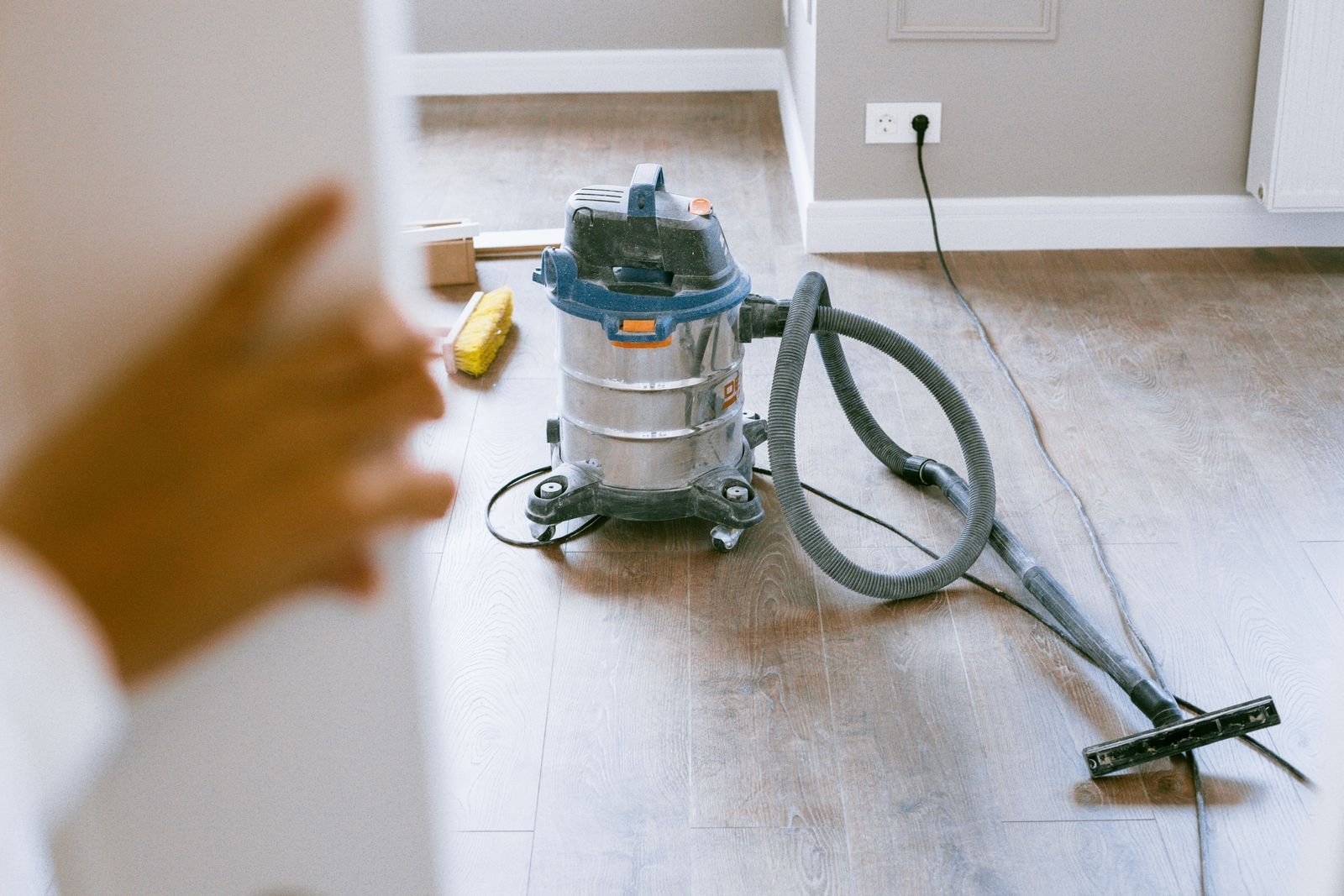
The skip has gone, the last van has pulled off the street and the room finally looks finished. Then the afternoon light comes in low across the windowsill and you can see it, a soft grey film on the skirting you wiped that morning. You clean it again. Two days later it is back, and it is on the worktop, the curtain rail and the inside of the light shade as well. This is the point at which most homeowners realise that finishing a renovation and being able to live in the space are two different milestones.
Fine construction dust behaves nothing like household dust, and the cleaning routine that keeps a normal home in order will not shift it. What follows is how the dust actually works, what a builder is genuinely responsible for, and a room by room checklist you can work through, or hand to us, before you move furniture and family back in.
Why the dust keeps coming back for weeks
Building work generates particles far smaller than anything a domestic clean was designed to handle. Sanded plaster skim, cut MDF, chased brickwork, mortar, jointing compound and sawn timber all break down into dust light enough to stay airborne for hours after the work that created it has stopped. Sweeping a floor or running an ordinary vacuum without sealed filtration does not remove that dust, it relaunches it. It settles overnight, you find it in the morning, you wipe it, and the cycle starts again.
Two things keep that cycle running. The first is reservoir dust, the load sitting in places you never look. On top of door frames and architraves, inside pendant light fittings, behind and between radiator fins, on the top edge of kitchen wall units, along cable runs, in the tracks of patio doors and inside the void under a floating floor. Every slammed door, every time the heating fires up and drives convection currents through the room, some of that reservoir lifts and redistributes.
The second is that fine dust clings electrostatically. It bonds to painted walls, glass, plastic sockets and satin woodwork in a way a dry duster skates straight over. You appear to clean the surface, and in reality you have polished the particles across it. The only reliable answer is a top down sequence with capture at every stage, damp microfibre for surfaces, sealed high filtration vacuums for everything else. That systematic approach is the backbone of every residential cleaning service we run across Manchester, and it is the single reason a professional builders clean holds where repeated DIY wiping does not.
The health case for not living with it
Construction dust is not simply a nuisance. Dust created by cutting or grinding concrete, brick, stone, mortar, tile and some cement based boards contains respirable crystalline silica, which is recognised across the construction industry as a genuine respiratory hazard rather than an inconvenience. Older Manchester housing stock adds another consideration. Terraces, semis and mill conversions built before the 1980s can hold materials that should never be disturbed or dry swept by a homeowner, and if anything of that nature has been flagged during your works it belongs with a licensed specialist, not a mop.
For a household with young children crawling on floors, or anyone with asthma or another respiratory condition, the practical takeaway is straightforward. Do not move back in and clean around yourselves over the following fortnight. Get the dust out of the property in one controlled pass, then move back in.
Builder’s broom clean against a professional builders clean
Most contracts include a builder’s clean, and most homeowners assume that means the house will be handed back ready to live in. It rarely does. A broom clean, sometimes called a sweep up or first clean, means the site has been cleared of rubbish, offcuts, packaging, tape and protective sheeting, floors have been swept, and obvious debris and splashes have been taken off. It is a construction handover standard, not a domestic one.
A professional after builders clean starts where that stops. It removes paint spots, silicone smears, plaster splashes and adhesive residue from glass, tiles, sanitaryware and ironmongery. It takes protective film off appliances, baths and shower screens and cleans away the adhesive line it leaves behind. It reaches the reservoir points, the tops of doors, the tracks, the vents, the extractor housings, the inside of new cabinetry. Then it does the whole thing a second time, because the first pass unavoidably disturbs dust that then resettles.
That two pass structure is what makes this job different from routine housekeeping, and if you are weighing up what level of service you actually need, our breakdown of how deep cleaning differs from regular cleaning sets out where each one starts and stops. An after builders clean sits beyond both.
Get the timing right before you book anything
Book the clean too early and you pay twice. The clean should follow the final snagging visit, not precede it, because touch up filling and repainting produce fresh dust and fresh splashes. Ask your contractor for a realistic date on which all tools are off site, all decorating is signed off and no further trades are returning. TrustMark, the government endorsed quality scheme for work carried out in and around the home, publishes homeowner guidance on planning building work and managing tradespeople, and it is worth reading before you agree that completion date so the handover sequence is clear on both sides.
Three practical things to line up in advance. Confirm the electricity and hot water are on, because industrial vacuums, steam and floor machines all need power. Confirm whether waste and packaging still need removing, since that is a separate job from cleaning. And decide the order of rooms, working from the furthest point back towards the front door so that finished space is never walked through again.
The room by room checklist
Work top down in every room. Ceilings and coving, then light fittings, then walls, then joinery and fittings, then floors last. Anything else guarantees a repeat.
Kitchens
Remove protective film from every appliance and clean off the adhesive line underneath it. Clean inside every new cupboard and drawer, including the runners and hinges where sawdust collects. Take the plinths off if they lift, because plaster dust and offcuts sit behind them. Clean the top surfaces of wall units, the extractor canopy and the gap between the worktop and the wall. Silicone smears along the splashback and sink edge need lifting carefully rather than scraping, and new stone or composite worktops need a pH neutral product, not a strong household cleaner.
Bathrooms and en suites
Grout haze on new tiling is the common one, a dull film that looks like poor cleaning and is actually cement residue. It needs the correct treatment rather than harder scrubbing. Clean the shower screen and its channel, the underside of the bath rim, the toilet cistern and the concealed pipe boxing. New chrome and brushed finishes mark permanently under abrasives, so those are done with soft cloths only.
Bedrooms and living spaces
Tops of doors, architraves, picture rails, curtain poles and every skirting run. Radiators need dust taken from between the fins and from behind them, which is where a narrow crevice tool on a sealed vacuum earns its place. Sockets, switches and thermostat plates hold a surprising load of plaster dust in their seams. Fitted wardrobes get the same internal treatment as kitchen cabinetry.
Hallways, stairs and loft conversions
Stair spindles, string and nosings collect sanding dust along every edge. In a loft conversion or an extension, check the newly formed junctions where old plaster meets new, along with velux frames, drainage channels and the underside of any exposed steel.
Windows, frames, tracks and vents
Windows are the single most visible failure point of a poor builders clean. Glass carries plaster splatter, paint flecks and mortar spots that a cloth alone will not shift, and using a blade incorrectly on toughened or coated glass causes permanent scratching. Both faces need doing, along with the frames, the rubber seals, the hinges and the drainage slots at the bottom of the frame, which block with mortar and then leak.
Trickle vents matter more than people expect. They are usually left open through the works, so they act as a direct dust route, and a blocked vent undermines the ventilation the room is meant to have. Every vent, in windows and in walls, should be opened, cleared and wiped rather than left sealed shut.
Floors, carpets and soft furnishings
Hard floors need vacuuming with sealed filtration before any water touches them, because wet grit grinds into new timber, LVT and stone. New wood and engineered boards should not be soaked, and freshly laid stone or porcelain often needs a specific first clean to lift installation residue. Check the perimeter expansion gap under the beading, which fills with debris during fitting.
Carpets and rugs are where dust hides longest. Fine particles work below the pile and a domestic vacuum brings back only the surface layer. Repeated slow passes in alternating directions with a high filtration machine make the real difference, and heavily loaded carpets benefit from hot water extraction afterwards. Curtains, blinds and upholstery that stayed in the property during works hold the same load and need vacuuming or laundering rather than shaking out, which just puts it back in the air.
Air filters, extractors and the systems that store dust
This is the step almost everyone skips, and it is the reason a house can look clean and still feel dusty a month later. Replace or clean the filters in every extractor fan, cooker hood, tumble dryer and air purifier. If you have mechanical ventilation with heat recovery, or any ducted system, the filters will have been loading throughout the works. Boiler and heating vents, along with the grilles on any underfloor system, should be cleared as well. Leave these and the property recirculates construction dust every time the systems run.
When the property is genuinely ready to live in
The honest answer is that a well executed clean plus one follow up pass gets a renovated home to a normal living standard, and a small amount of settlement in the first week afterwards is expected rather than a sign of failure. Keep windows open where weather allows, run extractors, and give the ventilation a chance to carry the last of the airborne load out.
If your project was a full refurbishment rather than a single room, the volume of residue usually justifies a dedicated post renovation clean instead of trying to stretch a standard visit to cover it. The residue profile is different, the products are different and the time on site is considerably longer.
Many Manchester households then move onto a scheduled deep clean a few weeks later, once furniture is back in place and the last of the settlement has worked through. That second visit is what turns a finished building project into a house that feels genuinely reset rather than merely tidy.
Handing the job over
You can work this checklist yourself if you have the time, a sealed high filtration vacuum, the right products for new stone, timber and coated glass, and the patience for a second pass. Most people finishing a renovation in Manchester have run out of all four. Our teams work the top down sequence across every room, handle the finishes that mark easily, clear the vents and filters, and return for the settlement pass so you are not still chasing grey film in week three. Tell us the size of the property, what the works involved and the date the last trade leaves, and we will scope it accurately from there.