
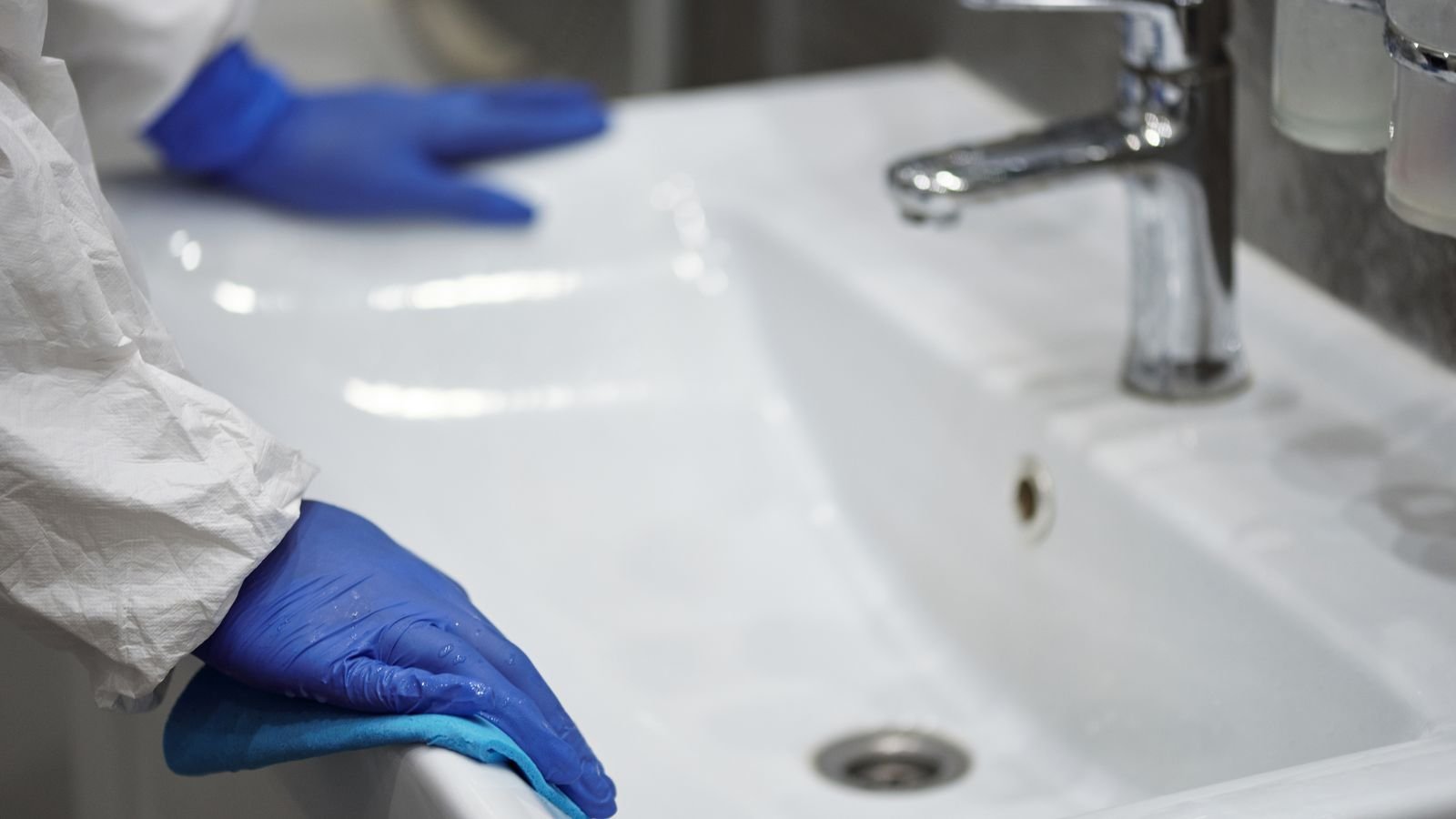
A bathroom gets wiped, sprayed and flushed every week, and still it can look tired. Cloudy glass on the shower screen, grey lines between the tiles, a film around the taps and a dusty fan grille above the door all hint at what the routine clean leaves behind. A proper bathroom deep clean goes further than the weekly wipe. It tackles limescale, grout, silicone and the places that never quite get reached, and it shows what can be restored and what has reached the point of needing a repair. For anyone looking for bathroom cleaning in Manchester, or simply wondering why the bathroom never looks as clean as it should, this guide describes what a deep clean covers and what to expect.
Why a bathroom needs more than a wipe
A bathroom has a particular set of problems. It is warm, damp and heavily used. Water leaves mineral deposits as it dries. Soap and body products leave a film. Moisture that cannot escape settles into grout and silicone. A regular wipe deals with the surface, but over months, the deposits build up in layers that a cloth cannot lift.
Hard water is common across parts of the North West, and its effects are visible on taps, shower screens and tiles. The reason these deposits are stubborn is that they are mineral, not dirt. They need an appropriate descaling product and time to work, not harder scrubbing.
Limescale
Limescale is the white or cream crust that forms where water dries. It collects on taps, shower heads, screens, tiles and the base of the bath or tray.
Taps and fittings
Descaling products dissolve limescale when used as directed. For taps, a common approach is to apply the product, leave it for the stated time, wipe and rinse. Fittings with delicate finishes, such as brass or coated chrome, can be damaged by the wrong product, so it is worth checking the label and testing a small area. Scrubbing hard with an abrasive pad risks scratching the finish.
Shower heads
Limescale blocks the small holes in a shower head and weakens the spray. Many shower heads can be unscrewed and soaked in a descaling solution, then rinsed and refitted. If you are not sure how to remove yours, or if the head is part of a fixed system, leave it to someone who can do it without damaging the connection.
Glass screens
Hard water leaves a cloudy film on glass. A descaling product applied with a soft cloth or a non-scratch pad, followed by thorough rinsing, usually restores clarity. A squeegee after each shower reduces the build-up in future. If the glass is etched, which means the surface itself has been damaged, cleaning will not bring it back.
Grout and silicone
Grout and silicone are two of the most noticeable parts of a bathroom. Grout is the cement-based filler between tiles. Silicone is the flexible sealant around the bath, shower tray, basin and screen edges.
Grout
Grout is porous, so it holds dirt, soap and moisture. A deep clean uses a suitable cleaner and a stiff brush to lift the soil from the grout lines. Heavily stained grout can improve a good deal, though it may not return to its original colour. Sealing the grout after cleaning helps to protect it, provided it is fully dry first. Where grout has cracked, crumbled or gone missing, cleaning cannot fix it, and it needs raking out and replacing.
Silicone
Silicone seals gaps against water. Over time, it can develop black or pink spotting, which is often mould growing on the surface or within the sealant. A surface mould spot may wipe or spray away with an appropriate cleaner, but if the discolouration has gone through the silicone, it will stay. Peeling, gaps and cracks mean the seal has failed, and water can get behind it into the wall or under the bath. In that case the silicone should be removed and replaced. A cleaner can tell you what the seal looks like, but resealing is a trade job.
The extractor fan grille
The extractor fan is a quiet workhorse. It removes moist air and helps to stop damp. The grille and the fan blades collect dust, lint and grease, which can reduce airflow and look unsightly.
For a deep clean, a cleaner will switch off the fan at the isolator or consumer unit, remove the cover if it is designed to come off, wash it, wipe the visible surfaces and refit it. Cleaning inside the fan housing and the wiring is for an electrician. If the fan is noisy, weak or damp, the problem may be in the motor, ducting or the outlet, and it needs an engineer, not a duster. A working fan is one of the best protections against bathroom damp, so it is worth checking that it runs.
Behind the toilet and along the bath panel
Some of the grubbiest areas are those nobody sees. A deep clean covers them.
Behind the toilet
The base, the pan outlet, the floor behind the pan, the wall and the cistern collect dust, splashes and hair. A cleaner works around the base with a small brush, cleans the hinges and bolts and wipes the wall. Sealing around the base should be checked, since gaps can let moisture under the pan.
Along the bath panel
The bath panel and the floor beside it trap dust and hair. If the panel is removable, taking it off shows how much collects behind it. A cleaner will wipe it, clean the floor and replace it. If it is fixed, they will clean the front and the edge as far as they can reach.
Floors and skirting
Bathroom floors need washing, including under the radiator and around pipes. Skirting boards and door frames get splashed, and the bottom of the door often has a line of dirt.
Other touch points
Door handles, light pulls, switches, towel rails and cabinet fronts are touched constantly and should be cleaned and dried. The inside of the bathroom cabinet is often missed.
What can be restored and what cannot
A deep clean can do a great deal. It can bring back clarity to glass, shine to taps and a fresh look to tiles. It can lift most soil from grout and clean surface mould from silicone. It can restore the sense that the bathroom is truly clean.
It cannot repair damage. The following usually need other action.
- Cracked, missing or crumbling grout, which needs re-grouting.
- Failed silicone, which needs replacing.
- Etched glass or damaged chrome, which cannot be polished back.
- Limescale damage to an enamel or acrylic bath, where the surface has been eaten away.
- A fan that does not work.
- Damp, flaking paint or mould growing on walls and ceilings, which points to a ventilation or moisture problem.
A good cleaner will tell you which category each problem falls into, so that you know whether it is worth cleaning further or time for a repair.
Water and local supply
Water quality varies from place to place. United Utilities provides water and wastewater services in the North West of England, and its website carries information about local water supply. If you are curious about why limescale builds up where you live, a look at your local supply information is a good starting point. Treat any claims about water hardness with care, and rely on your supplier’s own information.
How a bathroom cleaning visit in Manchester is organised
A professional bathroom deep clean follows a logical sequence. The cleaner removes items from surfaces, applies descaler and cleaner and lets them work, then cleans from top to bottom. They scrub grout lines, treat taps and glass, clean the fan grille, tackle the toilet and the floor and finish with a rinse and a dry polish. Doing the job in order means products have time to work and nothing is wetted twice.
Exclusive Pro Cleaning describes its home deep cleaning service, which includes bathrooms, on its website. If you want a single visit to reset a bathroom, the one-time cleaning option is designed for that, and a regular cleaning arrangement helps to keep the result once the bathroom is back in shape.
Keeping it clean afterwards
A few habits slow the return of limescale and grime.
- Squeegee or wipe the shower screen and tiles after use.
- Open a window or run the extractor fan during and after showers.
- Wipe taps dry to stop water spots forming.
- Use a gentle daily spray designed for showers if you like.
- Wash bath mats and towels often.
- Check silicone and grout every few months, and fix small problems early.
Bathrooms in rented and shared homes
In a rented flat or a shared house, bathrooms take the most abuse and are often the focus of a deposit dispute. A deep clean before an inspection or handover can make a real difference, because limescale, grime in the grout and a dusty fan are exactly what a checking agent looks for. Take photographs before and after, and note any failing silicone or grout so that responsibility is clear. In shared houses, agree a rota for the weekly wipe and book a deep clean every so often so that no single person carries the load.
Questions about bathroom deep cleaning
Why does limescale come back so quickly?
It forms whenever water dries on a surface. In a hard water area it returns as long as water is left to evaporate. Wiping surfaces dry slows it down.
Can discoloured silicone be cleaned?
Surface spotting can often be improved, but if the discolouration goes through the silicone, it needs replacing.
Should the extractor fan be cleaned?
Yes, the grille and visible parts. Work on the wiring and motor is for an electrician.
How often should a bathroom have a deep clean?
It depends on use and the water in your area. Many households do one every few months, with regular cleaning in between. To ask about a bathroom clean at your address, contact Exclusive Pro Cleaning.