
When a stomach bug or a heavy cold has gone through a household, the cleaning job afterwards feels bigger than the usual weekly tidy. Everyone has been touching the same door handles, the bathroom has seen more use than normal, and the bedding has probably been changed more than once. People often look for a home disinfection service at this point, and it helps to know what a cleaning visit can sensibly do, what you can do yourself and where the limits are.
This article does not make health claims. It describes a sensible order of work, takes its general hygiene points from public education resources and leaves medical questions to your doctor or pharmacist.
Clean first, then disinfect
The order matters. Disinfectant works on a surface that is already clean. If a surface still has grease, dust or splashes on it, the product spends its time on the dirt and not on the surface beneath. So the first stage is always ordinary cleaning with detergent and water, or a suitable all-purpose cleaner. The second stage is disinfecting the places that are touched most.
The e-Bug project offers free educational material on microbes, hand hygiene and the spread of infection, and its general message is a helpful one for any household. Washing hands properly, covering coughs and sneezes and keeping surfaces clean are simple habits that make a difference, and they matter just as much after the illness as during it.
Contact time and what it means
Every disinfectant label gives instructions. One of the most important is contact time, which is how long the product must stay wet on the surface for it to do its job. If you spray and wipe straight away, the product has not had the time it needs. Read the label of whatever you are using, follow it as written and do not mix products. Mixing cleaning chemicals can release harmful fumes, and bleach in particular should never be combined with other cleaners.
A few other label points are worth checking.
- Which surfaces is the product safe on? Some damage stone, wood, painted finishes or fabrics.
- Does it need diluting, and by how much?
- Does it need rinsing, especially on surfaces that touch food or that children handle?
- Does it require gloves or ventilation?
A professional cleaner works from the same labels and the same safety data sheets. The difference is mainly experience and efficiency, not a secret product.
Where to start in the house
Work from the cleanest areas to the dirtiest, so that you do not carry dirt from the bathroom into the bedroom. In practice that usually means bedrooms and living areas first, then the kitchen, then the bathroom and toilet last.
Touch points
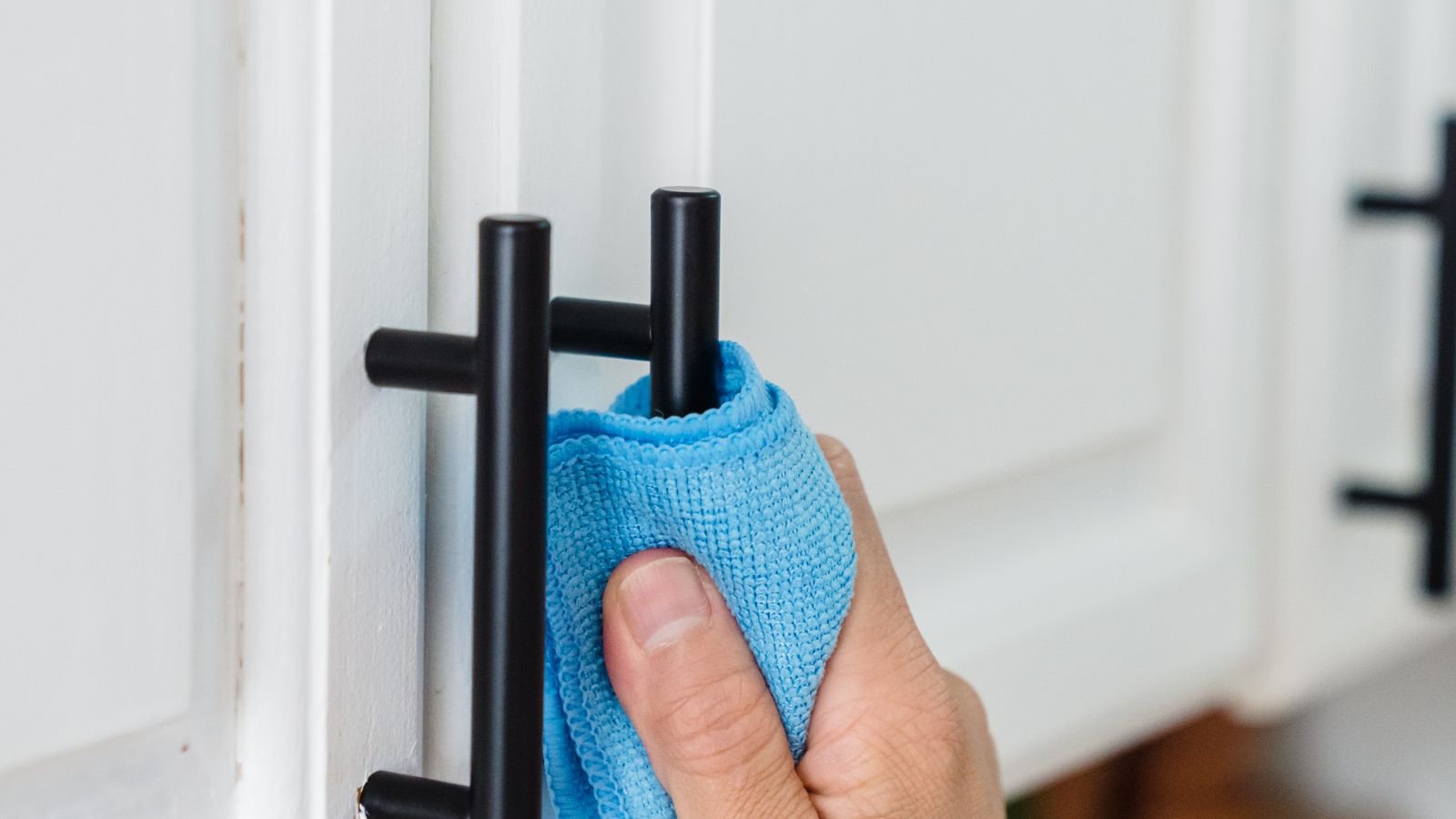
The surfaces that everyone handles are the first priority. Think about door handles, light switches, stair banisters, remote controls, phones, tablet screens, cupboard handles, fridge handles, taps and the flush. A cloth and detergent will clean them, and a disinfectant, used with its contact time, treats them afterwards. Electronics need care. Use products made for screens, or follow the maker’s advice.
The kitchen
Wash and dry worktops, the sink, the draining area and the fridge handles. Change dishcloths and sponges, or wash them at a high temperature, because they hold moisture and food residue. Clean the bin lid and the area around the bin. If the illness involved vomiting or diarrhoea, pay attention to the floor and to any surface that may have been splashed.
The bathroom and toilet
Clean the toilet seat, lid, flush handle, cistern and surrounding floor. Clean the basin, taps, towel rails and light pull. Wash the shower or bath, since these have been used more than usual. Use separate cloths for the toilet and for the rest of the room, and keep them apart. Throw away or wash at a hot setting anything used for the toilet.
Soft items and washing
Bedding, towels, pyjamas and soft toys have been close to the person who was ill. Wash them as soon as you can, following the care label on each item. Wash at the highest temperature the label allows, because heat helps, and dry them fully. Handle used linen carefully, avoid shaking it, and wash your hands afterwards.
Items that cannot be washed, such as a cushion or a mattress, can be aired, spot cleaned or steam cleaned, depending on the fabric. A professional upholstery or mattress service can help where an accident has soaked into a surface and ordinary cleaning has not reached it.
Ventilation
Fresh air is one of the easiest and most useful steps. Open windows for a while each day, even in colder weather, so that stale air leaves and the rooms dry. This also helps cleaned surfaces to dry and reduces the damp that can build up when a house is shut tightly for several days.
What a cleaning visit can sensibly do
A cleaning team can take the heavy lifting out of the aftermath. A typical visit might include the following.
- Cleaning and then disinfecting touch points throughout the home, following the product’s contact time.
- A full clean of the bathrooms and toilets, including the floors and the areas behind and around the toilet.
- Cleaning kitchen surfaces, the fridge handle and the bin area.
- Vacuuming and mopping floors, so that dust and debris are removed.
- Stripping and remaking beds if you ask for it, and loading the washing machine with items you have set aside.
What a visit cannot do is promise a particular health result. Cleaning reduces dirt and the germs that sit on surfaces, and it helps a home feel fresh again, but nobody can guarantee that an illness will not come back. If someone in the house is still unwell, wait until they have recovered, and think about who will be in the home while the cleaners are working.
One-off or deeper cleans
If the illness was a rough one, or if several people have been ill, a one-off visit may be the easiest route back to normal. Exclusive Pro Cleaning’s one-time cleaning page describes a single visit for situations like this, and the home deep cleaning page explains what a more thorough clean involves, including the kitchen, bathrooms and the areas that get missed in a quick tidy.
Some households also ask about fogging. Fogging is a way of applying a disinfectant mist through a room, and it has a role in some commercial settings. You can read how it works on the fogging and disinfection page. For most homes, a careful hands-on clean with the right products and contact time does the main job, and fogging is an extra rather than a replacement.
Children’s rooms and shared spaces
Rooms where children play deserve a little extra attention after an illness. Toys that go in mouths can be washed in warm soapy water and left to dry, and hard plastic ones can usually be wiped down and rinsed. Play mats, changing mats and high chair trays are worth cleaning thoroughly because they are handled so often. In shared spaces such as the hallway and the living room, think about the cushions, throws and blankets that everyone has used while recovering on the sofa. Many can go in the wash, and the rest can be aired in fresh air for a few hours. It is a small job, but it is the sort of thing that is easy to forget until the next person sits down.
Looking after yourself while cleaning
If you are doing the work yourself, a few habits make it safer and easier.
- Wear gloves, and wash your hands well when you take them off.
- Open a window while you work, and do not mix products.
- Keep children and pets away from wet surfaces and products.
- Use disposable cloths or paper towels for the dirtiest jobs, and put them straight in a bag.
- Keep cleaning products in their original bottles and out of reach.
If you are recovering yourself, ask for help. It is perfectly reasonable to wait until you feel better before taking on a big clean.
When to ask for help
Hand the job over when you are tired, when the house is large, when you need several rooms done at once or when you simply do not want to be the one scrubbing the bathroom. A short, targeted clean can be booked as a one-off, with a clear list of what you want done, and it can be repeated if the illness comes back or if you want the home reset at the start of winter.
Questions about cleaning after illness
Do I need to disinfect everything?
No. Concentrate on the surfaces that are touched most often, plus the bathroom and kitchen. Clean the rest in the normal way.
How long should disinfectant stay on a surface?
For as long as the product label says. This is called the contact time, and it varies from product to product.
Is it safe to mix cleaning products for a stronger effect?
No. Mixing products can release harmful fumes. Use one product at a time and follow the label.
Can a cleaner guarantee my home will be germ free?
No. A clean reduces dirt and the germs on surfaces, but no honest provider can promise that illness will not return.