
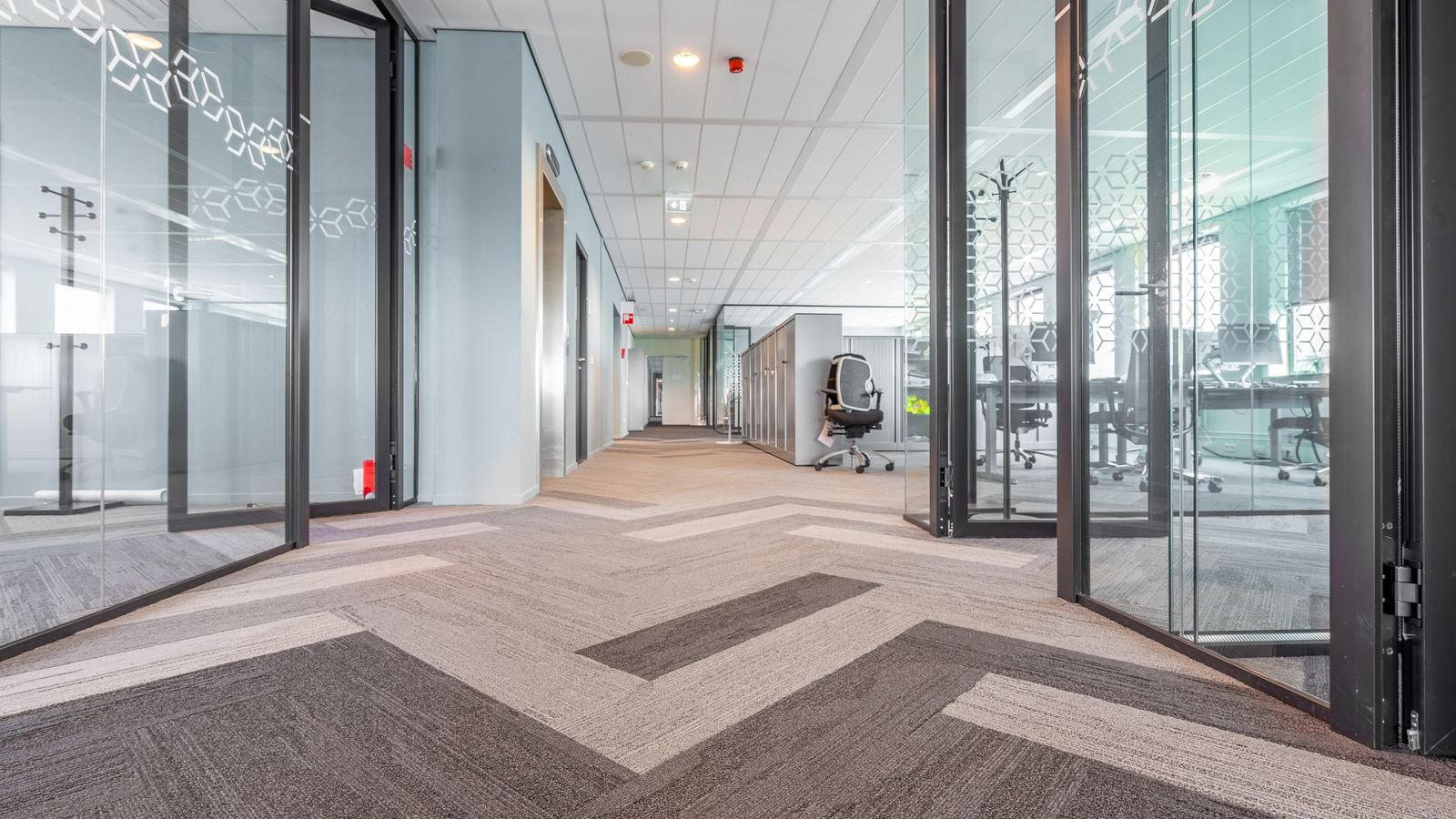
If you have asked three companies to quote for cleaning the carpets in an office or a shop, you will probably have received three different numbers, set out in three different ways. One may price by the square metre, another by the room, and the third as a lump sum with a note about minimum charges. Comparing them is difficult unless you know what each number is built from.
This guide explains the factors that move a commercial carpet cleaning quote, without quoting any prices, because a fair price depends on the premises. It then sets out how to compare two quotes fairly, and what to ask a provider before you accept one. The aim is to help you ask for the right information so that the quotes you receive can be placed side by side.
Floor area and layout
The first factor is the simplest. A larger area takes longer to clean, so it costs more. Two details inside that matter just as much.
- Layout. A wide, open floor is quicker to clean than a floor cut into small rooms, because equipment can run in long passes. Narrow corridors, meeting rooms, cupboards and stairs take more time per square metre.
- Access. Distance from the vehicle to the work area, the number of floors, the presence of a lift and parking or loading restrictions all add time.
When you request a quote, give a realistic floor area and a short description of the layout. Better still, invite the provider to look at the premises. A quote based on a survey is easier to rely on than one based on a guess.
Carpet type, tiles or broadloom
Commercial carpet comes in several forms, and the type affects both the method and the time.
Carpet tiles are square modules laid on the floor, common in offices. Broadloom is carpet supplied in rolls and fitted wall to wall. Each has its quirks. Tiles can sometimes be lifted and replaced if one is badly damaged, which can make a difference when a stain does not respond. Broadloom is continuous, so a poor repair is harder to hide.
The pile construction matters too. A dense loop pile behaves differently from a cut pile, and the fibre content, whether wool, nylon or a blend, decides which cleaning agents are safe. Manufacturers such as Burmatex supply carpet tiles, sheets and entrance matting for offices, schools, retail and other commercial settings, and publish advice on caring for their products and cleaning stains. If you know the make and range of your carpet, say so when you ask for a quote, and keep any care leaflet from the installer.
Soiling and staining
How dirty the carpet is affects the effort involved. A carpet cleaned regularly can often be refreshed in a single pass. A carpet that has gone for years without attention may need pre-treatment, a more intensive method or more than one pass.
Staining is a separate issue from general soiling. Coffee, ink, food and grease each behave differently, and some marks come out easily while others may not come out at all. Ask providers how they treat stains, whether they charge separately for it and whether they promise removal. Be wary of anyone who guarantees that every mark will disappear. A trustworthy provider will say which stains are likely to respond, and which are uncertain until they try.
Heavily trafficked lanes, such as the route between a reception desk and a lift, are worth pointing out. They are usually the most worn and soiled part of the floor, and they may need extra attention.
The cleaning method
Commercial carpets are cleaned in several ways, and the method influences price, speed and drying time.
- Hot water extraction injects a cleaning solution into the carpet and pulls it out again with the dirt. It cleans deeply but leaves the carpet damp, so drying time matters.
- Encapsulation uses a low-moisture cleaning agent that traps dirt in crystals, which are then vacuumed up. It dries quickly and suits regular maintenance in busy premises.
- Dry compound and bonnet methods are used for light cleaning and interim maintenance.
No single method is always right. A good provider will recommend one based on the carpet, how soiled it is and how long the premises can be out of use. Exclusive Pro Cleaning’s commercial carpet cleaning page describes starting each job with a fibre assessment so the cleaning agent matches the carpet, followed by portable extraction equipment. Ask any provider you are considering to explain why they have chosen a particular method for your floor.
Furniture moving
Carpets sit under desks, chairs, filing cabinets and displays. Someone has to deal with that. Options include moving furniture off the carpet before the clean, cleaning around it, or having the cleaning team move and replace light items.
This changes the quote. Cleaning around furniture is quicker but leaves untreated patches. Moving furniture takes time and creates responsibility for damage and for the arrangement of items. Heavy or fixed items usually remain in place. Ask what is included and what you are expected to do. A common arrangement is for your staff to clear desks and floors, and for the cleaner to move light chairs and bins.
Out-of-hours work and access
Many businesses cannot close for a carpet clean. Evening, overnight or weekend work is common, and it may affect the price, since out-of-hours rates can differ from standard working hours. Security and access arrangements add another layer. Agree who opens and closes the premises, how alarms are handled and whether the cleaners can work alone.
Exclusive Pro Cleaning’s office carpet cleaning page describes working evenings and weekends so the cleaning is complete before anyone arrives. If your premises have restricted hours, explain them when you request a quote.
Drying time
Drying time decides whether a clean is practical. A carpet that stays damp for a day is no use in an office that opens at eight the next morning. A wet carpet can also cause slips, smell and even mould if it stays damp, so ventilation and airflow matter.
Ask the provider how long the carpet will take to dry, what influences it, and what they do to speed it up. The time depends on the method, the carpet, the room and the weather. Low-moisture methods are often chosen for regular maintenance for that reason, while hot water extraction may suit a periodic deeper clean when the building can be left to dry.
How to compare two quotes fairly
Because quotes are built from the factors above, the best way to compare them is to break them down. Put these questions to each provider and write down the answers.
- What area and layout is the quote based on? Was it measured or estimated?
- What method will be used, and why?
- Is stain treatment included, and are there extra charges?
- Is furniture moving included, and what is expected from us?
- When will the work take place, and does the price assume out-of-hours working?
- How long will the carpet take to dry?
- Is there a minimum charge or travel cost?
- What insurance does the provider hold?
- What happens if a stain remains or the result is not as agreed?
If two quotes differ, check whether they describe the same job. A cheaper quote that excludes stain treatment and furniture moving is not comparable with a dearer one that includes them. A quote that is vague on method, drying time or exclusions deserves a follow-up question.
It also helps to compare on the same basis. Ask both providers to quote for the same areas, the same method, the same time of day and the same frequency. Regular maintenance programmes, such as quarterly or twice-yearly cleaning, are often quoted differently from one-off jobs, so say which you want.
What to prepare before you ask
A few details help providers quote accurately.
- A floor plan or a description of the rooms and the approximate area.
- The carpet type and any installer information.
- Photographs of problem areas.
- The hours the premises can be accessed.
- How often you want cleaning, and whether it is a one-off.
If you manage a mix of offices, corridors, meeting rooms and reception areas, it can be worth splitting the quote so you can see the cost of each. The carpet cleaning services page lists the range of services available, and the right choice depends on the carpet and the use.
Questions about commercial carpet cleaning quotes
Why do two quotes for the same office differ so much?
They may be based on different methods, areas, inclusions or timings. Break each quote down before deciding which is better value.
Is the cheapest quote the best?
Not necessarily. Check what it includes and what it leaves out, and ask about method, stain treatment and drying time.
Can I get a fixed price without a visit?
Sometimes, for simple areas. For larger or more complex premises, a visit gives a more reliable quote.
How often should commercial carpets be cleaned?
It depends on traffic, soiling and the standard you want. Many premises combine regular maintenance with a periodic deeper clean.