
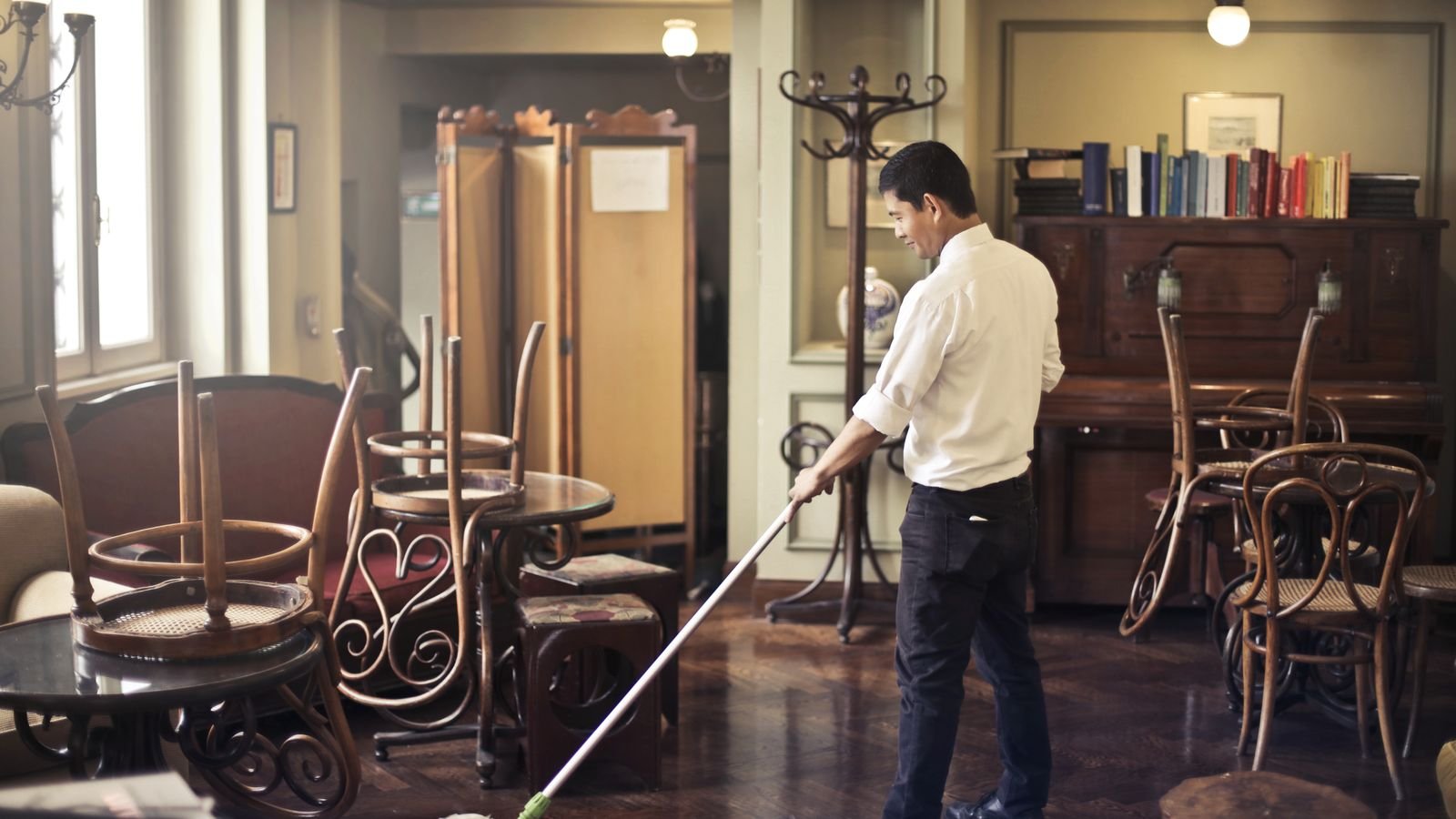
Stockport is a town of contrasts for anyone who looks after a commercial floor. There are shops in the town centre with polished tile and vinyl, offices with carpet tiles and hard-wearing flooring, workshops and small units off the main roads with sealed concrete and resin, and cafes, salons and surgeries with their own particular needs. The right way to clean a floor depends on what it is made of, how it is used and when the premises are free. This guide explains how commercial floor cleaning in Stockport is usually approached for shops, offices and units, what to tell a provider before they quote and how a visit is planned from start to finish.
Start with the floor type
Before you can choose a method, you need to know what you are cleaning. Mistakes in this area are the main cause of damaged floors, and they are easy to avoid.
Shops
Retail floors vary a great deal. Common types include ceramic or porcelain tile, vinyl sheet and planks, laminate, sealed timber, polished concrete and carpet. Tile and vinyl take most of the wear near the door and the till. Grout lines collect dirt, and glossy floors show every scuff. Sealed timber needs care with water and with floor machine pads.
Offices
Offices usually have carpet or carpet tiles in the working areas, with vinyl or tile in kitchens, corridors and toilets. Carpet tiles can be lifted and replaced, which helps with stains, but they still need deep cleaning at intervals. Hard floors in corridors take the traffic, and they benefit from regular machine scrubbing.
Small units and workshops
Floors in units tend to be sealed concrete, resin, epoxy paint or industrial vinyl. They are built for hard use, but oil, dust and tyre marks build up. The cleaning approach has to deal with the soil without stripping coatings or leaving a slippery surface.
A good provider will ask about all of this, and it is worth giving them photos if you can. If you do not know what a floor is made of, say so, and let them test a small area.
The common methods
Commercial floor cleaning uses a handful of methods, chosen to match the surface.
- Vacuuming and sweeping, for loose dirt, which is the first step on almost every floor.
- Damp mopping, for light soil on sealed surfaces.
- Machine scrubbing, where a rotary or scrubber-dryer machine applies cleaner and lifts the dirty water in one pass.
- Carpet extraction, which injects cleaner and water into the pile and extracts it, for deep cleaning.
- Low-moisture carpet cleaning, using encapsulation or bonnet methods for quicker drying.
- Strip and reseal, for vinyl and similar floors that have a worn polish layer.
- Grout and tile cleaning with brushes and suitable products.
None of these is better in every case. The skill is in picking the right one and carrying it out well. Exclusive Pro Cleaning describes its floor cleaning service, including the range of floor types it handles, on its website. If you are not sure which method suits your floor, ask a provider to explain their choice.
Working around opening hours
For a shop or an office, the floor is only free when people are not on it. The visit time is therefore one of the first things to settle.
- Before opening, floors can be cleaned and dried ahead of the first customer.
- After closing, floors can be cleaned without disturbing anyone, though drying time and access need thought.
- On a quiet day, a deep clean of a specific area can be done while the rest of the business operates, using signs and barriers.
- During a closure, such as a refit, a holiday or a stocktake, bigger jobs can be done in one go.
Wet floors are a slip risk, so wet cleaning in an open shop needs warning signs and a clear plan. A provider should arrive with their own signs and keep wet areas small. Ask how long a floor takes to dry, and what happens at the edges of the cleaned area.
How a visit is planned
A well-run floor cleaning visit follows a pattern.
Before the visit
A provider will usually ask for the address, the floor types, the area to be covered, the access arrangements and any specific problems. Some will visit before quoting, particularly for larger or more complicated jobs. A written scope should list what is included, the date and time, and the expected duration.
On the day
The team arrives, checks the area and moves furniture or stock as agreed. They sweep or vacuum, apply the chosen cleaning product, work the machine across the floor, rinse or extract as needed and leave the floor to dry. Edges, corners and skirting are done by hand where machines cannot reach. Signs go up where the floor is wet.
After the visit
The team should walk the area with you, point out any marks that did not come out and give advice on aftercare. A short note of what was done and what was found is useful for your records.
Telling the provider what matters
The more a provider knows, the better the result. Give them these details.
- The size of the area, even roughly, and the number of rooms.
- Floor types, ages and known problems.
- Any history of spills, stains or previous treatments.
- Access, parking and any building rules.
- The hours when the premises are empty.
- Whether furniture or stock can be moved and by whom.
- Special requirements, such as allergens, food areas or sensitive equipment.
If the floor is a safety surface, or has had a slip-resistant coating applied, say so. Some cleaning products reduce the grip of a coating and some methods wear it away.
Local coverage
The areas we serve page lists the towns where Exclusive Pro Cleaning works most often, and says it covers the wider Greater Manchester area from its base near Crumpsall. Stockport is not on the named list, so a business there should get in touch, describe the premises and ask for a free quote. The reply will confirm whether the visit can be done and when. The commercial cleaning overview shows the other services that can be combined with floor work, such as office cleaning and deep cleaning.
Business information from the council
Local authorities publish information that matters to businesses, including waste collection, licensing and street rules. The Stockport Council website is the place to check local requirements for trade premises, such as commercial waste arrangements and any rules that affect deliveries and access. A cleaning provider will not usually handle those arrangements, but the information is useful when you plan a visit, especially when a large clean generates extra waste.
Aftercare to keep floors looking good
What happens between professional cleans matters as much as the visit itself.
- Put entrance mats at every door, and clean or replace them when they are saturated.
- Sweep or vacuum daily, because grit does more damage than people expect.
- Wipe up spills quickly, and use signs for wet floors.
- Use the cleaning products your provider recommends, not whatever is on offer.
- Report marks and damage early.
- Book periodic deep cleans before the floor looks bad, not after.
Seasonal points for Stockport businesses
Floors change with the weather. In autumn and winter, wet footwear brings in grit, water and salt, and entrance floors and mats take the strain. A shop that is spotless in July can look tired by December without any change in the cleaning routine. Salt marks on tile and carpet, dull patches near the door and slippery tiles are all signs that the entrance needs more attention. Spring is a good time to book a deeper clean of carpets and hard floors after the winter, and late summer suits a strip and reseal of vinyl while trade is quieter. If your premises depend on seasonal trade, such as a gift shop before Christmas, plan the deep clean before the rush rather than during it. Tell your provider about the busy and quiet periods when you ask for a quote, and they can suggest a schedule that fits.
Choosing a provider
Look for clear communication, a straightforward quote and a willingness to explain their method. Ask for the scope in writing. Ask whether they bring their own equipment and products, and how they protect furniture and skirting. Ask about insurance. A provider that answers these questions without fuss is more likely to do a careful job.
Questions about commercial floor cleaning in Stockport
How long does a floor take to dry?
It depends on the method and the floor. Machine scrubbing with extraction leaves a floor nearly dry, and carpet cleaning takes longer. A provider should give you an estimate.
Can floors be cleaned while the shop is open?
Sometimes, in sections, with signs and clear routes. Many businesses prefer to clean before opening or after closing.
Do I need to move stock or furniture?
It depends on the arrangement. Say in advance who will move what, so that nothing is missed.
What if I do not know what my floor is made of?
Tell the provider, share photos and let them test a small area. They can usually identify the surface and suggest a method.