
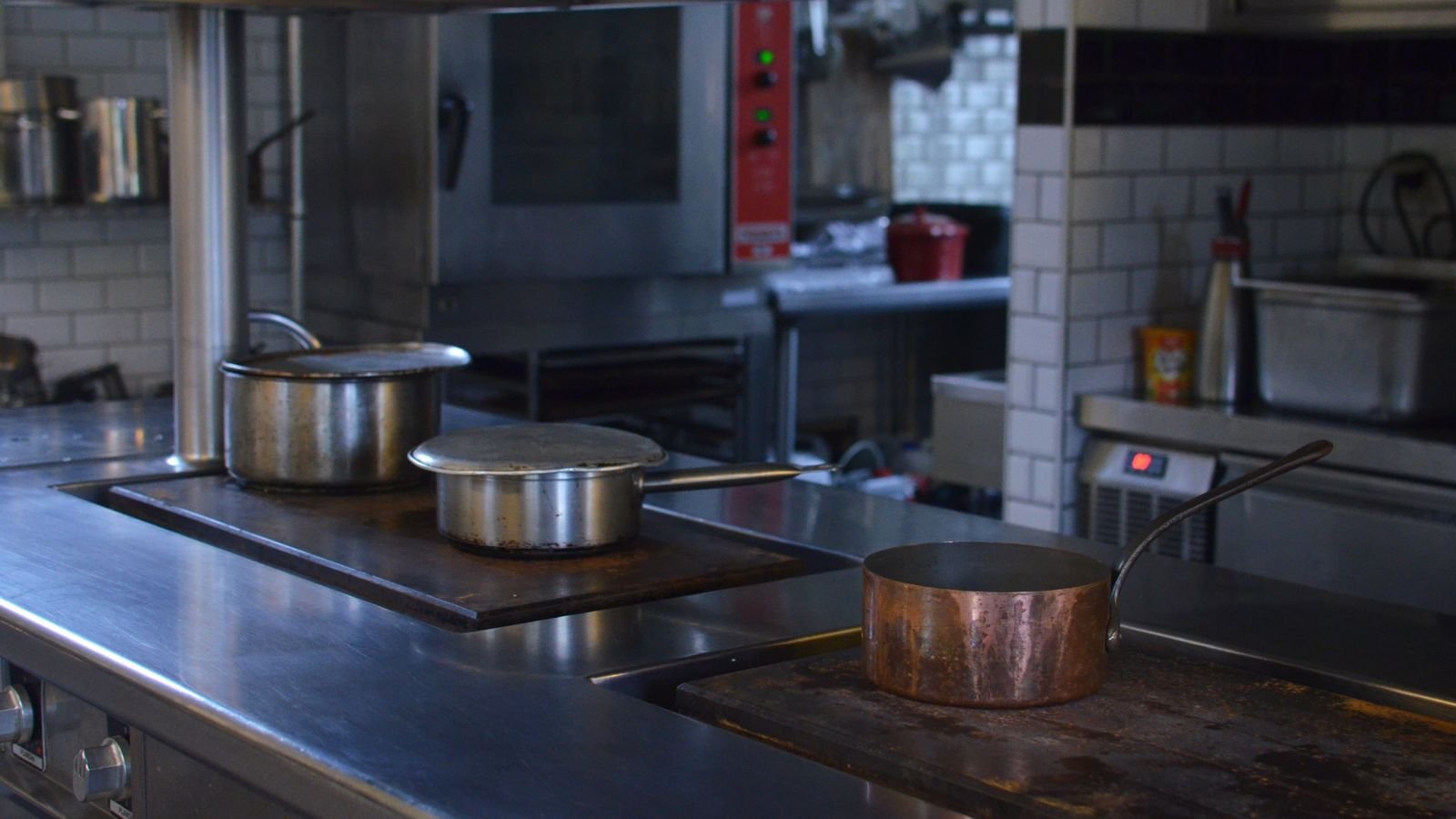
Commercial oven cleaning for a restaurant or takeaway is a planned job, not a quick wipe at the end of a shift. The oven sits at the centre of service, so the visit has to fit around opening hours, staff and food. The clearer the arrangement is before the cleaner arrives, the less time the kitchen spends waiting.
This guide explains what a commercial oven clean usually covers, how it is timed around service, what the kitchen prepares beforehand and the record a food business can keep afterwards. It does not replace your own food safety procedures. It helps you have a clear conversation with whoever cleans the equipment.
What a commercial oven clean covers
Start by naming the equipment. A small takeaway may have one or two ovens. A restaurant kitchen may have several ovens, a range, a grill and a combination oven used all day. Each one can need a different approach, so list them by type and by where they stand in the kitchen.
Agree which parts are included for each item. Racks, trays, shelf runners, door glass, seals, side panels and the oven floor are common areas to discuss. Some ovens have removable parts that can be taken out and soaked. Others have fixed parts that are cleaned in place. Ask the cleaner to confirm which applies to your equipment rather than assuming.
Ask about the outside of the equipment too. Handles, control panels and the surfaces around the oven are touched often during service. They may be part of the same visit or part of your daily kitchen routine. Write down which, so neither side leaves it for the other.
Keep extraction separate in the conversation. The canopy, filters and ductwork above the cooking line are a different job with their own arrangements. If you want the filters handled on the same visit, say so and confirm it. Do not assume an oven clean includes the extraction system.
Timing the visit around service
The steps for a commercial oven depend on its model and the method planned. Before booking, identify the make and model and ask whether the cleaner proposes manual work or a manufacturer-provided cleaning cycle. Confirm the preparation, isolation and return-to-service steps against the equipment instructions and the kitchen’s own food-safety procedure. Choose a visit window long enough for the agreed work and checks.
Ask the cleaner how long the job usually takes for your equipment. The answer depends on how many units there are, their size and their condition. A heavily baked-on oven takes longer than one cleaned regularly. Plan the first visit with extra time, because it often reveals the true starting condition.
Agree when the kitchen can use the equipment again. Confirm any rinse, drying or refitting steps from the product label and the oven’s make-and-model instructions. Include those steps in the time window instead of counting only the cleaning itself.
Think about the rest of the kitchen during the visit. If staff need to prepare food at the same time, discuss where cleaning materials will be used and where food will be. Keeping the two apart is easier when it is planned before anyone starts work.
Preparing the kitchen beforehand
Clear the oven and the area around it. Remove food, trays in use, utensils and anything stored on top of or beside the equipment. A clear working space lets the cleaner reach every part and reduces the risk of contaminating stored items.
Make sure someone can let the cleaner in and show them the equipment. Explain any quirks, such as a door that sticks, a part that is already damaged or a control that behaves oddly. Telling the cleaner about existing faults protects both sides when the work is checked.
Agree where removable parts will be handled. Do not treat a food-preparation sink as the default soaking area. Before the visit, choose a suitable designated space under the kitchen’s own procedures, and confirm how the area and any equipment will be returned to food use.
Ask which cleaning products will be used. A commercial kitchen should know what is brought onto the premises. The cleaner should be able to explain the products, how they are rinsed off and any precautions. Keep that information with your own records.
What happens during the clean
A typical visit starts with protecting the floor and nearby surfaces. Removable parts come out and are cleaned separately. The inside of the oven is then worked on in place, followed by the door, glass and seals. The exact sequence varies, so ask the cleaner to describe theirs.
Expect some areas to need more than one pass. Carbon that has built up over many months does not always lift in one attempt. A good cleaner will tell you where marks remain and why, rather than leaving you to discover it during service.
Cleaning does not repair the equipment. If a seal is torn, a door hinge is loose or a part is missing, the cleaner may notice it but cannot fix it. Ask them to tell you about anything they see. You can then arrange a repair through whoever services the oven.
Checking the result before service
Look at the oven with the cleaner before they leave. Check the inside, the door glass, the racks and the areas you agreed. It is easier to raise a missed area while the cleaner is still on site than after the kitchen has reopened.
Confirm that every removable part is back in place and fitted properly. A rack in the wrong position or a tray left out can cause problems during the first service. Run through the checklist you agreed at the start of the visit.
Check that any rinse, drying or refitting steps agreed for the product and oven model are complete. Ask the cleaner to explain the checks used before the equipment returns to service. If a product or equipment instruction is unclear, confirm the right step with its supplier or manufacturer before using the oven.
Keeping a record for food hygiene
The Food Standards Agency guidance on cleaning effectively in your business says a food business must be able to prove it cleans effectively. It says a cleaning schedule must state what is cleaned or disinfected, how often, and which products are used. Record the professional oven visit as part of your own schedule, alongside the routine work your team records.
Keep a simple note of each visit. Record the date, the equipment cleaned, who did it and anything they reported. Add photographs if they help you see the condition over time. This makes it easier to show how equipment is looked after if anyone asks.
Use the record to set the interval. If the ovens are heavily soiled at each visit, more frequent cleaning may make each job quicker and less disruptive. If they stay in good condition, the interval may be longer. Let your own records guide the decision rather than a fixed rule.
Ovens in a takeaway compared with a restaurant
A takeaway kitchen is often small, with one or two ovens working hard through the evening. Space around the equipment may be tight, and the kitchen may open again the next afternoon. That usually points to a visit late at night or early in the morning, with a clear plan for where removable parts are cleaned.
A restaurant may have more equipment and longer service hours, sometimes across lunch and dinner. The gap between services can be short. Some restaurants clean one unit at a time on different days so the kitchen is never without an oven. Others close one morning a week and do everything together.
Neither approach is right for every business. Tell the cleaner how your kitchen actually runs, including deliveries, prep times and staff shifts. The visit can then be arranged around your service instead of forcing the kitchen to fit the cleaner’s schedule.
How often a commercial oven needs cleaning
There is no single answer for every kitchen. A busy grill house cooking all day will need more attention than a café using one oven for a few hours. The menu, the volume and the daily cleaning routine all affect how quickly carbon and grease build up.
Daily cleaning by your own staff matters as much as the professional visit. Wiping spills, emptying crumbs and cleaning trays after service slows the build-up. The professional clean then deals with what daily cleaning cannot reach.
Review the interval after the first few visits. The cleaner can tell you what they found and how long it took. Together you can choose a frequency that keeps the equipment in good condition without closing the kitchen more often than necessary.
Choosing who cleans the ovens
Ask how the cleaner approaches commercial equipment specifically. Domestic oven cleaning and commercial kitchen work have different demands. A cleaner used to restaurant cleaning will understand working around service and food safety.
Ask what the cleaner needs from you and what they bring. Equipment, products, protective materials and waste disposal should all be clear before the visit. Confirm how they will take away soiled water and waste.
Check insurance and how issues are handled. If equipment is damaged during cleaning, you need to know who is responsible and how a claim would work. Get these answers before the first visit, not after a problem.
Questions about commercial oven cleaning
Does the oven need to be cold before cleaning?
Follow the instructions for the oven’s exact make and model and the method planned. Ask the cleaner how the unit will be taken out of service and prepared before manual work. If a manufacturer-provided cleaning cycle is proposed, confirm it is suitable for that model and follow its instructions. Agree when the oven can return to use.
Is the extraction canopy included?
Not automatically. Extraction is usually a separate job. If you want filters or the canopy handled during the same visit, agree it in advance and confirm exactly which parts are included.
Can the kitchen keep working during the clean?
Sometimes, if other equipment is in use and food preparation is kept well away from cleaning products. Discuss it with the cleaner and decide which areas stay in use before the visit starts.
What if marks remain after cleaning?
Ask the cleaner to explain them. Heavy carbon may need more than one visit, and some marks are damage rather than dirt. A clear explanation helps you decide what to do next.
Can removable racks go in the food-preparation sink?
Do not assume that area is available. Agree a suitable designated space with the person responsible for the kitchen’s food-safety procedures before the visit. If any food-contact area or equipment will be used afterwards, follow the kitchen procedure for making it ready again.
Should we keep a record of each visit?
It helps. A dated note of what was cleaned and what was found supports your cleaning schedule and makes it easier to judge how often the ovens need attention.
Arrange your commercial oven clean
List your ovens and other cooking equipment, the times the kitchen is closed and anything the cleaner should know about the condition of each unit. With that information, a visit can be planned around service rather than against it. See our oven cleaning service in Manchester, or send us your kitchen details to discuss a visit.