
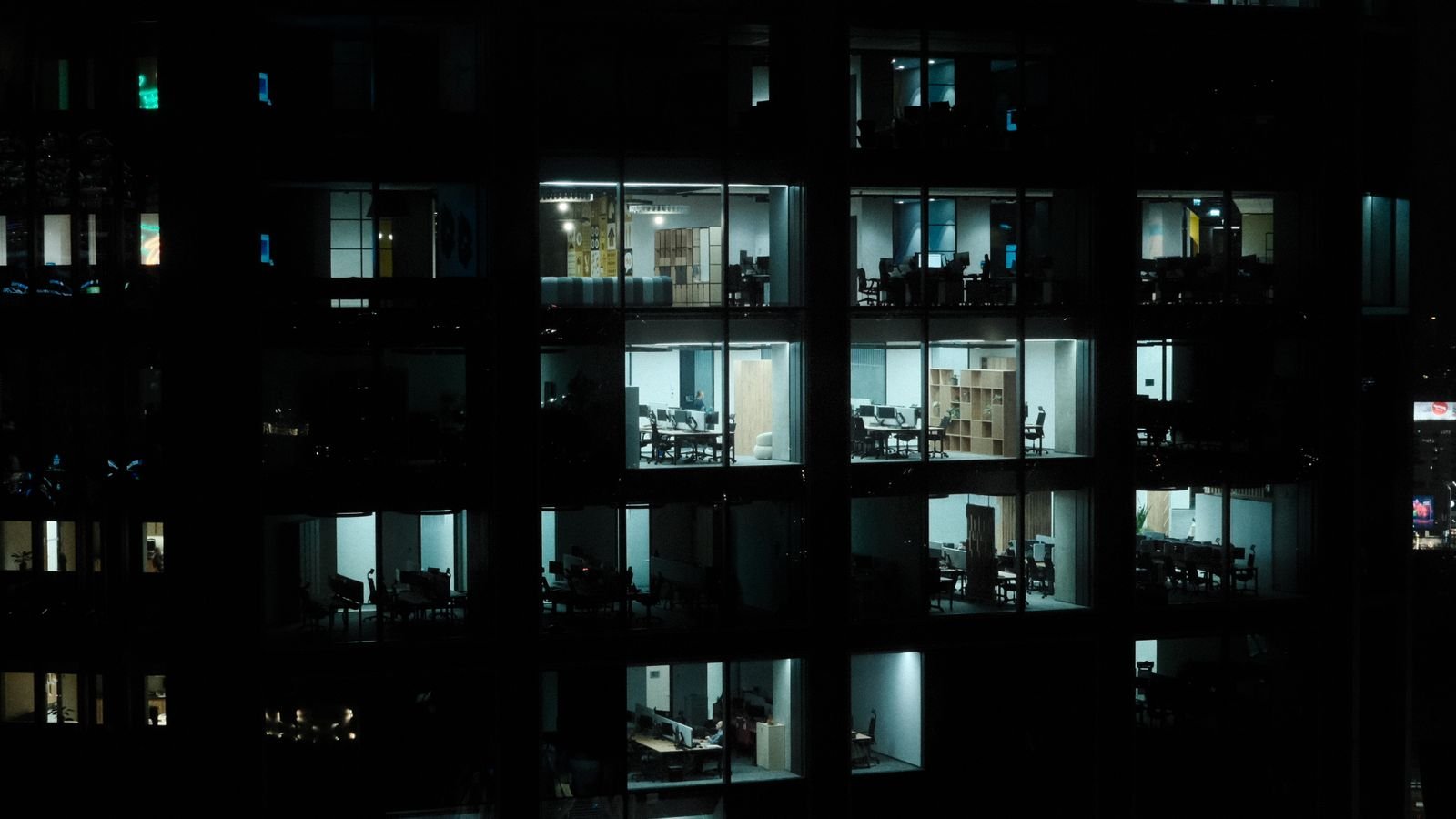
The clocks change on 25 October, and out of hours means something different afterward
An early morning or evening office clean scheduled for six o’clock feels completely different in September, with daylight either side of it, to the same slot in November, arriving or leaving in genuine darkness. Most of the practical arrangements around out of hours office cleaning, key holding, alarm codes, who is actually in the building, do not get revisited once the clocks change, even though the working conditions around them have shifted considerably. This is written from the buyer’s side specifically, the questions a business should be asking its cleaning provider about exactly this, rather than the provider’s own operational concerns.
Who actually holds the keys, and what that arrangement should look like
Key holding for out of hours access needs a clear, named arrangement, not an informal understanding that has built up over time and nobody has actually reviewed. A business should know exactly how many sets of keys or fobs are in circulation for out of hours access, who holds each one, and what the process is if a cleaner leaves the contract, since keys not properly recovered when a member of staff moves on is a genuine, if often overlooked, security gap. Asking a provider directly how key holding is managed and audited, rather than assuming it is handled responsibly, is a reasonable question any business should feel comfortable asking.
Alarm codes deserve the same scrutiny
A shared alarm code used by multiple cleaning staff over an extended period, never changed, known by people who may have left the contract months ago, is a common but avoidable weakness. Individual codes per cleaner, changed when staff turnover happens, and a clear record of who has access at any given time, is the standard worth expecting rather than a single generic code that has quietly become common knowledge across a wider group than the business ever intended.
Lone working after dark changes the risk picture entirely
A cleaner working alone in an office building after dark, arriving or leaving through an empty car park or a quiet street, faces a genuinely different situation to the same job done in daylight, and a responsible cleaning provider accounts for that rather than treating an evening or early morning slot identically to a daytime one. A proper lone working arrangement includes a check-in and check-out process, confirming a cleaner has arrived safely and confirming again once the job is finished and they have left the premises, so a missed check-in triggers a follow-up rather than going unnoticed until the next scheduled contact.
This matters to a business commissioning the clean too, not just as a duty of care toward the individual cleaner, but because a business relies on that same cleaner being reliably present and safe to actually get the job done consistently, and a provider without proper lone working protocols is a provider with a genuine, if easily overlooked, point of failure in service reliability.
Lighting around access points, the buyer’s responsibility as much as the provider’s
A business commissioning out of hours cleaning has some responsibility here too, specifically making sure the external lighting around whichever entrance a cleaner uses is genuinely adequate once the clocks have changed and that entrance is being used in the dark rather than daylight. A poorly lit staff entrance or car park that was never a problem through summer becomes a real one once a cleaner is arriving or leaving in darkness, and it is worth a business checking this specifically rather than assuming lighting adequate for a daytime workforce is automatically adequate for someone arriving before dawn or leaving after dusk.
What happens to a check-in record afterward
A check-in and check-out log is only useful if it is actually reviewed rather than simply collected and filed. A provider who can show a business its own site’s check-in history, on time every visit, or flag a pattern of late finishes worth discussing, is demonstrating the system is genuinely active rather than a policy that exists on paper but is not actually being monitored day to day. Asking to see this kind of record periodically, even briefly, is a reasonable check for any business that wants confidence the arrangement is working as described rather than taking it on trust indefinitely.
A single cleaner working alone versus a small team
A larger office is sometimes cleaned by a single person working alone across the whole space, and sometimes by a small team covering different areas simultaneously, and the choice affects the lone working picture directly. A team of two or more working the same building at the same time carries a built-in layer of safety a single lone cleaner does not have, someone else is physically present to notice if something goes wrong, without needing to wait for a scheduled check-in to catch a problem. For a larger premises specifically, it is worth asking whether a single visit is covered by one person or a small team, since the answer changes what kind of lone working protocol is actually needed to keep that visit properly safe.
What a genuinely poor arrangement looks like
A shared alarm code nobody can remember the origin of, keys held informally by whoever happened to be given a set years ago with no current list of who actually holds one, a cleaner working alone with no check-in system beyond an assumption that a call would come if something went wrong. None of this is unusual, and none of it reflects a provider or a business acting carelessly on purpose, it is simply what happens when an arrangement is set up once and never properly reviewed as staff, seasons and circumstances change around it. Recognising any of this in an existing contract is not a reason for alarm, it is simply the starting point for the review this piece has been arguing for.
What to ask before the clocks change, not after
Whether the scheduled cleaning time itself should shift now that daylight hours have narrowed, since a slot that made sense with daylight either side of it in September may be worth moving once it falls entirely within darkness. Whether the provider has a documented lone working policy, not just an informal assurance that staff are safe. And whether external lighting at the specific access point being used has actually been checked recently, rather than assumed fine because nobody has raised a problem yet.
What good practice actually looks like on the ground
A cleaner arriving at a well lit entrance, using an individually assigned access code, with a manager or scheduling system aware of their expected arrival and departure time and following up promptly if either does not happen as expected, is what a properly run out of hours arrangement looks like in practice. None of this is complicated or expensive to get right, but it does need to actually be in place rather than assumed, and a business that has never asked these questions of its provider has no real way of knowing which version of the arrangement it currently has.
Where this fits into our office cleaning service
Our office cleaning service runs individually assigned access codes and a documented check-in and check-out process for every out of hours visit as standard, not an optional extra, and we review scheduled visit timing against the clock change every year specifically to avoid a slot drifting into full darkness without anyone actually deciding that was the right outcome. Our wider commercial cleaning service applies the same standard across every out of hours contract we run, whatever the premises type.
If any of the questions above have raised something worth reviewing on an existing arrangement, you can ask us to review your out-of-hours cleaning arrangements directly, and it is a conversation worth having before the clocks change rather than once a slot is already running in the dark.
What personal safety guidance says about working alone after dark
The Suzy Lamplugh Trust, the UK’s leading personal safety charity, publishes guidance specifically on lone working, covering exactly the kind of check-in protocols and risk awareness a responsible out of hours cleaning arrangement should be built around. It is a genuinely useful reference for any business wanting to understand what proper lone working protection actually looks like, rather than relying on a general assurance from a provider that staff safety is being taken care of.
A short conversation, not a renegotiation
Raising these questions with an existing provider does not need to feel like reopening a contract or challenging a relationship that has otherwise worked well. Most of what this piece has covered is a straightforward, factual conversation, confirming who holds keys, checking whether codes are individually assigned, asking how a missed check-in is actually handled, and it is the kind of review a reasonable provider expects and welcomes rather than resents. A business that has this conversation once a year, timed naturally around the clocks changing, keeps the arrangement current rather than relying on assumptions that quietly go stale as staff and circumstances move on around it.
What a business should be able to say with confidence
A business that has actually asked these questions can say, plainly, who holds keys to its premises, how alarm access is controlled, and what happens if a cleaner working alone after dark does not check in when expected. That is the whole point of raising it now, before the darker months are fully underway, rather than assuming an arrangement that worked fine in daylight automatically holds up once the same job is happening in the dark.