
Plan the cleaning without promising an illness-free office
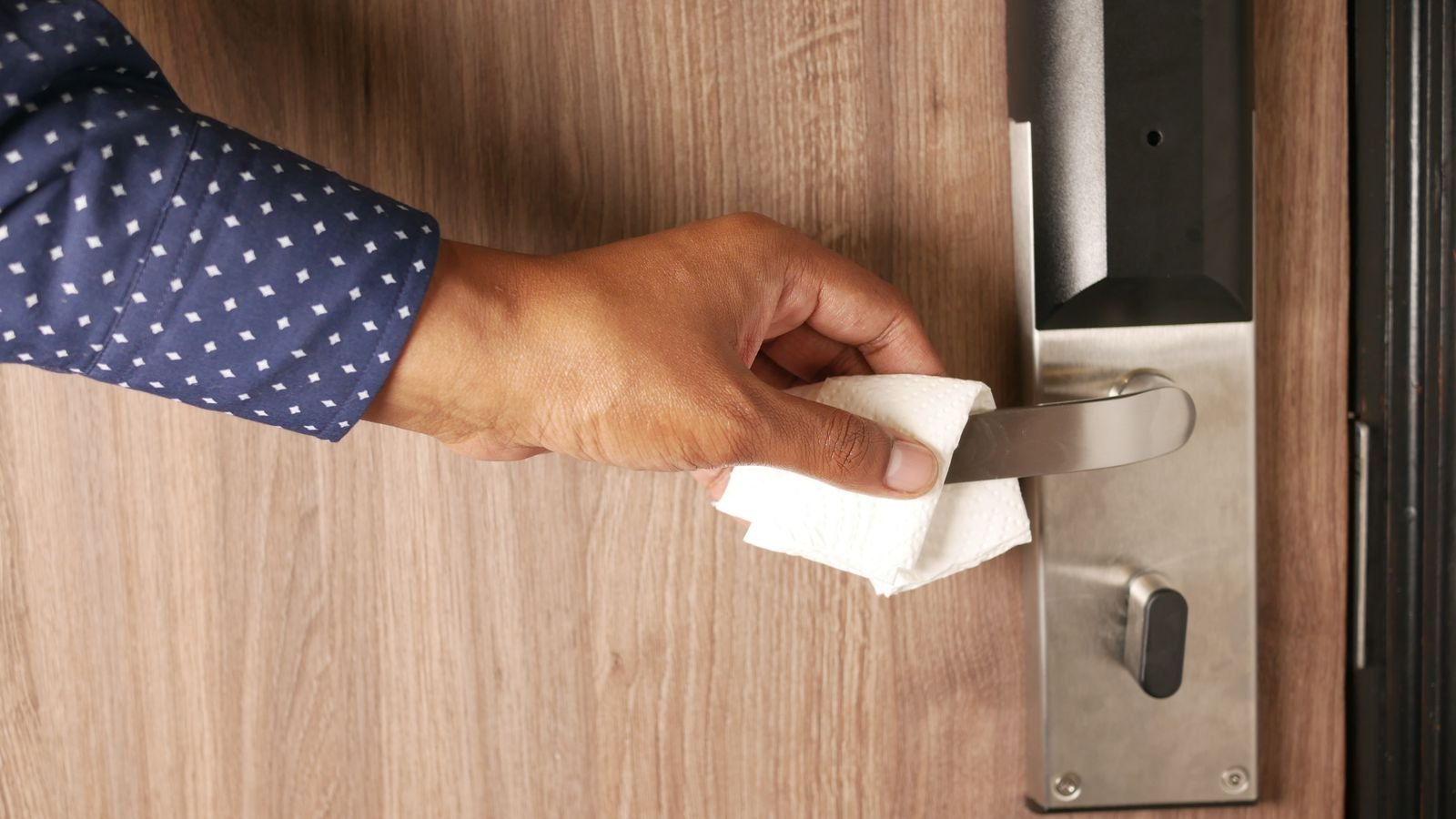
Office touchpoint cleaning means giving shared handles, controls and other frequently handled surfaces a clear place in the cleaning schedule. For a Manchester workplace, the useful question is who cleans each surface, with which method, and when. A vague instruction to keep everything hygienic leaves too much open to interpretation, particularly when several businesses share a building or different cleaners cover different shifts.
A cleaning contract cannot guarantee that an office stays open or that nobody becomes ill. Flu and norovirus are different infections, and surface cleaning is only part of the precautions a workplace may need. This guide concerns the practical cleaning brief. Decisions about staff illness, public health advice and whether an area can remain in use belong with the employer and the relevant health professionals.
Start by checking what your existing commercial cleaning arrangement already includes. A named task in a written schedule is easier to check than an assumption that the evening team covers everything people touch.
Name the surfaces and who is responsible
Walk the route someone takes from the entrance to their desk, then to the kitchen, meeting rooms and washrooms. Note the handles, switches and shared controls along that route. Entrance push plates, lift buttons, kettle handles, fridge handles, taps, printer controls and meeting-room remotes are useful examples. Your list should reflect the actual office, including any shared areas managed by the landlord.
Separate accessible surfaces from equipment that needs special instructions. A door handle and a powered conference-room screen should not automatically receive the same product or method. Ask the equipment owner for the manufacturer’s cleaning instructions and record any restrictions. If an item cannot safely be cleaned under the agreed arrangement, make that limitation visible rather than leaving the cleaner to guess.
For each task, name the responsible party. Reception staff, tenants, the building manager and a contracted cleaner may all have different roles. This avoids a shared kitchen being missed because every team believed another team was covering it.
Agree frequency from how the office is used
There is no single daily timetable in this article that will suit every workplace. An occupied reception, an occasionally used meeting room and an empty upstairs office have different patterns of use. Discuss those differences with the contractor and record the agreed frequency against each task. Do not turn a sample checklist into a claim that the same frequency is adequate everywhere.
Check whether the contracted hours make the schedule possible. If the cleaner attends after the last person leaves, a midday task needs a separate arrangement. It might be covered by the building team, agreed as an additional visit, or assigned to a trained member of staff. The important point is that the arrangement exists before someone relies on it.
Write down what triggers a review, such as a change in occupancy, a new shared room or advice received during an illness incident. Record who can authorise changes and how the revised instructions reach the people doing the work.
Keep cleaning instructions separate from product claims
A cleaning schedule should identify the product and method suitable for the surface. Where disinfection is specified, ask the contractor to check the product’s stated use, instructions and required contact time. Do not substitute a general claim such as antibacterial for evidence that a product is suitable for the task being discussed.
The written method should also cover preparation, application, any required rinsing and when the surface can be used again. Follow the label and relevant safety assessment; do not improvise a dilution or combine cleaning products. For shared electrical equipment, include the manufacturer’s restrictions rather than assuming that a spray suitable for a worktop is suitable for a keyboard.
Keep the product information where the team can find it. A substitute cleaner should be able to identify the correct bottle and instructions without relying on the usual cleaner’s memory. If a supplied product changes, review the method instead of keeping the old timing and application instructions by default.
Soap and water matter for norovirus
UKHSA guidance on preventing norovirus spread says to wash hands with soap and warm water and not rely on alcohol gels, which do not kill the virus. It also advises staying away from work until at least two days after vomiting or diarrhoea has stopped, and using bleach-based cleaners to disinfect surfaces. These are health precautions, not a promise that a cleaning visit prevents every infection.
For the office manager, a practical check is whether sinks are accessible and soap and hand-drying supplies are available. Give someone responsibility for reporting shortages and arranging replenishment during occupied hours. An evening cleaner cannot fix a dispenser that became empty just after the morning rush unless a reporting and restocking arrangement exists.
A sanitiser station should not be presented to staff as a replacement for handwashing against norovirus. Keep any staff notice consistent with current public health advice, and ask the employer’s responsible person to approve it. Cleaning teams should not be asked to diagnose symptoms or decide when an employee can return.
Give kitchens and meeting rooms clear boundaries
In the kitchen, distinguish cleaning shared handles and worktops from washing employees’ dishes or clearing personal food. Those are separate tasks and may sit with different people. Record whether cleaners can move items, which areas must be cleared before a visit, and what happens when a surface is inaccessible.
Meeting rooms need the same clarity. List the table, chair arms, door controls and shared accessories that are included. Agree who removes cups, papers and personal belongings after a meeting. A cleaner should not have to sort confidential documents to reach a surface.
If a room is booked continuously, decide how cleaning fits between bookings. A diary allowance, a room-release message or another simple handover can prevent the cleaner arriving while a confidential meeting is still in progress. The process should be usable by reception and substitute staff as well as the regular team.
Keep washroom equipment separate
Ask how the contractor keeps washroom cloths and equipment separate from items used in kitchens and other office areas. The explanation should match the equipment actually supplied, including where used cloths are placed and how clean replacements are stored. A colour on a checklist is not enough if the person using the cloth cannot explain what it means on that site.
Include storage in the review. Check that products remain labelled, equipment can be put away safely and staff know which cupboard they may access. Report missing supplies before the next shift where possible. This is a useful operational check for an office manager and does not require making claims about infection rates.
Escalate illness incidents through the right person
Suspected or confirmed illness calls for a review of the workplace’s arrangements, not an automatic assumption that a standard cleaning visit is an outbreak response. The employer should obtain the appropriate health advice and tell the contractor what has been agreed. Staff should know who to contact and how to keep people away from an affected area while suitable instructions are arranged.
A routine cleaner should not be left to deal with unexpected bodily-fluid contamination without an agreed method, suitable training and equipment. Make the escalation route part of the site instructions. Record who can arrange specialist help when the task falls outside the contract.
Do not assume fogging is necessary or suitable simply because someone is ill. Ask for an assessment of the specific task, product, occupied areas and restrictions. A contractor’s sales description is not a substitute for public health advice or a safe working method.
Use a record that helps the next shift
A useful record names the area, task, completion time and any exception. If a room was locked, a product was unavailable or equipment could not be accessed, record that plainly. A tick should mean the specified task was completed, not merely that the cleaner entered the building.
Give exceptions an owner. Reception might arrange access to a locked room; the building manager might replace a broken dispenser; the contractor might clarify a product instruction. Without that next action, the same note can be copied from one visit to another while nothing changes.
Review a small selection of entries with the team and compare them with the actual rooms. This can reveal unclear instructions or an unrealistic time allowance. It is a check on the agreed service, not proof that a room is free from viruses.
Ask for an office-specific cleaning brief
When discussing office cleaning in Manchester, bring a floor plan or room list, the occupied hours and a list of shared equipment. Explain which tasks staff already handle and which you want the contractor to include. Ask for the agreed surfaces, frequency, exclusions and reporting contact in writing.
If you are comparing cleaning contractors for your workplace, compare those written details rather than a general hygiene promise. Check how cover staff receive instructions and how changes are approved. A clear brief gives everyone a realistic understanding of the work and makes it easier to spot when something has been missed.