
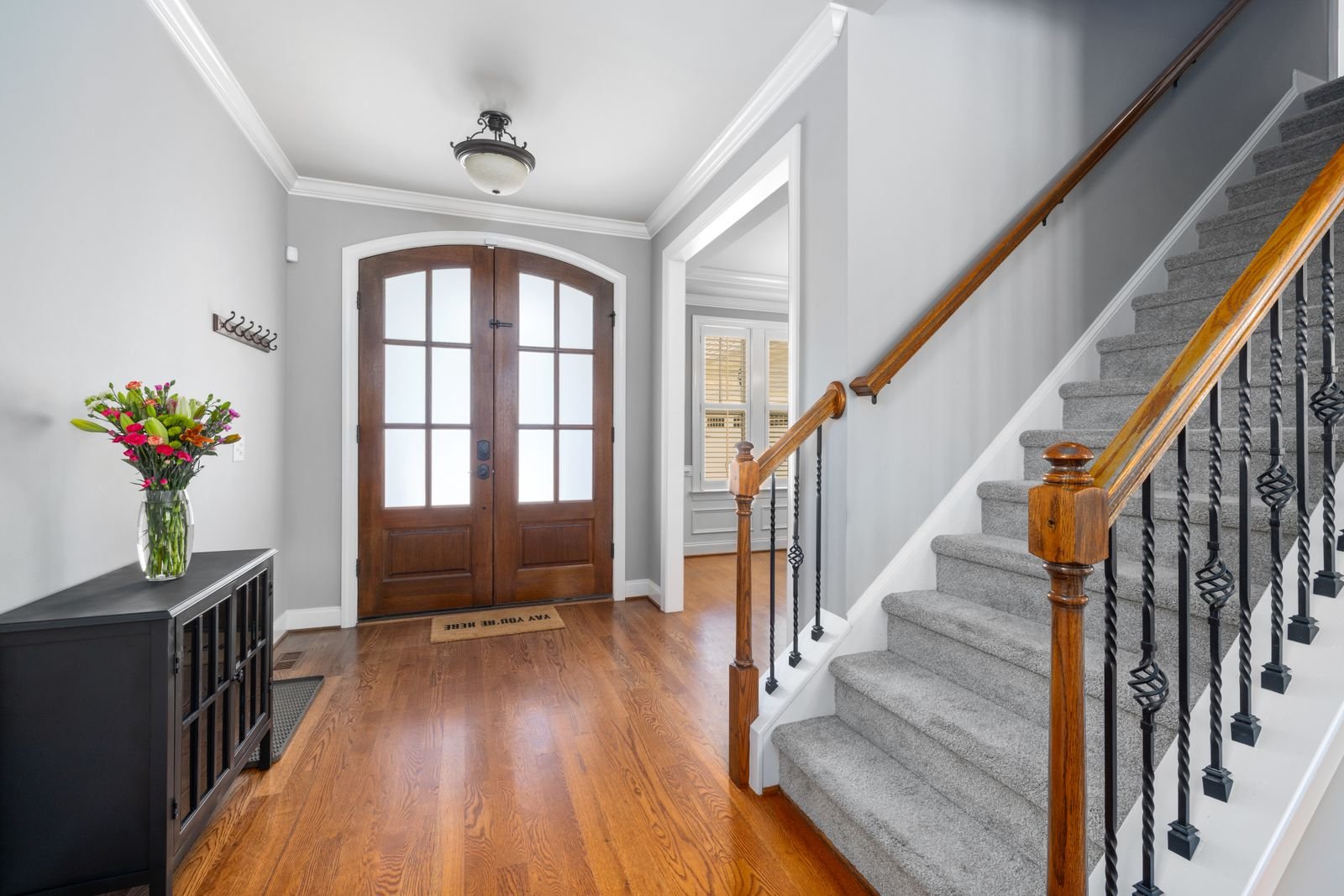
The shared areas are what an inspector sees first
A housing officer arriving at your HMO does not begin in the bedrooms. They begin at the front door, in the hallway, on the stairs and on the first landing. Within about ninety seconds they have formed a view of how the property is managed, and that view is built almost entirely from the condition of areas no single tenant considers theirs. A hallway with three weeks of takeaway flyers on the mat, a bin bag propped against the stair rail, a landing carpet that has gone tacky underfoot and a kitchen worktop nobody has claimed responsibility for since the last tenancy change all say the same thing before a word is spoken.
This is the awkward reality of HMO management in Manchester. The rooms are usually fine, because each tenant has a personal stake in the space they sleep in. The shared areas are where standards drift, because responsibility is spread across five or six people who did not choose each other and who will all be gone within twelve months. Landlords running student lets around Salford and the city centre, professional house shares in Ancoats and the Northern Quarter, and larger converted properties across Cheetham Hill and Prestwich tend to reach the same conclusion after their first licensing visit. Communal cleaning is not a household chore to be delegated. It is a management duty, and it needs the same contracted treatment as any other commercial cleaning service in Manchester you would put in place for a building you are legally accountable for.
What the HMO Management Regulations require of common parts
The relevant duties sit in the Management of Houses in Multiple Occupation (England) Regulations 2006. They apply to the person managing the HMO regardless of whether the property is licensed, which catches a surprising number of smaller three and four bedroom shares whose owners assume the rules only bite above a certain size.
Regulation 7 sets out the duty to maintain common parts, fixtures, fittings and appliances. The wording requires common parts to be kept in good and clean decorative repair and in a safe and working condition. That standard covers the hallway, staircases, landings, shared kitchens, shared bathrooms, shared living rooms and the fixtures and appliances that two or more households use between them. It extends outside the front door as well, to gardens, yards, outbuildings, boundary walls and fences. A shared kitchen with a grease-blackened extractor hood, a bathroom with mould across the ceiling and sealant, or a rear yard used as an overflow tip are all failures of the same duty, not separate cosmetic issues.
Regulation 4 covers safety measures, including the requirement to keep all means of escape from fire free from obstruction and maintained in good order. Regulation 9 deals with waste disposal facilities being adequate for the number of occupiers. Regulation 10 places duties on occupiers too, which matters, because it means tenants are not permitted to frustrate your compliance. What it does not do is transfer your responsibility to them. If you want the full statutory picture alongside the licensing framework it sits within, the National Residential Landlords Association maintains a detailed guide to HMO licensing and management duties that is worth reading before your next renewal.
Escape routes stay clear or the licence is at risk
The obstruction issue is where cleaning and compliance overlap most directly, and it is the one Manchester landlords most often underestimate. Hallways and staircases in a shared house are the only route out. They are also, from a tenant’s point of view, the nearest available storage. Bicycles chained to the banister, a suitcase parked on the half landing, flat-packed furniture leaning against a wall for a fortnight, boxes stacked under the stairs and bin bags left outside a bedroom door are all normal behaviour in a house share and all sit squarely against the duty to keep escape routes clear.
A weekly attendance solves this in a way that a notice on the wall never will. Someone walks the route, removes the accumulated rubbish, moves what can be moved and reports what cannot. The obstruction is dealt with while it is still one bag rather than a month of accumulation, and you get a dated record showing the route was walked. Landlords who rely on a quarterly inspection tend to discover the problem at the same moment the local authority does.
Why tenant cleaning rotas fail in shared houses
Almost every landlord tries the rota first. A laminated sheet goes up in the kitchen, weeks are allocated, and for three or four weeks it works. Then one person misses a turn, the next person decides they are not cleaning up after someone who did not clean up after them, and the whole arrangement collapses into a low-grade dispute that eventually arrives in your inbox.
The failure is structural rather than a matter of finding better tenants. Shared kitchens and bathrooms are classic common pool problems. The cost of cleaning falls on one person and the benefit is spread across everyone, so the rational move for each individual is to wait. Add a mid-tenancy replacement who never agreed to the rota, exam periods when nobody has time, and the fact that most people in their early twenties have never used a proper degreaser, and the outcome is predictable. Even where tenants do clean, they clean to a domestic standard. They wipe surfaces. They do not descale a shared shower, degrease an extractor filter, sanitise bin areas or lift traffic soil out of a hallway floor.
There is also a straightforward commercial argument. A communal clean priced across five or six rooms is a modest weekly figure per tenant, and it removes the single most common source of housemate conflict. Many Manchester landlords now build it into the rent as an included service and market the property on it, because a house that is visibly maintained lets faster and holds a better standard of tenant.
What a contracted communal clean actually covers
A serious rota is specified by area and frequency, not by a vague instruction to keep on top of things. The version we put in place for HMO clients across Greater Manchester usually breaks down as follows.
Weekly attendance
Hallway, stairs and landings vacuumed or mopped through. Entrance mat lifted and cleaned. Bannisters, light switches, door handles and shared touch points wiped and sanitised. Shared kitchen surfaces, sink, taps, splashback, hob and appliance exteriors cleaned. Shared bathrooms cleaned throughout, including toilet, basin, shower, screen and mirrors. Bins emptied and liners replaced. Rubbish removed from escape routes and communal floors. A short written note of anything obstructed, damaged or deteriorating.
Monthly and periodic work
Internal glass and communal windows. Skirtings, door frames and high level dusting. Extractor grilles and filters degreased. Limescale treatment on shared taps, showerheads and screens. Bin store washed down and deodorised. Cobweb removal to the porch and entrance. Communal fridge and microwave interiors where these are provided by you rather than by tenants.
Between tenancies
A full deep clean of all shared areas, which is a different job from a room turnover and should be quoted as such. Floors stripped back or restored, kitchen cabinetry cleaned inside and out, bathrooms taken back to a lettable standard, and the whole common area brought to a condition you would be happy to photograph for an inspection file.
The frequency that suits a given property depends on occupancy and layout. Six sharers with one kitchen need more than four sharers with two bathrooms. Rather than guessing, most landlords with more than one property get further by working with established commercial cleaning contractors who will survey the building, propose a schedule against the actual footfall and hold the same standard across a portfolio.
Hallway floors take the heaviest wear in the building
The communal floor in an HMO absorbs more traffic than any other surface you own. Every occupant crosses it several times a day, in Manchester weather, carrying shopping, bikes and deliveries. A hallway in a six-bed share sees a volume of footfall closer to a small office than a family home, and domestic vacuuming does not keep pace with it.
Where hallways and stairs are carpeted, the visible problem is traffic lane soiling down the middle of the runner, and the fix is periodic hot water extraction rather than more frequent vacuuming. Booking this into the schedule two or three times a year, alongside the routine attendance, is what keeps a communal carpet presentable for its full life rather than needing replacement every second tenancy. Our floor cleaning service handles this on a planned cycle so the work is priced in rather than becoming an emergency before an inspection.
Many Manchester HMOs have moved to laminate, vinyl or engineered wood in the hall and on the stairs for exactly this reason, and those surfaces have their own maintenance requirement. Grit tracked in from the street acts as an abrasive underfoot and takes the finish off within a couple of years if it is not removed regularly. Sealed and coated floors need the right pH-neutral treatment rather than whatever is under the sink, and periodic hard floor cleaning and maintenance to restore the surface and protect it. Good entrance matting at the front door does more for a communal hard floor than anything else you can buy, and it is cheap.
Bin stores, waste and the front of the property
Waste is where HMO complaints usually originate, and it is rarely the tenants inside who complain. It is the neighbours. Overflowing bins left on the pavement between collections, side alleys used as an overflow, and the front garden accumulating an old mattress and a broken clothes airer are the fastest route to a report reaching the local authority. In several Manchester wards with concentrated student and shared housing, waste and the external appearance of properties are actively monitored, and a property that generates repeat complaints attracts attention across your whole portfolio rather than just that address.
The regulations require adequate waste disposal provision for the number of occupiers, which in practice means enough bins for the household size and a bin area that is usable rather than blocked. Building bin presentation and return into the cleaning attendance, along with a wash down of the bin store and a clearance of the front boundary, removes the most visible failure point for a small weekly cost.
Records are what protect you at renewal
Compliance is judged on what you can demonstrate, not on what you know you did. A landlord who says the property is cleaned regularly is in a weaker position than one who produces twelve months of dated attendance sheets, a written specification of what is covered, and a log of obstructions reported and cleared.
Ask any contractor for a signed or timestamped record of each visit, a copy of the schedule, and a route for reporting issues back to you. That paperwork does three jobs. It evidences the management duty at licence renewal, it gives you early warning of maintenance problems from someone who is in the building every week, and it settles deposit disputes about the condition of shared areas at the end of a tenancy without argument.
Getting a communal cleaning schedule in place
If you manage one HMO, the honest answer is that a fortnightly or weekly visit will remove most of your risk and nearly all of your tenant complaints. If you manage several across Manchester and Salford, the gain is bigger, because a single contracted schedule gives you one standard, one point of contact and one consistent record across every address rather than a different arrangement in each house.
We work with landlords and letting agents across Greater Manchester on scheduled communal cleaning for shared properties, covering hallways, stairs, shared kitchens and bathrooms, bin areas and the periodic floor work that keeps those surfaces in good order. Talk to us about the properties you manage and we will survey them, propose a frequency that matches the occupancy, and set out a written specification you can put in front of an inspector. Full details of how we structure that work sit on our commercial cleaning pages, and we are happy to price a single address or a portfolio on the same terms.