
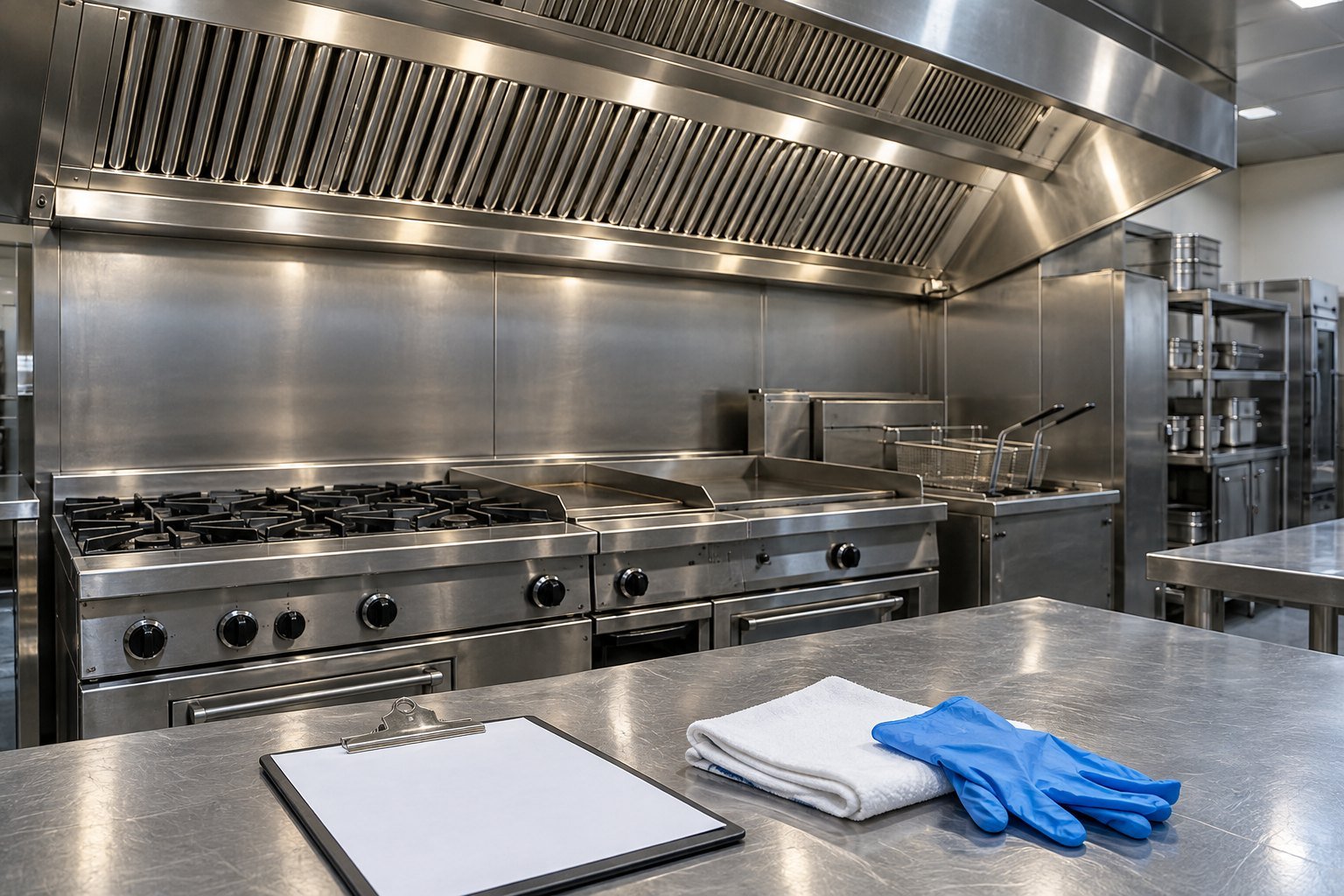
Two different cleaning jobs above the cooking line
A restaurant operator can see the canopy and its removable filters from the kitchen floor. The ductwork, fan and discharge route are usually out of sight. Keeping the visible metalwork clean is part of routine kitchen care, but it does not prove that the complete extraction system has been inspected or cleaned internally. That distinction matters when the fire risk assessment, insurer or landlord asks what work was done.
EPC’s restaurant cleaning service covers extraction hoods, filters and accessible areas within an agreed scope. For full duct cleaning, the service page says we can coordinate with specialist contractors. The specialist’s assessment, access plan, internal cleaning and verification report should be identified separately in the work order. A general kitchen deep-clean invoice should never be treated as a TR19 Grease certificate.
This guide is for Manchester restaurants, pubs, takeaways and other commercial kitchens deciding what to ask for and what records to retain. It is not a substitute for the kitchen’s fire risk assessment, insurance wording or a competent ventilation-hygiene contractor’s site-specific advice.
Why the ductwork needs its own record
Cooking vapour can leave grease deposits on surfaces behind the filters. The duct may pass through ceiling voids or rise to an external discharge, making most of its route invisible during a normal close-down clean. Grease accumulation is a fire risk, and a clean canopy face cannot show the condition of a hidden bend or fan housing.
The Building Engineering Services Association’s kitchen extract guidance explains the role of its TR19 Grease specification in inspection, cleaning and verification of the extraction route. BESA describes the canopy, filters, ductwork, fan and discharge as parts to define in the specialist contract, and it calls for a post-clean report that records what was actually reached. These are the useful questions to take into a quote, rather than simply asking whether the contractor “does extractor cleaning”.
A restaurant can have two perfectly legitimate suppliers on the same evening: one for the kitchen surfaces and accessible canopy, another for the internal extract system. Their written scopes should meet without either invoice implying that the other job was completed.
Start with the system, not a blanket price
Before requesting a specialist quote, gather any existing system drawing, previous cleaning report and fire risk assessment notes. Walk through where the canopy starts, where the fan sits and where the duct discharges if those details are known. Do not open panels or climb into voids to find out; record the unknowns for the specialist survey.
Ask the contractor to identify each canopy and extract run separately. A site with two cooking lines may have more than one route, and a quote that just says “kitchen extract” leaves the boundary unclear. The specialist should describe how access will be gained, which sections are unreachable as currently built and what extra panels or enabling work may be needed.
BESA stresses that hidden ductwork must be accessible for inspection and cleaning. If part of a run cannot be reached, the report should say so. It is more useful to receive a clear limitation and a remedy than a broad “all cleaned” statement that cannot be reconciled with the building layout.
Ask how the cleaning interval was chosen
Hours of operation are a starting point, not the whole decision. BESA’s public guidance gives indicative minimum intervals of three months for heavy use of 12 to 16 hours a day, six months for moderate use of 6 to 12 hours, and twelve months for light use of 2 to 6 hours. It also says cooking style, deposit condition, insurance terms and the fire risk assessment may require more frequent work.
Do not assign your own kitchen to a band merely because it opens for a certain number of hours. Frying, chargrilling and changes in menu can affect the grease load. Ask a competent contractor to explain the observed condition, the recommended interval and when it should be reassessed. Check the actual insurance policy rather than assuming that an industry example overrides its wording.
The interval should be written beside the evidence that supports it. A calendar reminder alone shows an intended date; it does not show that the extraction route was inspected or that a previously inaccessible section was brought into scope.
What to put in the specialist work order
A useful work order names the system and the sections included: canopy and plenum, filters, risers, horizontal runs, fan and discharge. It says who provides safe access, electrical isolation and reinstatement, and who arranges any panel installation. The agreed cleaning window should allow the kitchen to be protected and returned to service without rushing the verification stage.
Ask the contractor what qualifications and audited scheme membership apply to the technicians and to the post-clean verification. BESA describes the Grease Hygiene Technician qualification and its Vent Hygiene Register. If a supplier claims TR19 Grease compliance, request its registration details, a sample report and an explanation of how this particular system will be measured and documented. Do not accept a logo on a sales sheet as the only proof.
The kitchen team should know which areas are being handed over and which routine tasks remain with them. EPC can quote separately for commercial oven cleaning and other accessible kitchen surfaces. A specialist duct contract should explicitly cover the hidden route and the evidence pack. This division keeps the close-down plan practical and the records honest.
Read the report against the quote
BESA’s guidance says the post-clean verification report should include before-and-after photographs from comparable positions, any deposit-thickness test results, a written account of completed work, access limitations and recommendations, and a certificate that identifies the system and competent technician. Ask for enough location detail that a future manager can tell which canopy and duct run each photograph or reading represents.
Compare the final report with the original work order. Were all named sections reached? Did an access panel prove unusable? Is a fan or discharge area listed as excluded? What follow-up is required, by whom and by when? A certificate should not make those caveats disappear. Record them alongside the report and commission the outstanding work through the right specialist.
Store the report with the fire risk assessment and other premises-maintenance records in a place that the responsible manager can retrieve. Keep previous reports as well as the latest one: the sequence helps show whether access problems were resolved and whether the interval still fits the condition found. If an insurer asks for a particular form of evidence, follow the policy terms.
What staff can maintain between specialist visits
Daily and weekly housekeeping still matters. Follow the canopy and filter manufacturer’s instructions for removal, cleaning, drying and refitting. Keep every filter in its proper position and report a missing or damaged part. Clean reachable external metalwork and grease collection points within the restaurant’s safe operating procedure. Avoid spraying chemicals into a running fan or opening internal ductwork as a routine staff task.
Record obvious changes in extraction performance, noise, odour or visible grease escape and send them to the person responsible for maintenance. Those observations can prompt a specialist check, but they do not diagnose the condition of the hidden duct. Likewise, a visibly clean filter does not demonstrate that the fan and discharge are clean.
For broader close-down work, our restaurant deep-cleaning guide covers the kitchen environment. Its scope is different from the ventilation-hygiene report described here. The two jobs can be planned together, particularly when the kitchen is closed, but the evidence should remain separate.
A short evidence checklist for the manager
- Identify every canopy and extract route in the premises.
- Keep the current fire risk assessment, insurer wording and past extract reports together.
- Ask a competent specialist to survey access and system condition before fixing the interval.
- Require a written scope covering the canopy-to-discharge route and any exclusions.
- Confirm technician competence and the proposed post-clean verification method.
- Read the delivered report for photographs, measurements where taken, limitations and next actions.
- Keep EPC’s accessible canopy or kitchen-cleaning invoice separate from the specialist duct report.
These records help an incoming manager avoid starting from scratch. They also make it easier to spot when a planned specialist visit was missed or an access recommendation was never completed. They are evidence of the work recorded, not a blanket guarantee that a building will pass every inspection or insurance test.
Plan the next clean without confusing the scopes
If the kitchen needs a close-down clean, tell EPC which cooking equipment, external canopy surfaces, filters and accessible areas you want included. We can discuss timing and quote for the cleaning work within our commercial cleaning programme. If the ductwork needs a TR19 Grease assessment or full internal clean, ask for the specialist scope and evidence separately; our restaurant service page says we can coordinate with specialist contractors.
When you enquire, bring the last extract report if you have it and note any known access issues. We can then describe the work EPC can carry out, what requires a ventilation-hygiene specialist and how the visits might fit around service hours. That is a better starting point than one vague request to “clean the extractor”.