
The cleaner empties the bin, but the duty stays with you
Every evening a cleaner collects the bags from under the desks, carries them to a store and leaves the bins ready for the morning. It looks like a simple job. It is also the first step in a chain of legal duties around office waste and recycling, and most of that chain belongs to the business, not the cleaner.
The GOV.UK guidance on disposing of business or commercial waste sets out the rules. They apply to any waste that comes from a commercial activity. That includes the ordinary rubbish from an office, a shop, a surgery or a unit on a business park.
This guide is for the manager or owner in Greater Manchester who uses a cleaning contractor and wants to know who does what. It explains what the guidance requires, where a cleaner’s work begins and ends, and what to agree so that nothing is missed.
What the guidance says you must do
GOV.UK lists your responsibilities as a business. There are six main points.
- Keep waste to a minimum by doing everything you reasonably can to prevent, reuse, recycle or recover it, in that order.
- Sort and store waste safely and securely.
- Complete a waste transfer note for each load of waste that leaves your premises.
- Check that your waste carrier is registered to dispose of waste.
- Do not allow the carrier to dispose of your waste illegally.
- Recycle waste that is like household waste, including food and dry recyclables such as glass, plastic, metal, paper and card.
Agree which waste tasks the cleaning contract includes and who carries them out. Keeping streams apart within the premises is different from taking waste away. A contractor’s responsibilities depend on its actual role, so do not assume that calling it a cleaning service removes any duties connected with the waste it handles.
What counts as business waste
GOV.UK says any waste that comes from a commercial activity is business waste. It also covers waste from construction, demolition, industry and agriculture. If you run a business from part of your home, waste from that part counts as business waste too.
That matters for a cleaning visit. The bag from a meeting room is business waste. So is the packaging from a delivery and the offcuts from a fit out. A cleaner who takes a bag home or leaves it in a public bin has put the business in an awkward position.
Sorting at the desk
The first decision about waste is made at the bin. If recycling and general waste go into the same bag, the recycling is lost. GOV.UK tells businesses to recycle waste that is like household waste, so the sorting has to start where the waste is created.
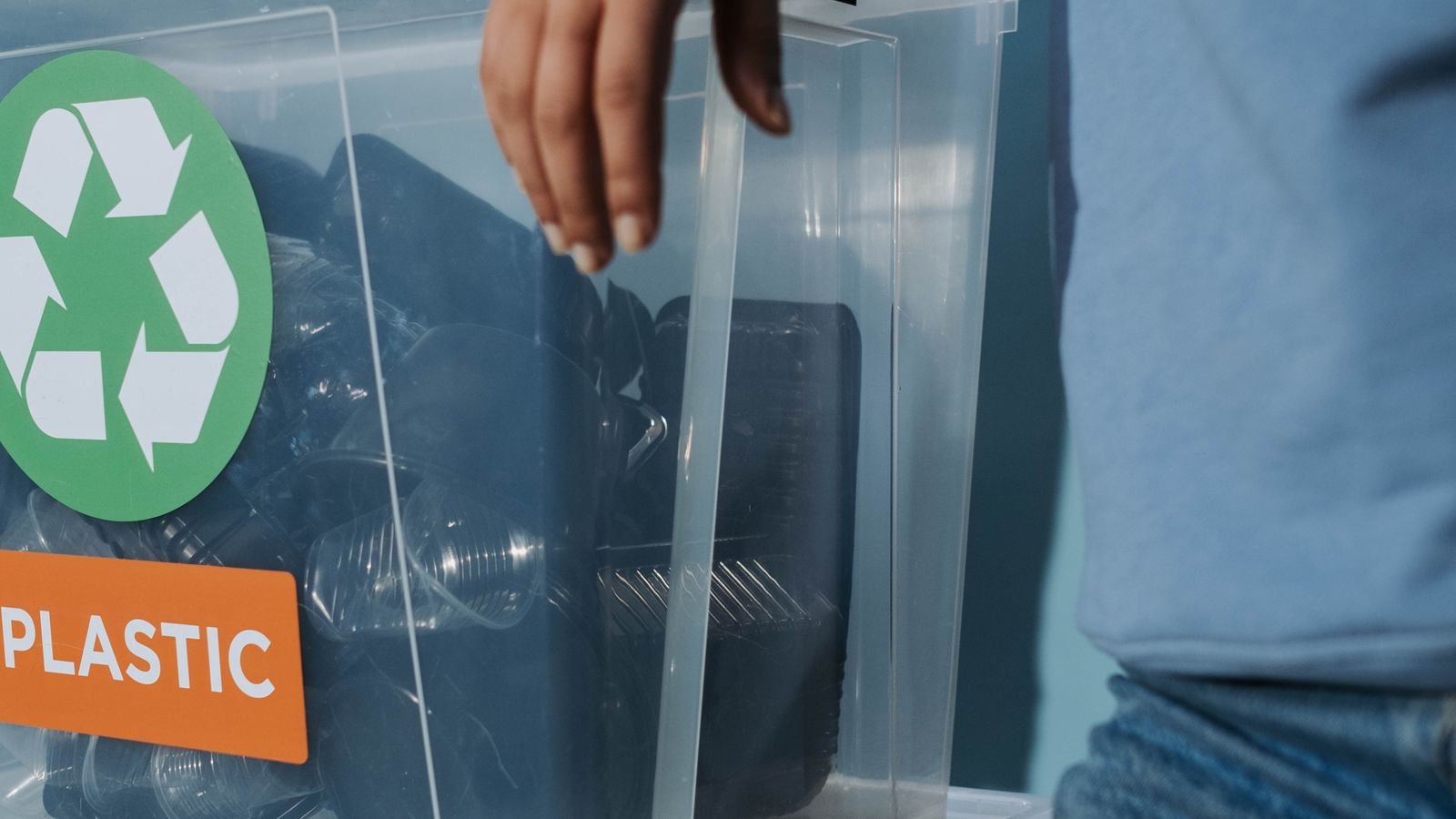
A simple set up works for most offices. A small bin for general waste at each desk. A larger recycling point for paper, card, glass, plastic and metal on each floor. A separate container for food waste in the kitchen. Clear labels on all of them. Staff then do the sorting, and the cleaner collects each stream into its own bag.
The cleaner’s job is to keep that separation going. If a recycling bag is emptied into a general sack, the effort of the whole office is wasted. This is one of the first things to agree with a contractor and one of the easiest to check.
Storing waste before it is collected
GOV.UK has clear rules for storage. Waste must be kept in a secure place, in suitable containers that stop it escaping. The containers should be labelled clearly with the type of waste inside. Covers should be used to stop waste blowing away, and waterproof covers if rain could cause contaminated run off or stop the waste being reused.
It also says to store different types of waste separately. That stops one kind contaminating another, makes reuse easier and helps you complete the waste transfer note correctly.
In practice, check the bin store. Are the lids closed? Are the containers labelled? Is there space for the cleaner to put the bags in the right place? If a store is full or untidy, cleaners cannot do their part, and the building gets a problem with pests and smells.
Waste transfer notes, in plain terms
For each load of non hazardous waste that leaves your premises you need a waste transfer note, or a document that holds the same information, such as an invoice. GOV.UK says both your business and the business taking the waste need to fill in the relevant sections, sign the note, and keep a copy for two years. You must be able to show it to an enforcement officer from the council or the Environment Agency if asked.
A season ticket can cover repeated collections of the same waste, by the same carrier, from the same holder, for up to a year. You keep a separate schedule listing each transfer, with the date, time, quantity and site where needed. Both documents are kept for two years after the last transfer.
The business holding the waste and the business taking it away must complete the relevant parts of the note. If the cleaning contractor also takes waste off site, its role needs to be included in that arrangement. If it only moves bags to an on-site store, define that narrower task clearly rather than treating all contractors as if they do the same work.
Is your carrier registered?
GOV.UK says you must check that your waste carrier is registered to dispose of waste. It also says you must not allow the carrier to dispose of your waste illegally. A business that skips this check is not meeting its responsibilities.
Ask your collection company for its registration details and check them against the relevant register. Keep the result with your waste records. Give the cleaning contractor the collection and handover information it needs for its agreed role, and resolve any uncertainty about who is carrying the waste before collection.
What about the cleaner’s own waste?
A contractor produces waste of its own. Used cloths, empty product containers, dirty water and worn parts all come from the cleaning work. They are not your office waste, and they should not go into your bins unless that has been agreed.
Some cleaning products are hazardous, and GOV.UK says there are extra responsibilities for hazardous waste. Ask your contractor how it disposes of empty containers and unused chemicals, and who is responsible. A good answer is short and specific.
Special items need a plan
Some waste does not belong in the ordinary stream. Confidential paper, batteries and electrical items, glass, printer cartridges and sharps all need their own route. If any of these are in your office, tell the cleaning team where they go and what to leave alone.
If a cleaner finds something unexpected, such as a needle or a broken item, the safest rule is to leave it and report it. It is better to ask than to guess.
Food waste in the office kitchen
GOV.UK names food among the waste that should be recycled where it is like household waste. In an office the food waste is small but constant. Tea bags, coffee grounds, fruit peel and lunch leftovers all end up in the kitchen bin.
Agree a suitable food-waste container, the liner accepted by your collection service and who checks it. Set emptying and cleaning tasks around the actual use of the kitchen and the collection arrangements. Record what the cleaner should do if a container leaks, overflows or contains the wrong material rather than assuming a fixed weekly task will cover every office.
A five minute check you can do yourself
You do not need an audit to see whether the system works. Walk the route that a bag takes and look for problems.
- Are the desk bins and recycling points labelled and in the right places?
- Is anything in the recycling bin that should not be, such as food or liquid?
- Are the bags in the store sorted by type, with lids closed?
- Is there overflow on the floor, or bags that have split?
- Do you know when the next collection is, and who the carrier is?
- Can you find the last waste transfer note, or the season ticket and schedule?
Use the answers to identify what needs attention. A yes to contamination, overflow or split bags identifies a problem, not a successful check. Record the issue, agree who will deal with it and check again after the action. Other satisfactory answers do not cancel out a problem that still needs resolving.
Fit outs, moves and one off clear outs
GOV.UK says business waste includes waste from construction and demolition. If you are refitting an office or clearing a unit, the waste from that work is business waste too. It needs to leave under a waste transfer note, with a registered carrier, in the same way as everyday rubbish.
A post build clean produces its own waste, such as dust sheets, packaging and filled bags. Agree in advance who removes it. It is usually simplest if the main contractor or the business arranges one collection for everything, instead of leaving the cleaning team to take it away.
What to agree with your cleaner
- Which bins are emptied, and into which bags.
- Where each stream is taken, and where the store is.
- How recycling is kept separate from general waste.
- Who has access codes or keys for the store, and who locks it.
- What happens if the store is full.
- Where confidential and special items go.
- How the cleaner disposes of its own waste.
How we handle it
On a contract, we agree in the cleaning specification which bins are emptied, where the bags go and how the streams are kept apart. Our office cleaning teams work to that specification on each visit, and shops and other premises with heavy waste follow the same approach in our retail cleaning service.
Getting started
If you are unsure how your waste is handled, start with a walk round. Look at the bins, the store and the paperwork. Then tell us what you see. We will agree a routine that fits your site, as part of a wider commercial cleaning plan for your premises.