
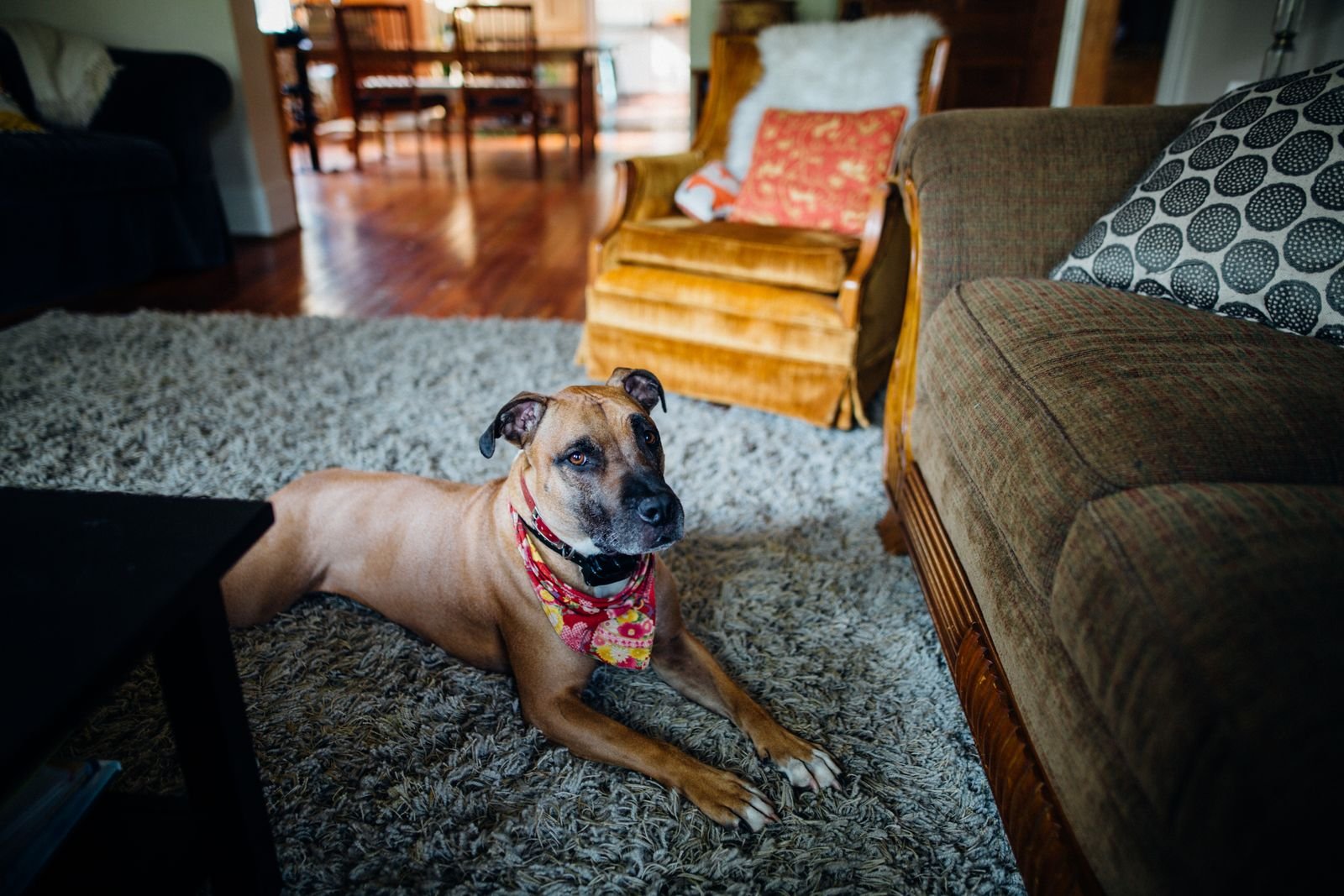
You scrubbed the patch. The room smelled fine for a fortnight. Then the first muggy day of the month arrived, the windows stayed shut overnight, and the whole living room smelled like a kennel again. Nothing has been reintroduced, the pet has not repeated the accident, and yet the odour is back exactly where it was. This is the single most common complaint we hear about pet urine, and it is not a sign that you cleaned badly. It is a sign that the material causing the smell was never actually removed from the building, only rinsed out of the top few millimetres of pile where your cloth could reach.
Understanding why that happens changes what you do next. Below we cover what urine does once it soaks into a carpet system, why household sprays mask rather than remove, how to use an enzymatic product so it genuinely works, and the point at which sub-surface extraction by a professional carpet cleaning team in Manchester is the only thing that will end the cycle. This is about odour specifically, not general spotting, and it is not a training guide.
What actually happens when urine hits a carpet
A carpet is not one surface. It is a system of at least three layers. There is the face fibre you can see and touch, there is the primary and secondary backing that fibre is stitched into, and beneath that there is underlay sitting on floorboards or a concrete screed. Urine is a liquid delivered under pressure. It passes through the pile in seconds, spreads sideways through the backing, and soaks into the underlay, which in most homes is an open-cell foam or a crumb rubber product that behaves like a sponge. A patch the size of a beer mat on the surface is routinely three or four times that size in the underlay below.
Fresh urine is mostly water, urea, salts, creatinine and uric acid compounds. The water evaporates. The urea breaks down under bacterial action and releases ammonia, which is the sharp note you get in the first day or two. What stays behind is the difficult part. The uric acid salts crystallise as the deposit dries, and those crystals are effectively insoluble in plain water. They sit dormant in the underlay and the carpet backing, giving off almost nothing while conditions are dry.
Then the humidity rises. The crystals draw in moisture, partially dissolve, and the odour compounds become airborne again. That is why the smell tracks the weather rather than tracking your cleaning. In a Manchester autumn, with damp air, drying racks indoors and heating cycling on and off, an old patch you thought you had dealt with in June will announce itself repeatedly from September onwards.
Why surface sprays and air fresheners make the problem worse
Most supermarket pet odour products work by one of two mechanisms. They either add a stronger fragrance that sits on top of the existing one, or they contain a masking agent that temporarily binds odour molecules at the surface. Neither reaches the underlay. Neither breaks down a uric acid crystal. You get two or three days of improvement, the fragrance fades faster than the source, and you are back where you started with an additional layer of perfume residue in the pile.
Repeated spraying causes a second, slower problem. Every application puts sugars, surfactants and fragrance carriers into the fibre without any recovery of the liquid. Those residues stay tacky, attract soil, and darken the patch until you end up with a visible grey shadow ringed around the original mark. At that point you are dealing with two separate jobs, an odour problem and a soiling problem, and the discoloration usually needs proper carpet stain removal alongside the odour work rather than more of the same spray.
Steam alone is another well-intentioned mistake. Heat sets protein residues and can bond them more firmly to the fibre, and a domestic steam mop drives moisture downwards into exactly the layer you want to dry out. If the smell has returned more than once, adding heat without extraction will not break the pattern.
Find every patch before you clean anything
Cleaning what you can see and stopping there is why most attempts fail. Before you open a bottle, map the full extent of the contamination. There are three practical ways to do this at home.
- Turn off every light after dark and go over the floor with a UV torch. Dried urine deposits fluoresce a dull yellow or greenish white. Mark each edge with masking tape, because you will not find them again with the lights on.
- Get down at floor level and smell along the skirting boards, in corners, and behind furniture legs. Odour concentrates where air movement is lowest and where a pet feels least observed.
- Press firmly on suspect areas with a folded white kitchen towel. Old deposits often leave a faint tan transfer and a distinct stiffness in the pile compared with clean carpet nearby.
Once patches are marked you will almost always find the contaminated area is considerably larger than the visible mark, and that there are two or three you had not noticed at all. Treating the obvious one and ignoring the rest guarantees the smell returns.
How to use an enzymatic cleaner so it actually works
Enzymatic cleaners are the correct chemistry for this job. They contain bacteria and enzymes that consume the organic residues, including the uric acid salts that water cannot lift. Dogs Trust makes the same point in its guidance on indoor toileting and cleaning up after accidents, noting that ordinary household cleaners and disinfectants are not effective enough at removing the scent and that dogs will return to areas that still carry it. The product choice matters, but the method matters more, and this is where most people go wrong.
Blot first, never rub
If the accident is fresh, stack several layers of white towel over it and stand on them. Replace and repeat until the towels come away nearly dry. Rubbing splays the fibre tips, spreads the deposit outward, and creates a permanently rougher patch that catches soil for years.
Apply enough product to reach the deposit
This is the critical step. A light misting treats the pile and leaves the underlay untouched, which is precisely the failure mode that brings the smell back. The enzyme has to make physical contact with the residue to digest it, so the liquid must travel as far as the urine travelled. Apply slowly and generously across the full marked area, including a border of at least ten centimetres beyond the edge you identified.
Give it time and keep it damp
Enzymes work over hours, not minutes. Most products need somewhere between eight and twenty four hours of contact time, and they stop working the moment the area dries out. Cover the treated patch with a damp towel or a loose sheet of plastic to slow evaporation, leave it alone, then blot up what remains and allow it to dry slowly with good ventilation rather than a heater aimed at it.
Products that set the odour in permanently
Some common home remedies do measurable damage. Anything containing ammonia should never go near a urine patch, because ammonia is one of the breakdown products of urine itself and reinforces the scent marker rather than removing it. Bleach and strong oxidisers will strip colour from wool and many synthetic dyes, leaving a bleached ring that no cleaning can reverse.
Vinegar and bicarbonate of soda are widely recommended online. They will neutralise some of the ammonia smell temporarily and they are harmless enough on most fibres, but they do nothing to the uric acid crystals in the underlay, and the alkaline residue left by bicarbonate can dull the pile and attract soil. They also deactivate many enzyme products, so if you have used them, rinse thoroughly with clean water and blot dry before applying anything enzymatic.
When the underlay is the problem and home treatment stops working
There is a point past which no amount of surface work will succeed, and recognising it early saves months of frustration. If the same patch has been treated properly at least twice and still returns in damp weather, if the affected area is larger than roughly a dinner plate, if there have been repeated accidents in the same spot over months, or if you can smell it from the doorway rather than only up close, the deposit is in the underlay and the subfloor and it needs to be pulled out physically.
That is what sub-surface extraction does. The carpet is flooded with a controlled volume of treatment solution so it penetrates the full depth of the system, then a dedicated deep extraction tool draws the solution and the dissolved contamination back out through the pile under high vacuum, rather than skimming the surface as a standard wand does. On heavier contamination the carpet may be lifted, the underlay treated or replaced, and the floorboards or screed sealed before the carpet is refitted, because a timber floor that has absorbed urine will keep releasing it through any new carpet laid over it. This is the core of our pet odour removal service for carpets, and it is a different process from a routine clean, priced and scheduled differently because of the drying time involved.
Pet friendly rentals, student lets and short stay flats
Landlords and hosts carry a version of this problem that owner occupiers do not. A property advertised as pet friendly attracts more bookings and longer tenancies, but the odour risk compounds across occupancies. One tenancy leaves a deposit nobody declared, the next tenant’s dog smells it and adds to the same spot, and by the third changeover you have a room that reviews describe as smelling of animals even though the current guests have no pet at all.
Two habits prevent almost all of it. Inspect with a UV torch at every changeover rather than relying on a visual walkthrough, and treat any patch found at that point, when it is small and recent, instead of waiting for a complaint. For pet friendly listings across south Manchester, Salford and the city centre apartment stock, we would also suggest booking a deep clean between longer tenancies rather than only after them, because contamination discovered during a two day turnaround is contamination you cannot properly dry before the next guest arrives. Enzyme treatment plus extraction needs a realistic drying window, and a rushed job that leaves the underlay damp will smell worse than doing nothing.
One further point for anyone preparing a property for a new tenancy. Odour is one of the few issues that reliably triggers deposit disputes, and it is much easier to evidence a clean carpet at check in than to argue about a smell at check out. Documented treatment with photographs is worth the small extra effort.
Getting the carpet back to neutral
The honest summary is this. Fresh accidents dealt with within the hour, blotted properly and treated with a generous application of a good enzymatic cleaner, will usually resolve completely at home. Anything older, larger, or repeated has almost certainly reached the underlay, and no surface product reaches the underlay. That is not a failure of effort, it is a limitation of the equipment available in a domestic cupboard.
If you have reached that point, we survey the room with UV, identify every patch including the ones nobody knew about, and treat the full depth of the carpet system with extraction equipment built for it. Most rooms are walkable within a few hours and fully dry within a day. If you are in Manchester or the surrounding boroughs and the smell keeps coming back, get in touch and we will tell you honestly whether it is a cleaning job or a replacement underlay job before we start.