
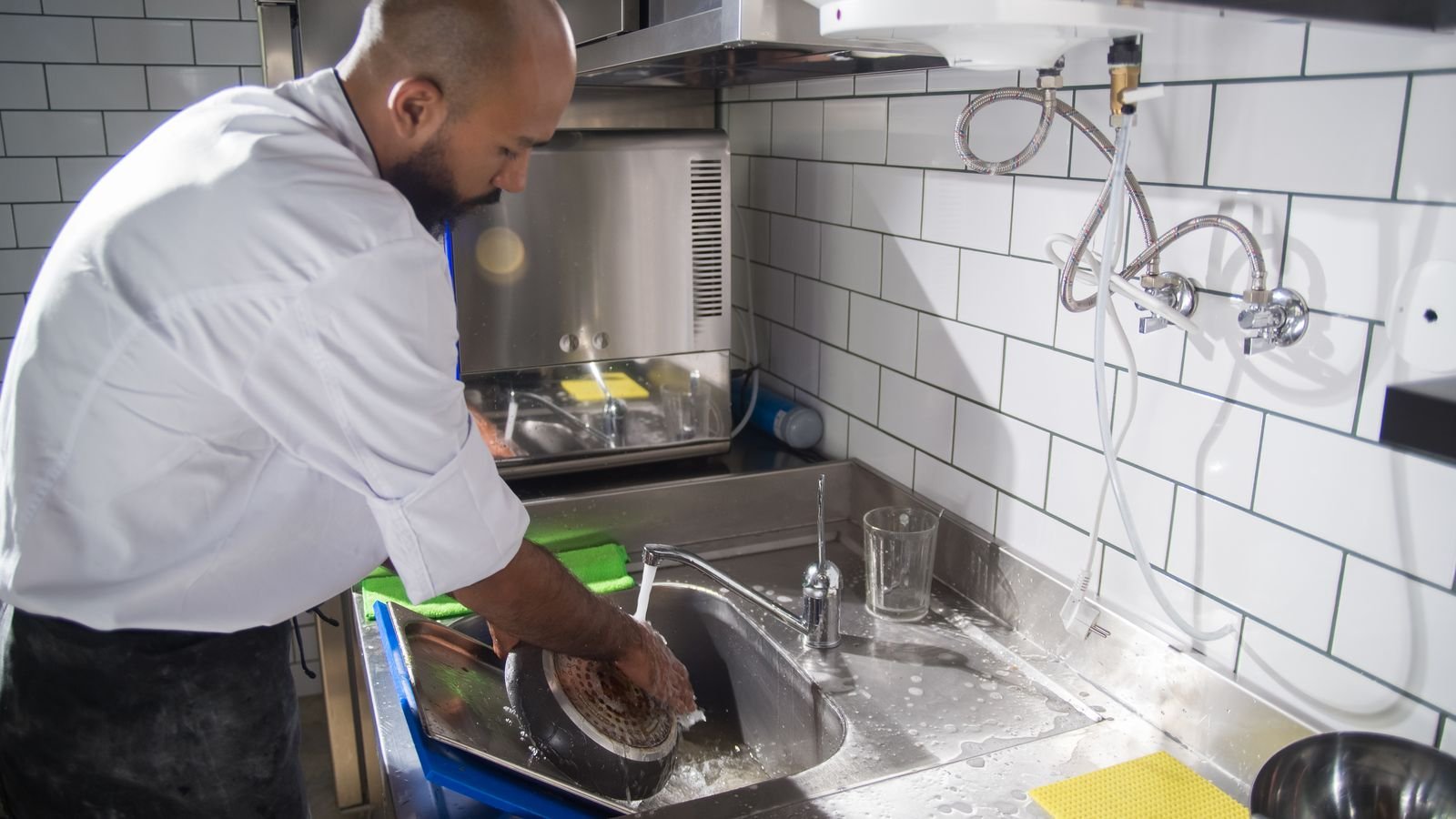
Every restaurant kitchen has someone who cleans it. Often that is a kitchen porter, or a closing team that takes it in turns, working through a list at the end of service when everyone is tired and the pass is still warm. That nightly routine is the backbone of a clean kitchen. But there are jobs that a closing team does not have the time, equipment or training to do well, and those are the jobs a restaurant cleaning company does better on a schedule.
This guide explains how to divide the work between the two, which jobs belong with each, and how to write the split down so that nothing falls between them. It is practical, not promotional. The right answer depends on your kitchen, your staffing and your trading pattern, and some restaurants will need very little outside help.
Why the split matters
Most kitchens run into trouble in the gaps. The porter assumes the cleaning company does the extraction hood. The cleaning company assumes the porter does the floor drains. Nobody does the tops of the fridges. A few weeks later the grease is thick, the drains smell and the person who notices it first is the environmental health officer.
A clear split solves this. It states who does what, how often and to what standard, and it gives you a way to check. It also saves money, because a cleaning company’s time is best spent on skilled periodic tasks and not on work your own team does every night anyway.
What the nightly team does best
A kitchen porter or closing team knows the kitchen, works with it daily and is on hand the moment something spills. The tasks that suit them are the routine ones, done at the end of every service.
- Clearing and cleaning prep surfaces, boards, knives and equipment used that day.
- Washing pots, pans and utensils.
- Cleaning the hob, grill, fryer exterior and other cooking equipment while it is still warm enough to clean easily.
- Sweeping and mopping the kitchen floor.
- Emptying bins and taking waste to the store.
- Wiping down fridge doors, handles and switches.
- Cleaning hand wash basins and sinks.
- Putting stock away and keeping storage tidy.
These jobs need to be done every day and should not wait for a visit from outside. They are also food safety tasks, so they belong to your own procedures and records.
What a restaurant cleaning company does better on a schedule
Periodic jobs are different. They need specific equipment, take time and are done at intervals, so a scheduled visit is more efficient than asking the closing team to find the hours.
Floors and drains
Kitchen floors build up grease that a nightly mop does not remove, particularly along edges and under equipment. A scheduled deep clean with machines, suitable chemicals and a squeegee lifts it. Drains collect fat and food debris, and clearing and cleaning around them is a regular task. Heavy blockages need a drainage specialist rather than a cleaner.
High-level degreasing
Grease rises. Walls, ceilings, light fittings and the tops of equipment collect a film that is hard to see from the floor. Cleaning at height needs safe access and the right products. It is a classic scheduled job, because no closing team wants to climb a ladder at midnight.
Behind and under equipment
Pulling out ranges, fryers and fridges to clean behind them is heavy work that needs two people and attention to gas and electrical connections. Done at intervals by a contractor with suitable training, it removes a major source of pests and fire risk.
Extraction surrounds
The hood, filters and the visible parts of the extraction system collect grease. The cleaning company can handle the surfaces and the removable filters where agreed. The ductwork inside the system is specialist work with its own schedule and records, and it should not be treated as part of a general clean. Our guide on extract records covers that separately.
Front of house
Dining room carpets, upholstered seating, banquettes and curtains need periodic deep cleaning that the closing team will not do. Floors and toilets are cleaned daily, while carpet extraction and upholstery cleaning suit a scheduled visit. Windows, entrances and high-level dusting in the dining area also fit here.
Exclusive Pro Cleaning’s restaurant cleaning page describes kitchen deep cleaning, grease removal, extraction system cleaning and front-of-house presentation as part of its service, and says the team works during downtime, typically after service or before opening. It also says its services meet the food hygiene standards outlined by the Food Standards Agency. Whichever provider you use, check what is included in the quote.
A simple way to divide the work
One approach is to sort tasks by frequency and skill.
- Daily and every service. The kitchen team.
- Weekly. Either the team or a contractor, depending on staffing.
- Monthly or quarterly. A contractor, with equipment and access.
- Annually or as required. A specialist, such as duct cleaning or drain clearance.
Another approach is to ask three questions about each task. Does it need to happen every day? Does it need special equipment or training? Would it take your team away from food preparation or service? If the answers are no, yes and yes, it probably belongs on a contractor’s schedule.
Writing the split down
The most useful document is a single table or list with four columns: the task, who does it, how often and how it is checked. Keep it plain and put it where both sides can see it.
For example, the list might say that the closing team cleans the hob and fryer exteriors every night, the contractor degreases walls and high surfaces monthly, and the contractor cleans front-of-house carpets quarterly. Under each entry, state what proof exists, such as a signed checklist or a contractor visit report.
Include these points:
- A list of tasks that belong to the closing team and tasks that belong to the contractor.
- Any task that is shared, with a clear line between the shared parts.
- The access arrangements, including keys, alarms and who is present.
- What happens when something is missed. Who is told, and how is it put right?
- A review date to adjust the list after the first few visits.
Bring in the head chef or kitchen manager when writing it. They know which areas are hardest to keep clean and which tasks the team resents, and they will notice a gap faster than an owner will.
Busy periods and one-off peaks
The split rarely stays the same all year. In the weeks before a busy trading period, the closing team is already stretched, and a scheduled deep clean takes pressure off them. After a private event or a run of late nights, a contractor can reset the kitchen so that the nightly routine starts from a clean base. If you add a second kitchen, a pop-up counter or an outdoor service area, revisit the written list, because new equipment brings new tasks that nobody has yet assigned. A short review each season keeps the split honest.
Records
Both sides should keep records. Your closing checklist shows the daily routine, and a contractor’s visit report shows the periodic work. Together they make up the evidence that cleaning is planned and happens. Keep the reports, date them and file them where inspectors can see them if they ask.
The Institute of Hospitality describes itself as the global professional body for hospitality, and it publishes toolkits and industry insights. Professional bodies of that kind are a useful reference for good practice, and a reminder that cleaning routines and records are part of how hospitality businesses run, not a side task.
When a restaurant needs more outside help
Some restaurants rely heavily on a cleaning company, and some need little. Consider more outside help when:
- The kitchen team is small and already stretched.
- The premises are large or have several kitchens.
- Trade is seasonal and peaks overwhelm the closing team.
- A deep clean is due before a busy period or after building work.
- Grease and build-up are getting ahead of the nightly routine.
Consider less when the team is large, the kitchen is simple and the periodic jobs are already covered. A deep clean before a busy trading period can be a good one-off, and the commercial deep cleaning page explains what that service covers. For general advice on commercial services, see the commercial cleaning overview.
Choosing a provider
Ask a provider to describe the jobs they would take on, the equipment they bring, how they work around service and how they report. Ask for a written scope and a sample report. Be cautious about vague promises. A good provider will say what they will not do, such as duct cleaning or pest control, and tell you when another trade is needed.
Questions about the split
Can a cleaning company replace my kitchen porters?
Not usually. The nightly routine belongs to your team and forms part of your food safety procedures. A cleaning company covers periodic and specialist work.
Who should clean the extraction hood?
The visible surfaces and removable filters can be part of a cleaning contract. The ductwork is a specialist job with its own schedule.
How often should a restaurant have a deep clean?
It depends on the kitchen, the menu and the trade. Many restaurants plan deep cleans at set intervals and before busy periods.
How do I make sure nothing is missed?
Write the split down, assign each task to one party and check it with signed checklists and visit reports.