
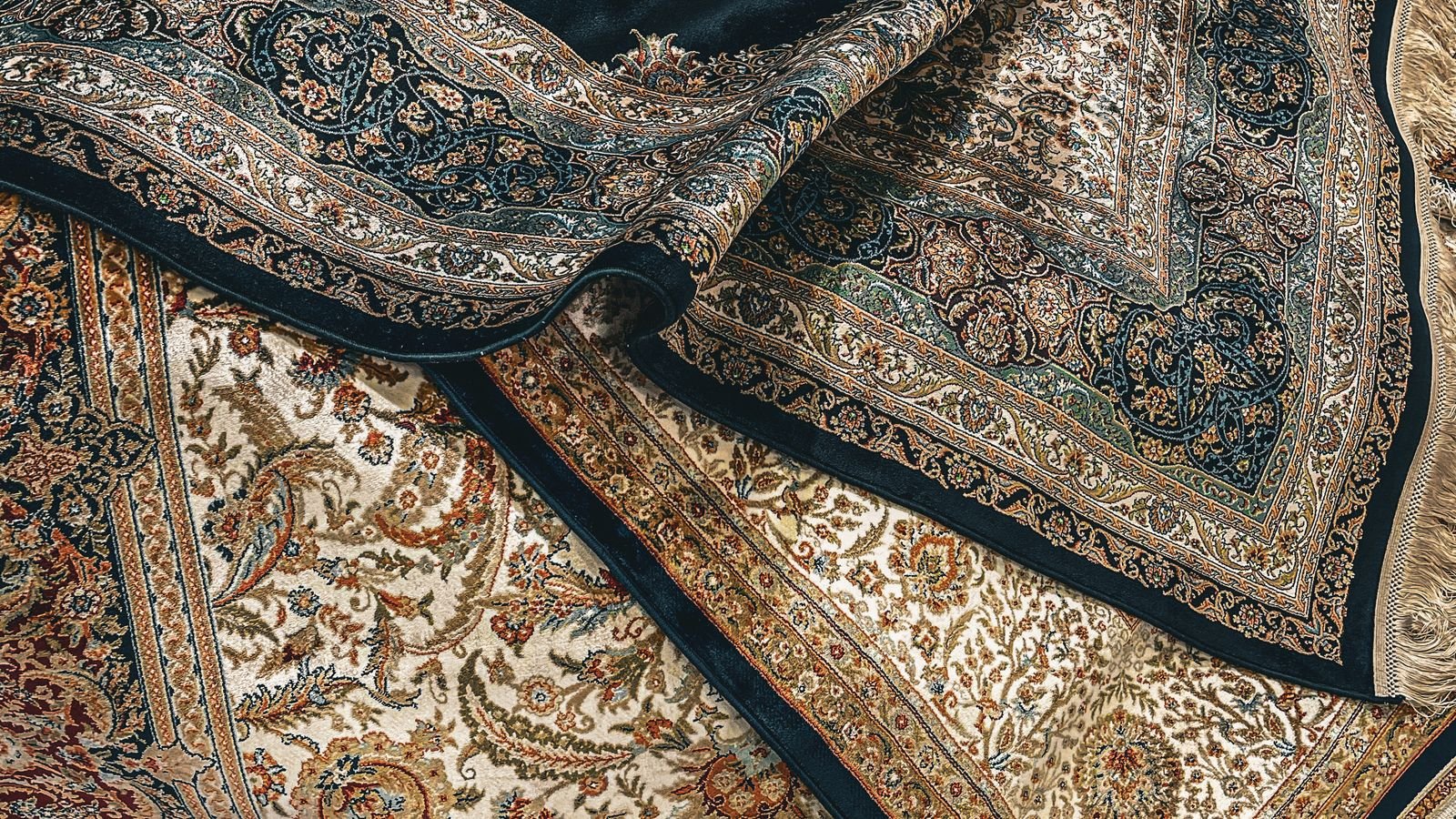
Silk rug cleaning starts with the care instructions for the exact rug. Similar-looking pieces can have different fibres or maker guidance, so a method used on one should not be treated as universal. Identify the stated material from its label, product details or seller before agreeing to moisture, products or a cleaning process. The Rug Company provides one example of a maker’s product-specific rug-care guidance.
This guide explains why silk and silk-like rugs need a different approach, the checks that should happen before any cleaning, what a careful method looks like and how to look after the rug between cleans. It is written for homeowners in Manchester with a rug they value and do not want to risk.
Why silk behaves differently from wool
The Rug Company’s guide gives separate care for wool and silk. For its silk rugs, it says spot cleaning should use cold water in a minimal amount, while its wool section gives different steps. Check the exact material and maker instructions before applying either method. Do not transfer a wool routine to silk by default. For the everyday care of a wool rug, see how to clean wool and delicate rugs without ruining them.
Wool instructions should not be applied to a silk rug by default. Ask the cleaner which guidance they are following for this piece and why. If the care label is missing or the material is uncertain, contact the seller or maker before choosing a method. A careful assessment states what is confirmed and what is not.
Before agreeing to wet cleaning, discuss the maker’s care advice and any previous treatments or repairs. If a test is appropriate for the proposed process, ask what it will assess. A small test gives information about that spot only; it cannot guarantee that every section will respond the same way. If its result changes the plan, discuss the next step first.
Silk, art silk and viscose
A glossy finish does not identify the fibre. Product information may use terms such as silk, bamboo silk, silk-look or viscose, and those words need to be checked against the label or seller’s description. Ask which material the rug contains before deciding which care guide applies.
Do not transfer silk instructions to viscose or another silk-look material without checking its own maker’s advice. If the fibre remains uncertain, record what is not confirmed and explain how that affects the proposed work. Keep that limit in the quote instead of promising the same outcome for different materials.
Find the label, receipt or product page. It may identify the stated fibre and give the maker’s care instructions. Send a photo to the cleaner before the visit. If the details are missing, make that uncertainty part of the assessment rather than guessing from appearance.
Checks before any cleaning
Before quoting, identify as much as possible about the rug: stated fibre, construction, back, fringe, visible wear, previous repairs and past cleaning. If the label or history is unavailable, record what cannot be confirmed. Use that information to narrow the promise and decide what further checks are needed.
If the process uses moisture, ask whether a discreet test is suitable for this rug and what it can show. Record where the test was done and what was observed, then use that finding in the plan. A result from one location does not prove that every colour or section will respond the same way.
Note worn areas, fraying edges, loose fringes, stains and previous repairs before cleaning. A short written record gives both sides a clear starting point and helps define what the visit covers.
Ask what the cleaner will do if a check changes the plan. A clear answer sets out whether to alter the method, limit the work or stop, and how that decision will be agreed. Be cautious of a guarantee that ignores the maker’s instructions or the rug’s condition. A specialist rug cleaning service in Manchester should explain the options before touching the rug.
Questions to ask before you book
Ask whether the cleaner has worked with silk and silk-look rugs, what information they need before choosing a method and how the plan will be agreed. A price based only on the rug’s size may leave assumptions unresolved. Ask what the quote includes and what could change after inspection.
Ask whether cleaning in the home or away from the home is proposed and why it suits the rug, access and room. For in-home work, confirm how nearby floors and furniture will be protected. If removal is suggested, ask who will handle transport, what condition will be recorded and how the rug will be returned.
Discuss the floor beneath, furniture, doorways and access before the visit. Ask what protection will be used for nearby surfaces, who moves items, and how the area will be left. Include those arrangements in the written quote so both sides understand what is covered.
Ask how the outcome will be recorded. A brief note can list the inspection, tests, work completed, limits agreed and aftercare instructions. Keep it with the rug’s product details so you can share it if the rug needs attention again.
What a careful method looks like
Agree the method after identifying the material and checking the care information. Ask the cleaner to explain the moisture, products, agitation and drying steps they propose, and why those fit this rug. If instructions are missing or conflict with requested work, discuss options before starting.
Ask whether dry soil should be removed before other work and which step suits the rug’s construction. The cleaner should explain how the process will be controlled and how pressure on the pile will be managed, instead of assuming that a standard carpet routine fits every rug.
Ask which product will be used and how it matches the maker’s instructions. Do not assume that a product suitable for a synthetic carpet or wool rug is also suitable for silk. If the label or product guidance does not answer the question, get advice before applying it.
Inspect fringes and edges separately. Ask what material they are made from, whether their care instructions differ from the pile, and whether they are included in the quote. If the material is unknown, record that and agree how those areas will be handled before work starts.
Drying the rug properly
Discuss drying before booking. The right plan depends on the agreed method and conditions at the property, so avoid promising a fixed time before seeing the rug and room. Confirm who will check progress and whom the customer should contact if a concern comes up afterwards.
Ask how moisture will be managed and what checks will show when the rug is ready for normal use. Ventilation, room conditions and the agreed work affect the plan. In Manchester, note whether windows, heating and access will be available; plan for that actual space rather than assuming one drying schedule.
Before work starts, agree who can enter the area, whether the rug will stay clear and when furniture can return. The cleaner should explain how readiness will be checked and include the instruction in the aftercare note. Do not leave the customer to guess from a general time estimate alone.
Spills and stains between cleans
If a spill occurs, check the rug’s own care instructions before trying a household product. The Rug Company’s silk guide says water should be cold and kept to a minimum for its spot-cleaning guidance. That is maker advice for its products; for another rug, follow its own label and ask for help when it is unclear.
Check any spot treatment against the care instructions for this exact rug. Guidance for another fibre or a general carpet spray does not answer that question. If the label or product guidance is missing, get advice before trying it on the visible pile.
Agree a realistic outcome before treatment. The cleaner should say which marks are within scope, which may remain, and whether a different method would require a new assessment. Do not promise complete stain removal before examining the rug and its history.
Looking after a silk rug day to day
Consider how the rug will be used before choosing its room. Ask the seller or maker whether the material and construction suit the expected traffic and cleaning routine. If it already sits in a busy area, discuss what routine checks or precautions are appropriate for that specific rug.
Use the maker’s instructions for routine vacuuming, rotation and sunlight. The Rug Company recommends low suction, no cleaning head and professional cleaning at least once a year for its rugs; it also says rotating them can help make fading more even. Those are its product recommendations, not a universal schedule. For a rug from another maker, use its care guide.
Ask a rug specialist whether an underlay suits the backing and the floor beneath it. Confirm who will move or replace it around the cleaning visit and whether this work is included.
Moving and storing a delicate rug
Before moving or storing the rug, check the maker’s advice for its construction and backing. Ask how it should be handled, whether it should be rolled or folded, what wrapping to use and where to keep it. If the care information does not answer those questions, ask a specialist and record the plan rather than applying generic storage advice.
Tell the cleaner about past spills, treatment and any change in condition before transport. Take a photo of existing marks and agree what will be recorded at collection and return. This gives both sides a clear handover without making assumptions about how the particular rug will respond to storage.
When the rug returns, check it before moving furniture back and note anything you want the seller or cleaner to review. If you need a follow-up, arrange carpet and rug cleaning in Manchester based on the rug’s material and condition.
Questions about silk rug cleaning
Can a silk rug be cleaned at home?
It depends on the maker’s instructions, the rug’s condition and whether the planned work suits the room. Ask for an inspection and a method before booking. If the care information is missing, do not assume a home method is appropriate.
How do I know if my rug is real silk?
The label or sales record is the starting point. If it lists only silk-look or an unclear term, ask the seller which fibre was used. Tell the cleaner if it is still unconfirmed and do not guess from shine alone.
Why did my rug turn brown after it got wet?
A brown or darkened area can have more than one explanation. A photo alone may not identify the material or cause. Stop applying products, note what was used and when, and ask a rug-care professional to assess it with the label and history.
Can every stain be removed?
No cleaner should promise that every mark will disappear before inspecting the rug. Ask what can be attempted under the agreed method, what may remain and whether further work would need another assessment.
How often should a silk rug be cleaned?
Use the maker’s schedule and the rug’s real use. The Rug Company recommends professional cleaning at least once a year for its rugs, but that is not a universal timetable. Ask the manufacturer or seller what they recommend for your specific rug.
Arrange a silk rug assessment
Tell us what you know about the rug, where it is in your home and any marks or damage you have noticed. A clean can then be planned around the fibre rather than a standard routine. Send us details of your rug and we can talk through the options.