
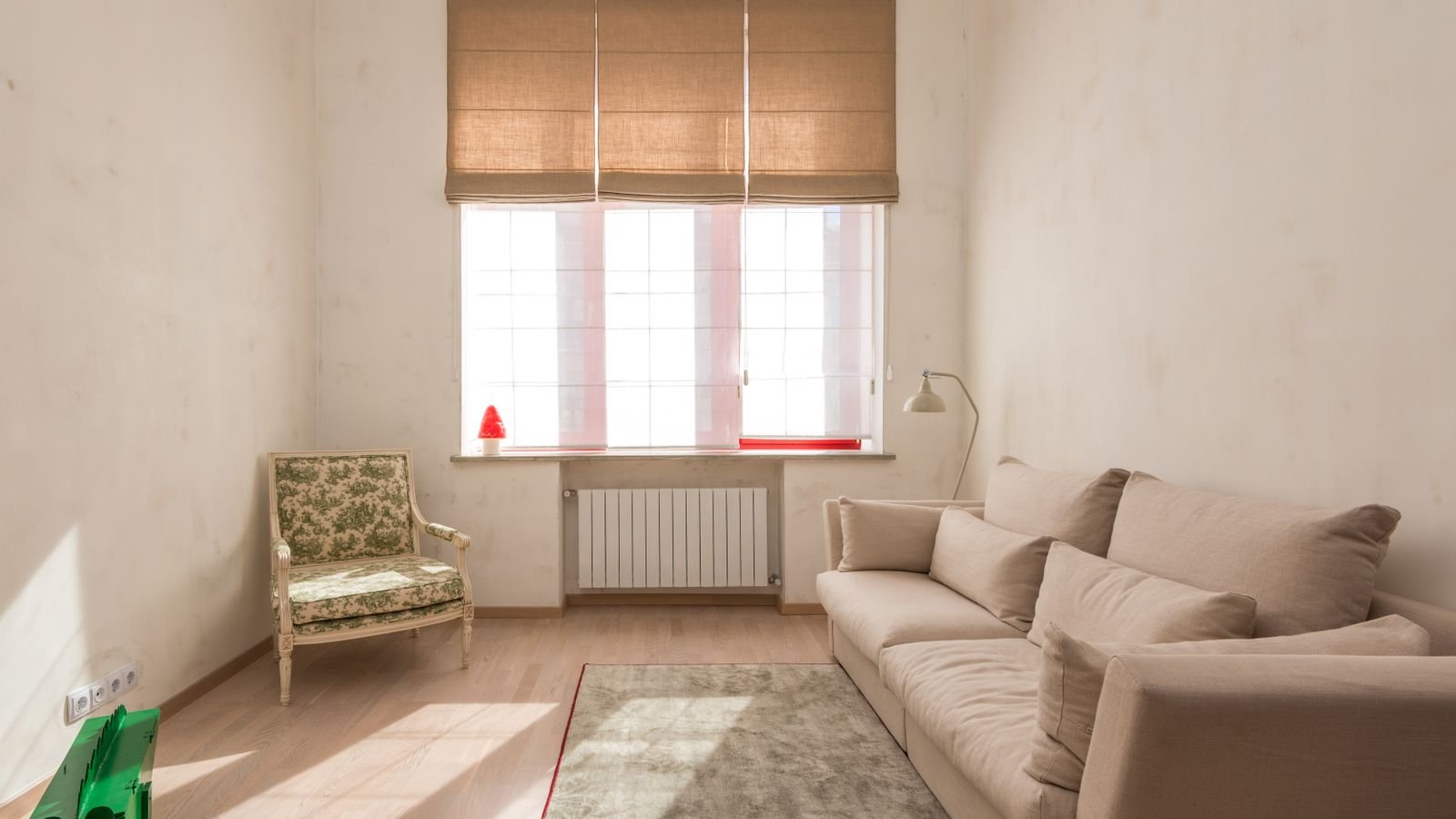
What changes the day the boiler comes on
Central heating, carpet dust, static. Manchester homes get all three from the first cold week of October onwards, and most people never connect them. The radiators go on and the windows stay shut. Within a fortnight the carpet looks duller and the skirting boards grow a grey fringe. You also get a small shock every time you touch the door handle. None of that is bad luck. It is what a heated, closed room does to a carpet over five or six months. This piece explains the mechanism and what you can do about it. Wet weather and doormats are covered separately in our guide to protecting carpets in wet weather.
Why heated air dries a room out
Warm air can hold more moisture than cold air. When a radiator heats the air in a room, the amount of water in that air stays the same, but the air’s capacity to hold water goes up. So the relative humidity falls. A Manchester living room that sat at a comfortable humidity in September can feel noticeably dry by November, even though the city outside is as wet as ever. The Chartered Institution of Building Services Engineers lists humidity alongside thermal conditions and air quality among the indoor factors that shape health and comfort. A carpet is one of the first surfaces in a room to show the effect.
Two things happen to carpet fibres in dry air. First, they give up their own moisture. Wool in particular holds a surprising amount of water within the fibre, and as it dries out it becomes more brittle and sheds more easily. Second, the dry air stops charge from draining away. In humid air, a thin film of moisture on every surface carries static charge harmlessly to earth. In dry air that film disappears, and the charge you generate by walking across the carpet stays on you until you touch metal.
The static problem, explained plainly
Static builds up when two materials rub together and separate. Rubber soled slippers on a nylon or polypropylene carpet is a very effective generator. Wool carpet on its own generates less, but wool socks on any carpet generate plenty. Through summer the moisture in the air bleeds the charge off before you notice it. Through central heating season it cannot, so the charge builds until it jumps, usually to a radiator, a light switch or the cat.
The shock is a nuisance rather than a danger in a home. The real cost is what static does to the carpet. A charged fibre attracts dust and holds it. That is why a static prone carpet in a heated room looks grubby faster than the same carpet in the same room in June. It is also why a quick vacuum seems to make less difference than it should. The dust is being held electrically, not just sitting loose.
What reduces static
Raising the humidity a little is the most effective fix, and the cheapest way to do it is to stop over drying the room. Turn the thermostat down a degree, open a window for ten minutes a day, and dry laundry somewhere with an extractor rather than on a radiator in the living room. A bowl of water on a radiator shelf does add some moisture, though not a great deal. A plug in humidifier does more but needs cleaning to avoid growing mould inside it. Leather or cotton soled slippers generate less charge than rubber ones. Anti static carpet sprays exist and work briefly, but they leave a residue that attracts more soil, which is a poor trade.
Where the dust comes from
People assume winter dust comes from outside. Most of it does not. In a closed, heated room the main sources are skin, clothing fibres, pet hair, the carpet’s own shed fibres, and combustion particles from cooking and candles. Central heating adds a specific ingredient. The convection current above a radiator lifts fine dust from the floor, carries it up the wall, and drops it as the air cools near the ceiling. That is what the grey streak above every radiator is. It also means the carpet directly in front of a radiator gets a steady rain of dust falling back down onto it.
The heating itself contributes too. Over summer, dust settles on radiator fins, inside convector panels and in the ducts of a warm air system. The first time the system fires in autumn, that dust gets cooked and blown into the room. That burnt dust smell on the first cold evening is exactly that. It settles on the nearest soft surface, which is the carpet.
A simple pre season habit
Before the heating comes on for the season, vacuum the tops and undersides of the radiators with a crevice tool. Then run a radiator brush between the fins. It takes twenty minutes for a typical three bed house in Blackley and it cuts the first week’s dust load noticeably. Wipe the tops of the skirting boards and the top of any wardrobe at the same time, because those are the surfaces the convection current loads first.
What the mix does to different carpets
Wool
Wool is the most affected by dry air and the least affected by static. It sheds more through winter, so you will see more fluff in the vacuum, and the pile can feel harsher underfoot by February. It recovers well once humidity returns or once it is properly cleaned and rinsed, because the fibre takes moisture back readily.
Nylon
Nylon is the classic static generator, although most modern nylon carpets have a conductive fibre woven in to limit it. Older nylon carpets, common in Manchester homes fitted in the nineties and early two thousands, often do not. Nylon does not dry out in the way wool does, so the fibre itself is unaffected, but it holds electrostatic dust stubbornly.
Polypropylene
Polypropylene sits between the two for static and is unaffected by humidity. Its weakness in heating season is different. It has a low melting point compared with other fibres. A carpet laid tight against a hot radiator pipe or a plinth heater can glaze and stiffen over a few winters. Look at the pile where it meets the pipe and you will often find a slightly shiny, flattened line.
Why the carpet looks worse by January
Put the pieces together and the pattern is clear. Dry air makes fibres shed and stops charge draining. Charge makes fibres grab dust. Heating stirs more dust into the air and drops it onto the carpet. Closed windows keep all of it inside. Feet carry it into the pile. By the middle of winter the traffic lanes have a fine, greasy layer of soil bonded to the fibres that a household vacuum only skims. The carpet does not look dirty in the way a muddy footprint is dirty. It looks tired, and it is the central heating carpet dust static Manchester winters bring that does it, not the wear.
Vacuuming that actually works in winter
A vacuum with a rotating brush bar agitates the pile and breaks the electrostatic grip on fine dust far better than suction alone. Go slowly, in two directions. Empty the machine or change the bag more often than you would in summer, because a full bag loses suction quickly on fine dust. Vacuum the strip in front of each radiator every time, not just the middle of the room. Once a week is a reasonable minimum for a heated living room in winter, and twice for a hallway.
The filter matters more in winter as well. A blocked filter blows the finest dust straight back out of the exhaust and onto the carpet you just cleaned. Wash or replace it at the start of the season. If anyone in the house has a chest complaint, this is the season when a fine filter earns its keep. Our piece on carpets, dust mites and allergies goes into that side in more depth.
The case for a mid winter professional clean
Most people book a carpet clean in spring, once the heating goes off and the windows open. There is a good argument for doing it in January instead. Hot water extraction rinses out the bonded winter soil that vacuuming cannot reach, and it puts moisture back into a wool pile that has spent three months drying out. The fibres soften, the colour lifts, and static drops noticeably for a few weeks afterwards because the pile is holding moisture again. The drying time is longer in a cold month, which is the trade off, but a heated room with a window cracked open dries a carpet in a day. If you want to know what that process involves before you book, our explainer on a professional carpet deep clean sets it out.
A heating season routine for Manchester carpets
- Clean radiators, fins and skirting tops before the first firing of the season.
- Turn the thermostat down a degree rather than heating a closed room hard.
- Air each room for ten minutes a day, even in December.
- Dry laundry where there is an extractor, not on living room radiators.
- Swap rubber soled slippers for leather or fabric soles if static is a problem.
- Vacuum weekly with a brush bar, slowly, and always the strip in front of radiators.
- Wash or replace the vacuum filter at the start of the season.
- Consider a professional clean in the middle of winter rather than waiting for spring.
When the carpet needs more than a routine
If the dull traffic lanes are not lifting with a good vacuum, or the static has become a daily annoyance, the carpet is holding too much soil. A household machine will not shift it. We clean carpets across Greater Manchester through the winter, and central heating carpet dust static Manchester households ring us about is one of the most common reasons for a January booking. Our carpet cleaning service in Manchester uses hot water extraction and a controlled dry. That combination deals with bonded winter soil and puts moisture back into the pile at the same time. Tell us what the carpet is made of and which rooms are worst, and we will fit the clean around the heating rather than asking you to turn it off.