
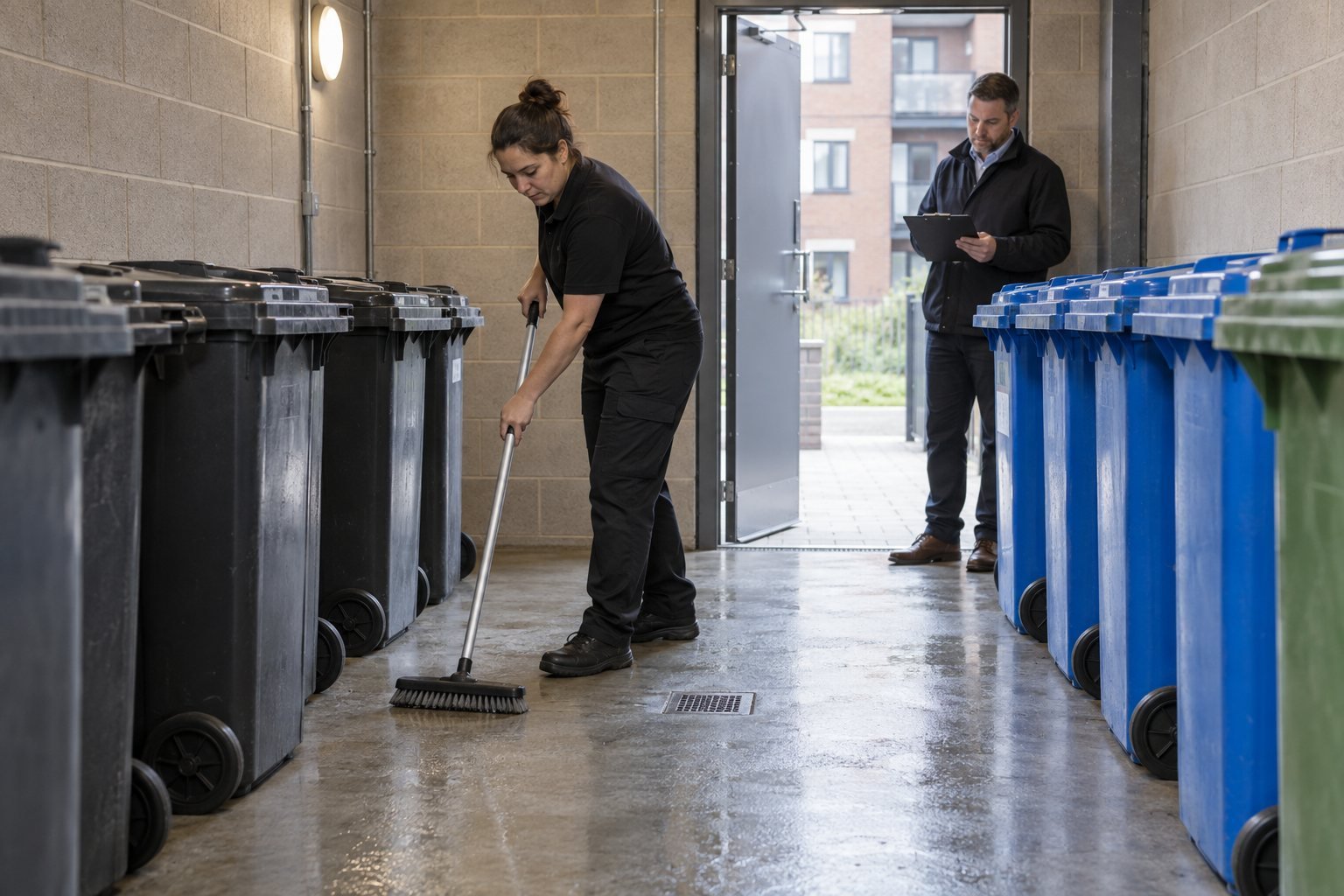
A communal bin room is one of the least glamorous parts of a Manchester apartment building, yet it is one of the quickest places for a small operating problem to become visible to every resident. One split bag is left beside a full container. The next collection cannot reach the right bin. By the weekend, the floor is sticky, the lids no longer close and complaints arrive with photographs. A cleaner can restore the room, but only if the building manager has also dealt with the cause.
This guide is for managing agents, resident directors and landlords responsible for a shared bin store in a block of flats. It separates cleaning from waste collection, sets out a practical inspection and washdown sequence, and explains what to record when the next job belongs to a different contractor. It is a more specific job than the hallway and shared-kitchen routine in our HMO communal-area cleaning guide. The layout, number of containers and collection arrangements vary by building, so the visit plan must start with the actual site.
Start with the collection arrangement, not a mop
Before anyone books a bin-store clean, establish who owns each step. Is the room on the council’s collection route or served by a private waste contractor? Who moves the containers to the collection point, and who brings them back? Which person can arrange an extra collection or replacement bin? A cleaner should not be left to guess whether a bulky item belongs in a bin, can be removed under the cleaning contract, or requires a separate authorised disposal booking.
The Manchester City Council waste-storage guidance for new developments makes the distinction clear in its design context. It asks for an identified route from stores to collection, accessible containers, and a plan for returning bins. It also says housing-management organisations are responsible for regular bin washing, replacement when needed, and keeping the communal compound clean and safe. This is guidance for new developments; an older block has its own design and service arrangements. Use it as a useful planning reference, not as a claim that every dimension or arrangement in the document automatically applies to an existing building.
Ask the managing agent for the collection day, the bin inventory and any access instructions before the first visit. Record whether the room has a usable water point or drain, a floor that can be washed, and enough space to move containers without blocking a door. Where there is no suitable drainage, a proposed high-volume washdown may create more trouble than it solves. A controlled method suited to the floor and the waste present is the better starting point.
Inspect and sort the problems before cleaning
The first pass is an inspection, not a chemical application. Photograph the condition if the contract and building privacy rules allow it. Note loose waste on the floor, overflowing or damaged bins, lids that cannot close, food residue, standing water, stained wall edges, an obstructed collection route and items that cannot go into routine refuse. Check whether lighting works and whether a door can be held open safely while staff move equipment. A bin room should never be treated as an isolated cleaning cupboard when people and collection crews still need to pass through it.
Separate four outcomes in the record. Ordinary litter and surface soil fall within the agreed clean. Full containers require collection or capacity action. A broken lid or wheel requires repair or replacement. Mattresses, appliances, sharps and unknown substances need an approved disposal or specialist route. That separation prevents a neat-looking clean from hiding a collection failure that will recreate the mess in two days. It also prevents an ordinary cleaner from handling a hazard outside the agreed scope.
For an apartment block, the location of the problem matters. A bag beside the door can obstruct residents and the collection team. Waste pushed behind containers can remain unnoticed until the next odour complaint. A leaking bin may leave a trail along the route to the kerb, so the relevant cleaning area can extend beyond the room itself. Agree those boundaries explicitly. Our Manchester commercial-cleaning work starts with a site-specific scope because a shared building has different traffic and access patterns from a single home.
Make the room usable before washing it
Move only the containers that staff are authorised and able to move. Keep the exit, fire route and collection route clear. Remove ordinary loose litter into the correct container if there is capacity and the item is suitable; never push side waste into an already overfilled bin to make a photograph look tidy. If the bins are full, flag the collection problem and arrange a separate return visit after capacity is restored. A clean floor beneath an overflowing container is not a completed job.
Once there is clear working space, deal with dry debris before wet work. Sweep or collect packaging, grit and food fragments from corners and behind bins. Look at the contact points people actually touch: door handle, latch, light switch and the outer surfaces used to lift lids. Cleaning these surfaces is distinct from disinfecting them. A product choice should follow the surface, soil and manufacturer directions rather than a blanket promise that every bin room needs the same treatment.
The floor plan dictates the method. On a sound, washable floor with drainage, a controlled wash may be practical. On an older porous surface, an area without a trapped drain or a room whose threshold runs into a shared corridor, excess water can spread contamination and create a slip risk. Use a method that captures dirty water and leaves the access route dry before reopening it. If the surface itself is broken or water is entering from elsewhere, the managing agent needs a maintenance decision. Repeated cleaning cannot repair a failed floor or drain.
Clean the containers as well as the space around them
Bin washing is often missing from a general communal-cleaning specification. The floor is washed, but residue remains on the lid rims, handles, wheels and inside surfaces. At the next opening, the same smell returns. Decide whether the contract includes only external wipe-down, a scheduled container wash, or a separate specialist bin-cleaning visit. Put the frequency and the owner of that task in writing. Manchester’s development guidance specifically mentions regular washing, but it does not prescribe one cleaning interval for every occupied block.
The right interval depends on use. A high-turnover building with food waste needs closer inspection than a small block where containers rarely reach capacity. Warm weather, missed collections and repeated split bags may justify an extra visit. An autumn schedule should anticipate wet leaves and tracked-in grit at an external store, then adjust from the actual condition rather than copy a calendar template. The cleaner’s dated observations help the manager decide whether the issue is attendance frequency, insufficient capacity or residents using the wrong containers.
Where containers need moving for cleaning, staff should return each one to its assigned position with its lid working and its label or waste stream still clear. Do not leave a clean row that blocks access to recycling. The Council’s new-development guidance emphasises accessible waste and recycling options; the practical lesson for an existing room is simple: residents need to reach the correct container without climbing around the wrong one. A wash that ends with a poor layout will not hold.
Keep collection access and cleaning access connected
The bin store has two workflows. Residents deposit waste, and a collection crew removes it. Cleaning sits between them. If the collection team cannot open a gate, cannot manoeuvre a container or finds bulky waste blocking the exit, washing the floor will not restore the service. The manager should confirm the agreed access mechanism and route with the collector. A cleaner can record a blocked or unsafe route, but should not improvise changes to gate security or emergency egress.
Build the cleaning visit around collection timing. Immediately after collection, more floor area is reachable and there is room to return bins correctly. Immediately before collection, an inspection can catch side waste and access obstructions while there is still time to escalate. Some buildings need both a light check and a deeper periodic clean; others need one combined attendance. State which tasks happen at each visit so residents do not assume that a weekly hallway clean includes bin washing, waste removal and pest treatment.
The same clarity helps with related office-cleaning checklist. A useful note says what was cleaned, what could not be cleaned and why, and who was told. “Bin room cleaned” is too broad when a leaking container was left in place awaiting replacement. Name the exception and its owner so the next person can act.
Respond to odours and pests without guessing at the cause
Odour is a signal to inspect, not a reason to spray fragrance over the room. Find the source first: food residue beneath a bin, a leaking bag, a full caddy, dirty water trapped at the drain, or a container whose inside needs washing. If the smell returns quickly after a thorough clean, the manager should review collection frequency, container capacity and the room’s ventilation or drainage. A cleaning company can document what it sees; it should not promise that surface cleaning alone will remove a building defect.
The same boundary applies to signs of pests. Record the location and visible evidence and tell the responsible manager promptly. Do not claim an infestation from one sighting or present ordinary cleaning as pest control. Keep food waste enclosed where the containers allow it, clear loose waste and arrange specialist inspection when indicated. If the problem follows repeated overflow, a better waste-management plan matters as much as a clean floor.
Residents can help if instructions are concise and practical. They need to know which bin takes which waste, when bulky items need a separate booking, and whom to contact when a lid breaks or the room is already full. A new poster cannot compensate for containers in the wrong place or a locked store the collection crew cannot enter. Fix the physical and operational obstacles before blaming behaviour.
Write a specification a building manager can check
A workable bin-store specification names the rooms and routes covered, the frequency of inspection, the surfaces cleaned each visit, the container-washing arrangement and the point at which a problem becomes a separate job. It identifies who supplies consumables and who arranges waste removal. It says how staff report sharps, damaged bins, standing water, blocked exits and pest signs. A short, clear schedule is more useful than a long promise to “deep clean everything” with no boundary.
Ask for a dated completion record with exceptions. A few photographs can help where they are permitted, but the written note should stand on its own. Record the condition before and after, any inaccessible area, the action taken, and the person who received the escalation. Review the records after several visits. Repeated overflow at one point is evidence to change capacity or collection, not simply to demand faster mopping. Repeated wet floors may be a maintenance issue rather than a cleaner-performance issue.
For a block where the bin room sits beside a lobby or shared corridor, align the work with the wider office and communal cleaning service only if those areas are actually in the contract. A managing agent should be able to point to the exact boundary. That prevents a dispute when the bin room is clean but the route to it is not, or when the corridor is in scope but the containers are not.
Plan the first visit around the real room
Before requesting a quote, send the contractor the building location, approximate number and type of containers, collection days, access method, floor and drainage condition, photographs if appropriate, and a note of any recurrent overflow or bulky-waste problem. Say whether you need routine floor and touchpoint cleaning, a container wash, or a one-off reset before a regular schedule begins. These details allow a realistic scope and prevent a low-looking quote from quietly excluding the hardest part of the job.
At the first visit, walk the route from the store to the collection point with the cleaner or supervisor. Check that bins can be moved safely, the exit remains open, and the proposed wash will not send dirty water into a public area. Agree the handover contact before staff start. Then review the first completed record together. If the site needs more capacity, a repair or a different collection arrangement, act on that separately instead of asking the cleaner to hide the symptom.
Exclusive Pro Cleaning works with Manchester property managers on specified cleaning for shared buildings. If a bin room is part of your wider communal or contract cleaning brief, send us the layout and the problem you need solved. We can discuss a cleaning scope that matches the room, its collection cycle and the areas your team remains responsible for.