
Before the heating goes on
The first cold evening often sends us back to radiators that have been left alone since spring. Before turning the heating on regularly, look at the top grille, the narrow gap behind the panel and the skirting beneath it. These are awkward places to reach during an ordinary weekly clean, and any settled debris is easier to remove while the radiator is cold.
The useful goal is straightforward: clear what you can reach safely, check that the household’s existing vents are unobstructed, and note anything that needs a specialist. If a radiator leaks, an extractor fails or a room stays damp, put that issue on a separate repair list rather than trying to solve it with more cleaning.
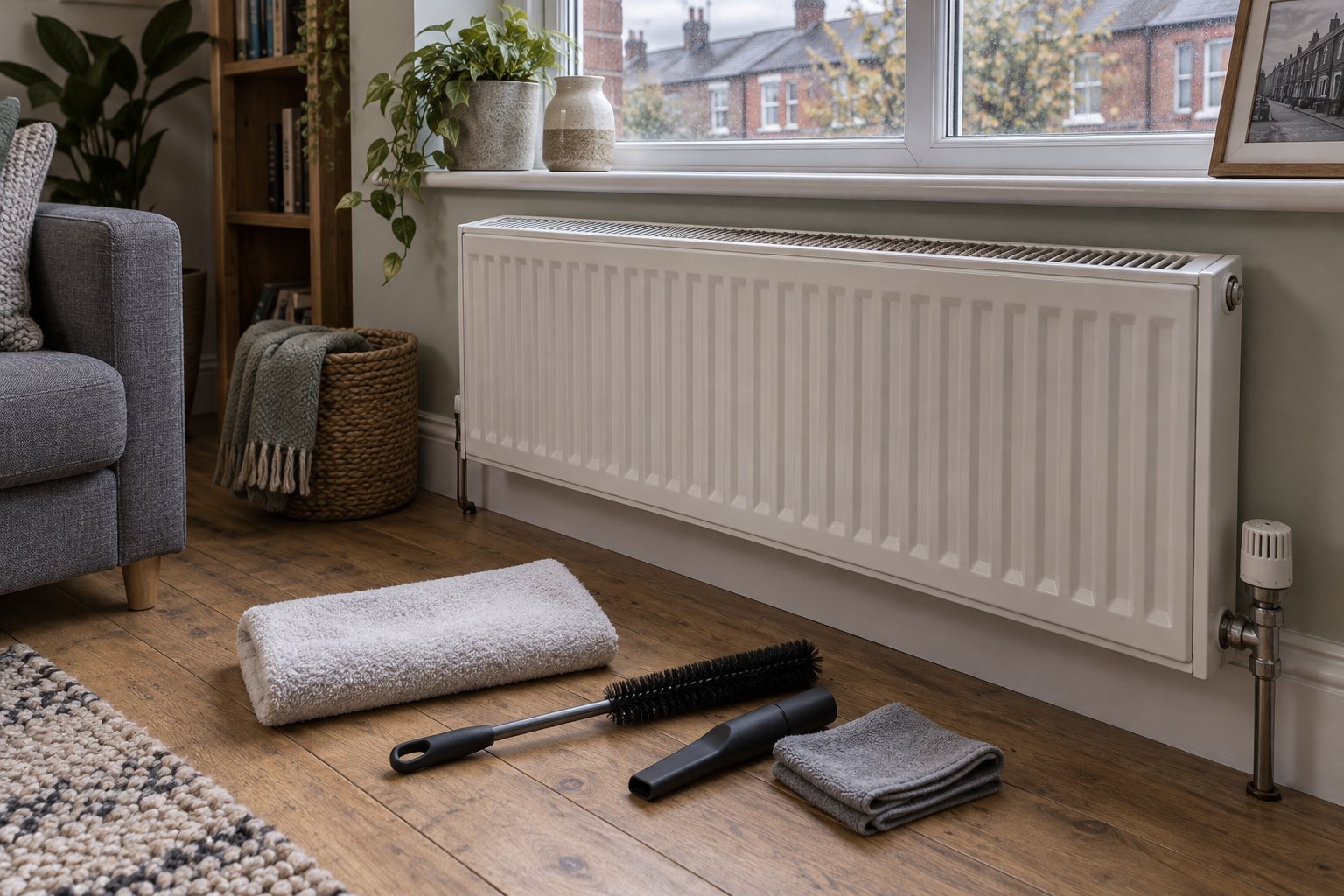
A room-by-room pass need not involve dismantling anything. Gather a vacuum with a crevice or brush attachment, a slim radiator brush, cloths and a towel for the floor. Check the appliance and paint finish before using water or a cleaning product. If a radiator or fan is difficult to access safely, leave the internal parts alone.
Where radiator dust collects
Many panel radiators have a grille and narrow channels that collect ordinary household dust and lint. The outside is simple to wipe; the fins and the space behind the panel take more patience. Different radiator designs allow different levels of access, so inspect the unit before deciding which tools will fit.
Start by inspecting the reachable surfaces with the radiator switched off and fully cool. Notice any dust on the grille, at the base, behind the radiator and along the skirting. If you see damp, a leak or an unstable fixing, stop cleaning that area and ask the appropriate property professional to assess it.
A regular surface clean also gives you a chance to notice a loose bracket, a drip near a valve or staining on the wall. Cleaning cannot fix those problems. Record where you saw the issue and arrange the right maintenance before it becomes harder to trace.
Clearing a radiator properly
What you need
Use a vacuum with a crevice or soft-brush attachment, a slim radiator brush, a dry microfibre cloth, a lightly damp cloth and an old towel. Choose a brush that fits without forcing it between fins. Avoid compressed air or a hairdryer, which can scatter loose dust rather than collect it.
The method
Switch the heating off and let the radiator cool fully. Put a towel under the panel to catch debris. Vacuum the reachable top and lower edges, then gently work the slim brush from the top where the design allows. Pause to vacuum the material that falls onto the towel and floor. Do not force a tool through a sealed or delicate grille.
Wipe the painted exterior with a lightly damp cloth, then dry it. Keep liquid away from valves, electrical fittings and the wall behind the radiator. Fold the towel inward before carrying it away, then vacuum the floor and skirting. Follow the radiator manufacturer’s instructions where its finish or construction calls for different care.
What not to do
Do not clean a hot radiator, soak the wall, remove a radiator from its brackets or disturb valves and pipework. Leave a leaking, loose or damaged unit to a qualified professional. Test any cleaner on an unobtrusive part of a painted surface first; a soft cloth and mild product are usually a safer starting point than abrasive tools.
The wall behind, and the dust shadow above
A dark mark on a wall above a radiator may be surface soiling, but it can also involve a delicate paint finish. Dust the wall gently first. If the finish permits washing, test a small inconspicuous patch with a lightly damp cloth and mild cleaner, then dry it. Stop if the paint lifts, shines or changes colour.
Persistent marks can require redecorating rather than harder scrubbing. If the wall is damp or stained by a leak, investigate the cause before treating it as a cleaning mark. That distinction matters more than making a surface look temporarily lighter.
The skirting and floor beneath the radiator are easy to miss. Vacuum crevices before wiping the skirting with a lightly damp cloth suitable for its finish. Move furniture only where you can do so safely; an inaccessible corner is not a reason to pull at pipes or brackets.
Extractor fans and vents
Bathroom extractors
Ventilation deserves its own check as the weather cools. The GOV.UK existing home ventilation guide explains that ventilation removes stale air and moisture, advises leaving trickle vents open and unblocked even in winter, and says bathroom and kitchen extractor fans should be cleaned regularly. It also says to follow the manufacturer’s instructions for a ventilation system.
Look first for visible dust on the bathroom fan cover and check whether the fan operates when expected. For cleaning, follow the model’s manual and make sure the power is isolated as directed. A removable cover can be cleaned only if the instructions permit it; dry it fully before refitting. Do not reach into wiring or dismantle a fan you cannot safely isolate. An apparently failed fan needs maintenance, not a stronger brush.
Kitchen extraction
Kitchen extractor covers and filters collect cooking residue. Check the cooker-hood manual for the filter type, removal method, cleaning product and replacement interval. Some metal filters may be washed; some carbon filters need replacement; the correct treatment depends on the model. Keep water and cleaning products out of the motor and wiring. If the hood no longer extracts as expected, seek appropriate maintenance.
Trickle vents and airbricks
Check the accessible window trickle vents without sealing or painting over them. Gently remove surface dust according to the window maker’s guidance, and leave the vents open and unblocked as GOV.UK advises. Do not remove fixed grilles or interfere with airbricks or vents serving a combustion appliance. If an outlet is obstructed or you are unsure what it serves, ask a qualified professional or property manager.
Cleaning the rest of the room
Once the high and narrow spaces are done, turn to the room’s ordinary dust-collecting surfaces. Curtains, upholstery and carpets each need a method suited to their material. Read care labels before washing or using a machine, and test a hidden area before applying a product. The aim is to clean what is accessible without damaging the fabric.
Vacuum carpets with the setting and attachments recommended for the pile. Spot treatment and extraction cleaning require material-specific care and proper drying. Our separate guide on carpets, dust mites and allergies covers the broader cleaning considerations. For this seasonal pass, focus on the edges and the floor beneath furniture that you can move safely.
For mattresses and upholstery, vacuum the accessible surfaces with an appropriate tool and follow the maker’s label before deeper cleaning. Curtains can often be vacuumed while hanging, provided the fabric tolerates it. A specialist clean may be appropriate for a delicate or heavily soiled item; do not assume every fabric can be washed or extracted.
The appliances that move air around your house
Finish by checking the household appliances used for the job. Their manuals set the safe cleaning method and filter intervals.
- Vacuum cleaner: empty the container or change the bag and clean or replace its filter according to the manual.
- Tumble dryer: clear the lint filter and maintain any other user-serviceable filter as the manufacturer instructs. A blocked or damaged machine needs its own maintenance assessment.
- Portable heater: unplug it and allow it to cool before cleaning reachable outer surfaces as instructed. Do not put water into vents or open electrical parts.
If you use a dehumidifier, check its filter and water tank against the manual too. These are appliance-care checks, not a substitute for fixing a leak or assessing persistent damp.
Dust, damp and ventilation
Cold surfaces can collect condensation when moisture in indoor air is not removed effectively. GOV.UK explains that cooking, washing and even breathing add moisture, and that inadequate ventilation can contribute to condensation and mould. Cleaning dust from a windowsill is useful housekeeping, but it does not repair a building defect or solve a persistent damp problem.
Keep existing trickle vents open, use working extractor fans and follow the home ventilation system’s instructions. If condensation or mould keeps returning, identify the moisture source and seek property advice. Our piece about Manchester weather and home care is related reading; weather alone is not a diagnosis of what is happening in a particular home.
A realistic order of work for one weekend
Choose a manageable order so that debris from high surfaces does not fall onto a freshly cleaned floor.
- Inspect for leaks, damaged fittings or damp before cleaning.
- Dust reachable high surfaces and door frames.
- Check accessible trickle vents and fan covers against their manuals.
- Clean cold radiator exteriors and reachable channels, one room at a time.
- Vacuum suitable curtains and upholstery, then wipe skirting and painted surfaces carefully.
- Vacuum floors last and maintain the vacuum filter as instructed.
The time needed depends on the size and condition of the property, how easily each radiator can be reached and the care instructions for its finishes. Split the work into rooms if that makes it safer. Leave complicated fan, radiator and damp issues to the relevant trades.
When it makes sense to book a deep clean instead
A larger home, hard-to-reach surfaces or limited mobility can make this a difficult weekend job. Professional help may be useful for the accessible cleaning tasks, with a clear scope agreed beforehand. A cleaner should not be asked to repair heating equipment, diagnose damp or dismantle electrical ventilation.
An EPC home deep clean can cover agreed dusting and cleaning of suitable surfaces, while specialist carpet or upholstery work can be quoted separately where the materials permit it. Ask which radiators, vents and high areas can be reached without dismantling, and what equipment and drying time are involved. If you already use a service, discuss any seasonal additions to your residential cleaning arrangement.
Plan the work while radiators are cold
Do this when the radiators are cold and before the regular heating routine makes the work inconvenient. Keep a short list of any fan, moisture or heating problems found along the way, with the room and location noted. Repeat the accessible cleaning when it is visibly needed and keep ventilation running as designed.
If you would like help with the cleaning portion, tell us about the property, the number and type of radiators, and any areas that are difficult to reach. We work in Manchester and Greater Manchester and can explain what the cleaning visit includes before quoting. For leaks, electrical faults or persistent damp, contact the appropriate property professional.