
One method does not fit every stain
The instinct with almost any carpet stain is to reach for whatever is under the sink and scrub. That instinct is usually the wrong one, and for three of the most common household stains, red wine, coffee and blood, the wrong treatment can actually set the mark permanently rather than lift it. Each of these stains has a genuinely different chemical make up, and treating them the same way is why so many people end up with a faded ghost of a stain that never fully disappears, rather than a carpet that looks like nothing ever happened.
The chemistry that explains why stains behave differently
Household stains are not one thing chemically, they are usually a mix of a pigment, the part that actually gives the mark its colour, and other components such as proteins, sugars or fats depending on what caused the spill. The Royal Society of Chemistry’s own education resources make exactly this point, that different stains have different chemical make ups and therefore need different removal methods, because there is no single universal stain remover that works equally well on all of them. A fruit juice stain, for example, has a bleachable coloured part, a greasy part, and a protein part from the pulp, each of which responds to a different kind of treatment.
That framework explains why wine, coffee and blood, three stains that all look broadly similar on first glance, a dark mark on a light carpet, actually need three different approaches to shift properly.
Red wine
Red wine’s colour comes primarily from pigments called anthocyanins, the same class of pigment that gives dark berries their colour. These pigments bind readily to carpet fibres, particularly natural fibres like wool, which is exactly why a wine spill left even a short while starts to look permanently set.
The first move matters more than anything that comes after it. Blot, never rub, using a clean white cloth, working from the outside of the stain inward so you are not spreading it further across the carpet. Rubbing pushes the pigment deeper into the fibres and can damage the pile itself. Once as much liquid as possible has been lifted, a cold water rinse followed by a mild cleaning solution applied and blotted again, repeating rather than soaking the area in one go, tends to work far better than one aggressive attempt. Heat is the enemy here, hot water or a hairdryer used to speed drying can set the pigment permanently, so keep the treatment cold or room temperature throughout.
Coffee
Coffee stains combine a strong pigment with tannins, the same compounds found in tea and red wine that give a slightly bitter, staining quality, plus whatever milk or sugar was in the cup. That combination means a coffee stain often needs a slightly different balance to a pure wine stain, something that addresses both the tannin pigment and any dairy residue if milk was involved.
As with wine, blot rather than rub, and start as soon as possible after the spill. A black coffee stain behaves more like a pure tannin stain and responds well to the same cold water and mild solution approach used for wine. A milky coffee stain has an added protein and fat element from the milk, which benefits from a treatment that can break down fat as well as lift pigment, otherwise a greasy residue can remain even after the visible colour has faded. Letting a coffee stain dry completely before attempting to treat it makes the job considerably harder, since the tannins bind more firmly to the fibres the longer they sit.
Blood
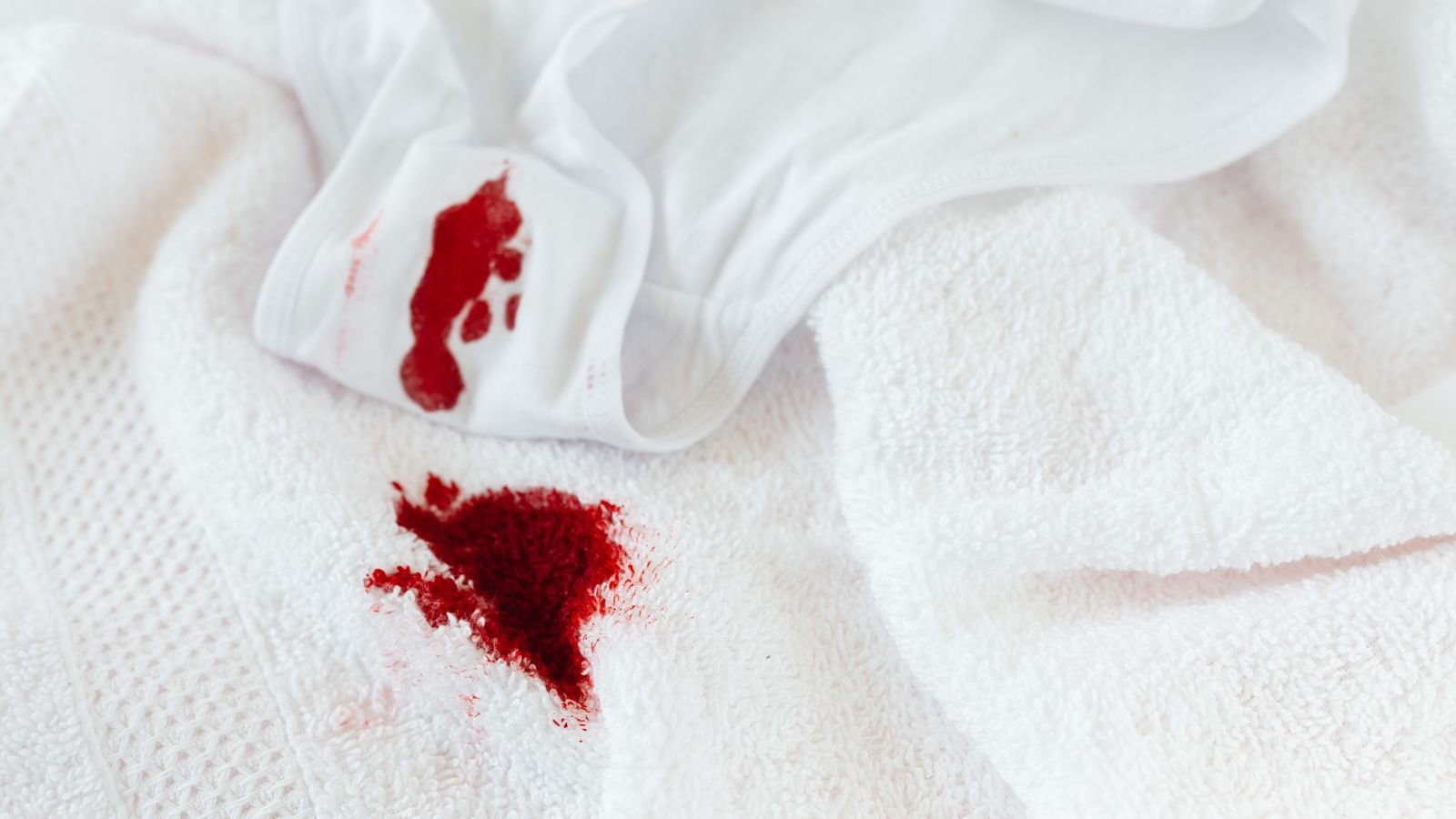
Blood is chemically different again, since its colour comes from haemoglobin, a protein, rather than a plant pigment like wine or coffee. This matters enormously for one specific reason, protein stains set with heat. Hot water actually cooks the protein into the carpet fibres, making a blood stain dramatically harder to remove, which is the exact opposite of the general instinct to reach for hot water to clean something.
Cold water, never warm and never hot, is essential for any blood stain, applied and blotted repeatedly rather than scrubbed. For a fresh stain, cold water alone often lifts the majority of it. For a stain that has already dried, a longer soak with cold water to rehydrate and loosen the protein before blotting tends to work better than any amount of scrubbing on a dry mark. This is also the one of the three stains where household enzyme based cleaning products, designed specifically to break down proteins, genuinely earn their place, since they work chemically with what blood actually is rather than just physically lifting colour.
The one rule that applies to all three
Speed matters more than technique for every one of these stains. A wine, coffee or blood spill treated within minutes, even with an imperfect method, lifts far more easily than the same stain treated hours later with a perfect one. Once any of these three stains has fully dried and set into the fibres, particularly on a wool or wool blend carpet, home treatment becomes far less reliable, and what looked like a manageable fresh spill can turn into a permanent mark simply because it was left overnight to deal with in the morning.
When a professional treatment is worth calling in
A fresh spill, treated promptly and correctly, is genuinely manageable at home for most households. A stain that has already dried, one on a more delicate or natural fibre carpet, or a larger spill that has soaked down into the underlay, is a different matter. Professional carpet cleaning brings equipment and treatments that reach further into the pile and underlay than anything applied by hand at home, and a specialist knows which combination of treatment suits wine, coffee or blood specifically, rather than reaching for a single generic carpet cleaner and hoping it works on all three.
If a stain has already had the wrong treatment applied, hot water on blood, vigorous rubbing on wine, it is still often possible to improve it professionally, though the earlier it is looked at after the original mistake, the better the outcome tends to be.
Why carpet fibre type changes the outcome too
The same stain behaves differently depending on what the carpet itself is made from. Wool and other natural fibres absorb liquid and pigment more readily than synthetic fibres like nylon or polypropylene, which means a wine or coffee spill on a wool carpet has a shorter window to be treated before it starts binding permanently, while the same spill on a synthetic carpet often sits nearer the surface for longer and stays easier to lift. Natural fibres are also more sensitive to strong cleaning products and higher temperatures, which is another reason the cold water, gentle blotting approach matters more on a wool carpet than it does on a synthetic one, where a slightly more robust treatment can usually be used without the same risk of damage.
This is worth knowing before reaching for any cleaning product, since a treatment that is perfectly safe on a synthetic hallway carpet can discolour or damage a natural fibre rug or a wool carpet in a bedroom. If you are unsure what a carpet is made from, treat it as if it were delicate, cold water, gentle blotting, no scrubbing, until you know otherwise or a professional has assessed it.
Common mistakes that make all three stains worse
Reaching for hot water is the single most common mistake across all three stains, since it can set pigment into wine and coffee marks and effectively cooks the protein in blood into the fibres. Scrubbing rather than blotting is the second, pushing the stain deeper and wider rather than lifting it out, and often damaging the pile in the process. Applying a strong household cleaning product without testing it on a hidden area of carpet first is the third, since some products can bleach or discolour a carpet, turning a stain problem into a much more visible and permanent patch problem. And leaving a spill to deal with later, rather than treating it in the first few minutes, is the mistake that turns a genuinely manageable stain into one that needs professional attention regardless of which method is eventually used.
Got a stubborn stain that home treatment has not shifted
If a wine, coffee or blood stain on your Manchester carpet has not come out with home treatment, or has already dried in, we can assess it and treat it with the right method for what it actually is, not a single generic approach applied to every mark. Get in touch and tell us what caused it, roughly which type of carpet it is on, and how long it has been there, and we will advise honestly on what is realistically achievable before any work begins, rather than promising a perfect result on a mark that has already had months to set in.